
Chasing 8% Economic Growth Target, Investment Becomes Key Factor
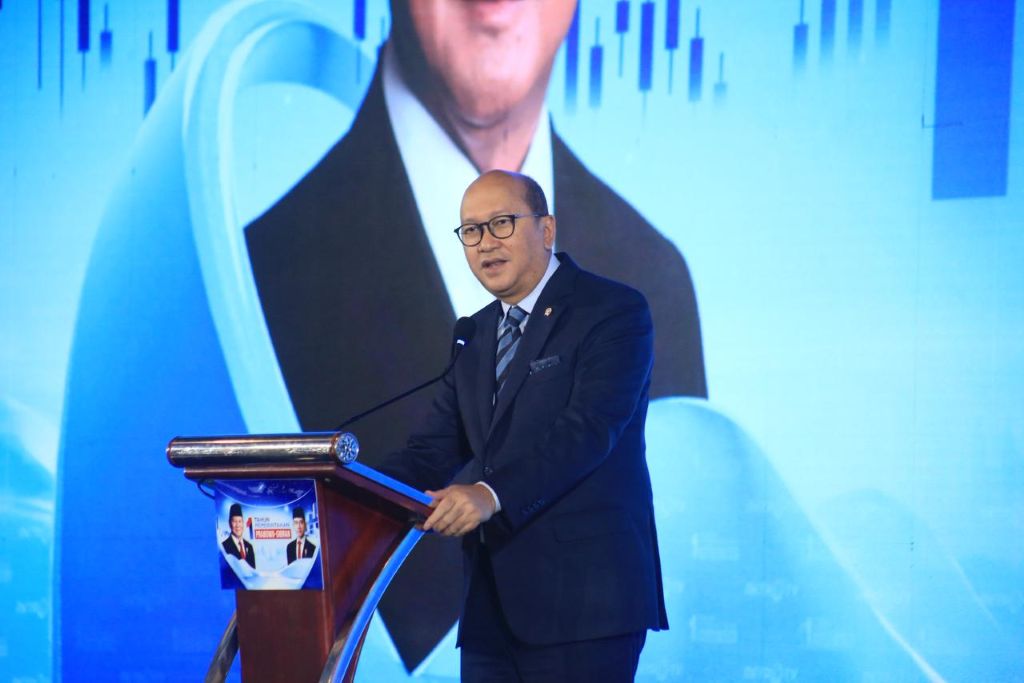
Jakarta: Minister of Investment and Downstreaming Rosan P. Roeslani stated that investment is one of the key factors in achieving Indonesia’s 8% economic growth target amid global uncertainties and geopolitical tensions.
“Investment plays a very significant role, contributing around 1.79% to the 5.61% economic growth,” said Rosan at the ‘Kadin Monthly Economic Diplomatic Breakfast’ event in Jakarta, quoted from Antara, Friday, 8 May 2026.
Rosan said Indonesia’s economy grew by 5.61% in the first quarter of 2026, with investment contributing about 31-32% to the total national economic growth. According to him, the contribution of investment to economic growth has increased compared to the previous period, which was in the range of 27-28%.
He explained that domestic consumption remains the largest supporter of Indonesia’s economic growth, while investment is the second largest contributor.
“The biggest contribution to our economic growth comes from strong domestic consumption. The second comes from investment,” he said.
Rosan stated that the government is targeting 8% economic growth for Indonesia, thus requiring a significant increase in investment realisation.
Target investment to support economic growth
According to him, Indonesia’s investment target for 2026 is set at USD123.7 billion to support that economic growth. He explained that Indonesia’s investment realisation during the 2014-2024 period reached around USD552.6 billion, while for the next five years, the government is targeting investment realisation of around USD789.9 billion.
Rosan said the target can be achieved through collaboration between the government, the business world, and international partners.
“For the next five years, the figure is USD789.9 billion. That is the number we must achieve to reach that 8% growth. This can be achieved if we all work together, collaborate, and synergise,” he said.
He added that Indonesia’s investment realisation in the first quarter of 2026 reached around USD30.2 billion and created around 706,659 jobs.
According to him, Singapore remains Indonesia’s largest direct foreign investor, followed by Hong Kong, China, the United States, Japan, South Korea, and the Netherlands. Rosan also mentioned that around 30% of the current national investment contribution comes from downstreaming programmes, especially in the mineral and energy sectors.
Therefore, the government continues to encourage downstreaming in various other sectors, including forestry, oil and gas, fisheries, maritime, and agricultural commodities. He exemplified Indonesia, which has about 42% of the world’s nickel reserves, thus having great potential to increase added value through mineral industry downstreaming.
“Why are we doing downstreaming in nickel? 42% of the world’s nickel reserves are in Indonesia, and if we look at bauxite and copper, we are number two in world reserves,” he said.
According to Rosan, downstreaming not only aims to increase commodity exports but also to strengthen the national industry’s added value and Indonesia’s economic resilience amid global dynamics.