
Charging Technology Advances, but Electric Vehicle Power Acceptance Remains Limited
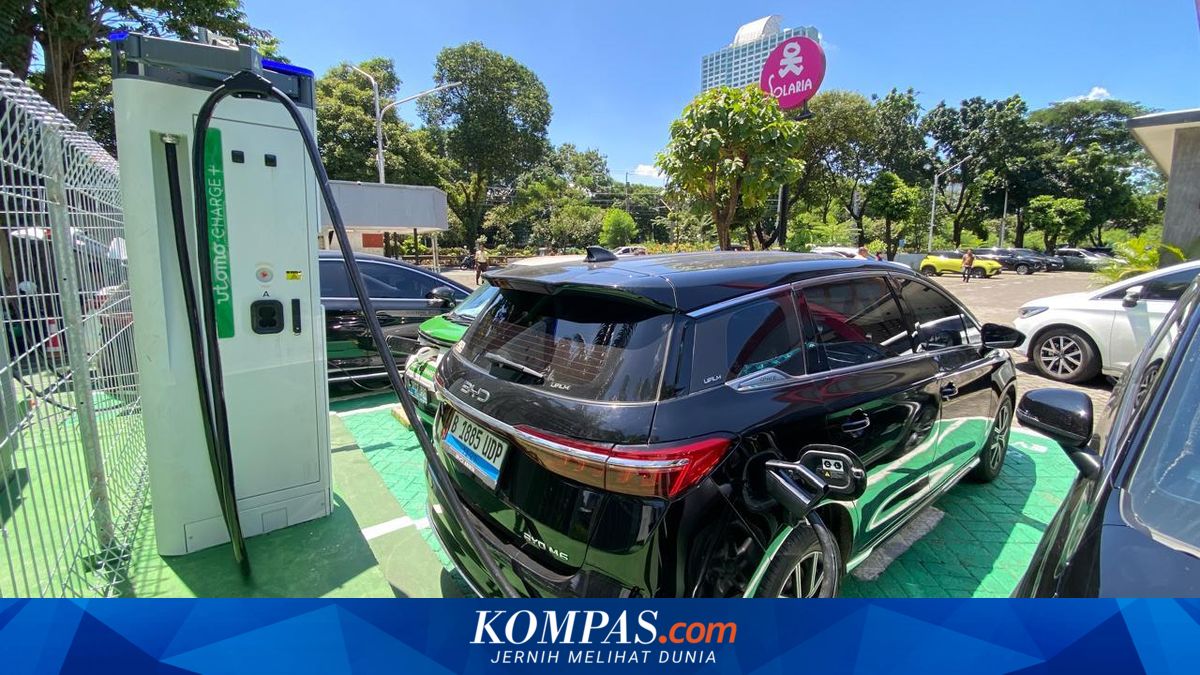
JAKARTA – Electric vehicle charging technology continues to develop. Currently, many public electric vehicle charging stations (SPKLU) are offering fast charging, ultra-fast charging, and flash charging with very large power capacities.
However, in practice, not all electric vehicles can fully utilise such capacity. For example, there is an ultra-fast charging type capable of supplying power up to 360 kW. However, if a vehicle can only receive a maximum power of 50 kW, then the charger’s large capacity cannot be used in full.
Anthony Utomo, chief executive of Charge+ Indonesia, stated that such conditions frequently occur because the charging capability is determined by individual vehicle manufacturers. “We encourage shared infrastructure, or infrastructure that can be enjoyed by the public. Our charging technology allows them to share power,” Anthony said to Kompas.com during the inauguration of the Urban Hub public charging station in Palmerah, Jakarta, on Friday (13 March 2026).
According to him, such a system enables more flexible electricity distribution at a single charging location. “For example, at lot 1, the user is a vehicle with small capacity. Then the adjacent lot can supply with large capacity, using the same PLN supply,” Anthony explained.
He explained that this concept differs from some conventional charging stations that still use static systems. “Charging stations are generally only static. So when they lock one charger for small capacity, others cannot enjoy the remainder,” he said.
Nevertheless, Anthony stressed that the limitation of power reception in electric vehicles is part of vehicle design that has already been calculated by manufacturers. On the other hand, battery technology development is estimated to continue improving the charging capability of electric vehicles in the future.
“This technology keeps developing. Over the years, batteries will become more economical, cheaper, more affordable,” Anthony said.
For this reason, his company is preparing charging infrastructure with large capacity to remain relevant with electric vehicle technology development. “As technology increases, we want this public charging station, which we call a mobility hub, to remain relevant with increasing needs and power acceptance every year,” Anthony said.