
Challenging "Political Hitchhikers", Demanding Party Sovereignty and Independence
The issue of political party independence in Indonesia is facing a double challenge: vulnerability to external power interventions and the fragility of internal democratic systems.
Amid public scrutiny of the phenomenon of instant leadership successions, legal certainty in resolving internal disputes has become a crucial element that is often overlooked.
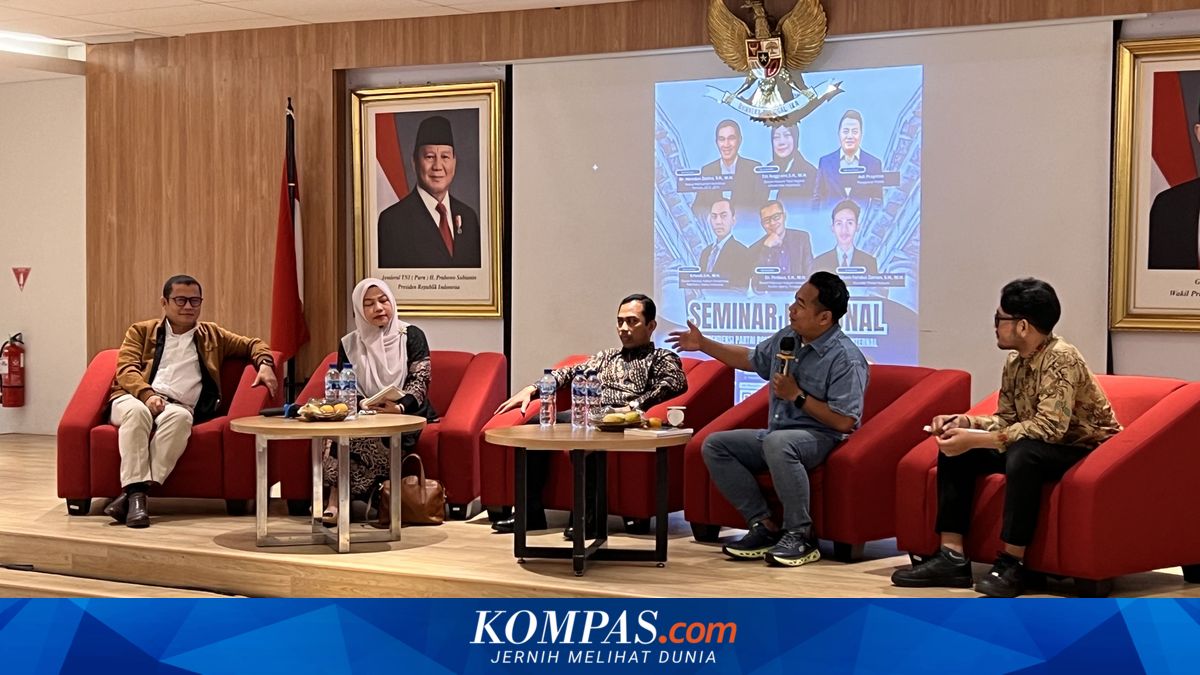
This concern was raised at the National Seminar titled “Independence of Political Parties: Strengthening Internal Solidarity and Mitigating External Interventions” organised by Pinter Hukum at the National Library in Jakarta on Saturday (28/3/2026).
The discussion thoroughly examined how political parties should fortify themselves to avoid becoming mere “hired vehicles” for the interests of elites or capital forces.
Political observer Adi Prayitno reminded that national democratic stability is threatened if political parties continue to open doors to “clandestine passengers”. The phenomenon of instant leaders often serves as an entry point for interventions by logistical and oligarchic forces seeking to privatise political institutions.
“Strong and solid parties must not, for any reason, recruit figures with unclear backgrounds and suddenly appoint them as general chairmen. That is clearly unhealthy,” stated Adi.
The Executive Director of Parameter Politik Indonesia emphasised that party independence can only be achieved if the recruitment system is carried out consistently without pressure from external parties.
If parties allow themselves to be intervened in, their function as a bridge for public aspirations will erode into mere transactional tools.
“If political parties are only used as transactional instruments, where those with substantial logistical resources can easily acquire parties without going through bottom-up cadre processes, then farewell to true democracy,” said Adi.
Lecturer in Constitutional Law at the University of Indonesia, Titi Anggraini, stated that the main indicator of unhealthy party governance is when the position of General Chairman falls into the hands of individuals who are not the result of a long cadre process.
According to her, party leadership is a moral mandate that should grow from the bottom up, not the result of elite agreements in closed rooms.
“The general chairman of a political party should truly be the result of a cadre mechanism. Decision-making processes in the party must also be democratic, listening to the aspirations of officials and members,” said Titi in her straightforward presentation.
According to her, there are four main pillars of reform that must be carried out immediately: preserving the honour of the party’s political identity, reviewing the relevance of the parliamentary threshold, increasing state subsidies to strengthen ideological development, and returning political sovereignty to the regional level through decentralisation of decision-making.
Titi opined that party independence can only be realised if there is consistency between internal regulations and law enforcement outside the party.
She highlighted the frequent interventions by general courts in disputes that should be the absolute authority of the Party Court. This is considered a bad precedent that damages legal certainty in organising.