
Challenges of the Archipelagic Return Flow
For millions of Indonesians, mudik and the return flow are more than an annual tradition. They are a tangible proof of our identity as an archipelagic nation.
Hitherto, the narrative of Lebaran mobility has been trapped in a “Java-centric” bias. The benchmark for transport success seems measured solely by how smoothly vehicles travel on the Trans-Java toll road asphalt. Yet, for coastal communities, Sulawesi, and eastern Indonesia regions, the reality is far harsher: their lifeline lies in the midst of the ocean.
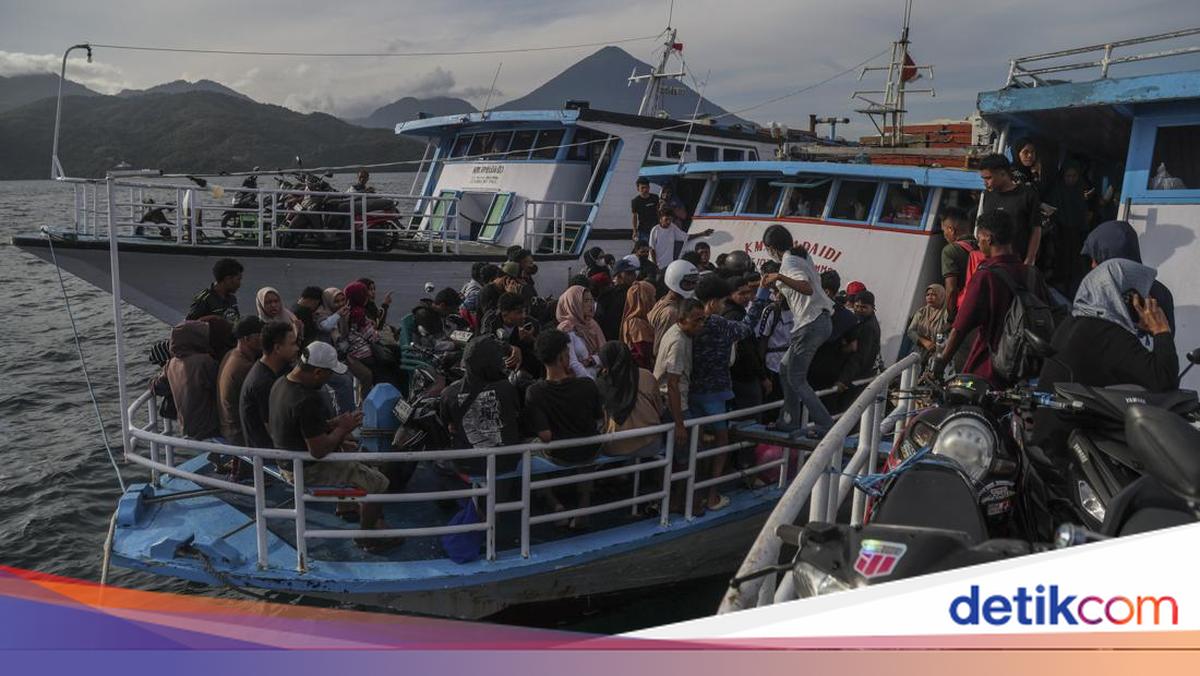
Now, in the return flow phase of Lebaran, the real “battle” is underway again. Just look at Soekarno-Hatta Port in Makassar or Tanjung Perak in Surabaya. Tens of thousands of people spill over, jostling to board the hulls of national shipping vessels to return to their lands of opportunity.
For archipelagic communities, a single economy-class ship ticket is a lifeline. It does not matter if it must be paid for with sleeping on tarpaulin mats on the cramped deck, drenched in sweat.
The question is: why do ships suddenly get swarmed by passengers to the point of overflowing every year?
The answer is very pragmatic. Economy-class airfares have become unreasonable. Middle- to lower-class people are gradually “driven out” from air routes. In eastern regions like Papua, empty Pelni ship schedules often hold residents hostage for days. They are forced to take to the sea due to a lack of options.
This skyrocketing of airfares is inseparable from the domino effect of geopolitics. Tensions between Israel, the United States, and Iran have triggered a surge in crude oil prices that spills over to avtur (aviation fuel) costs. On the other hand, civilian shipping operators are also strangled by the high cost of ship fuel. Adding extra fleets to ease congestion becomes a financially impossible step. As a result, existing ships are allowed to operate beyond normal capacity (overcapacity).
The situation in our civil transport is so dire that the state has to take an ironic tactical measure: deploying military fleets.
We certainly must tip our hats to the deployment of KRI Banda Aceh-593 to transport thousands of returnees across Jakarta, Semarang, and Surabaya. Likewise, in the Sulawesi archipelago region, KRI Marlin-877 steps in to ferry hundreds of residents from Makassar to the Selayar Islands. The mobilisation of Navy assets is a tangible manifestation of the state’s presence amid the crisis.
However, from the perspective of public policy and defence, this phenomenon is a danger signal (distress signal). It is a great irony when the threat of global war escalation looms before our eyes, our strategic defence assets are repurposed into makeshift ferries due to the mismanagement of national civilian shipping governance.
The absence of civilian fleet resilience feels even more logical—and worrying—if we dissect the current government’s policy direction. On various occasions, President Prabowo’s maritime vision appears to have a blind spot.
The government is so enthusiastic about strengthening the blue economy, improving fishermen’s welfare through integrated infrastructure, and enforcing maritime sovereignty. Yet, the blueprint to save and modernise the commercial civilian shipping transport industry slips off the radar. The narrative of a maritime nation seems to forget one most basic thing: the feasibility of sea transport for its own people.
Beyond macro policy issues, there are two silent threats lurking behind the crowded decks of returnee ships. First, the ecological threat. Ships operating overcapacity for days cause the domestic waste system to collapse. Plastic waste and liquid waste dumped into the open sea threaten coastal ecosystems. These pollutants can damage fish habitats, coral reef ecosystems, and affect the existence of Indonesia’s unique marine fauna such as filter feeders like Porifera (sea sponges), which are highly sensitive to water quality.
Second, the human error threat. Extreme fatigue surely plagues ship crews and harbour masters because voyage frequencies are maximised to clear queues. This unrelenting operational pressure opens fatal gaps for navigational negligence. Here, education and standardisation of maritime vocational human resources are truly tested. We need technical personnel who are not only skilled on paper but possess crisis management resilience in the field.
This year’s Lebaran transport chaos must serve as a harsh wake-up call. Transport infrastructure development must no longer be measured by the length of toll road asphalt.
Archipelagic communities deserve safe, independent, and affordable civilian sea transport without having to continually hitch rides on warships every Lebaran season. The nusantara seas must return to being bridges of civilisation, not arenas of despair that risk lives and damage ecosystems.