
Challenges of accessing nutritious food in Aceh Tamiang in the aftermath of disaster
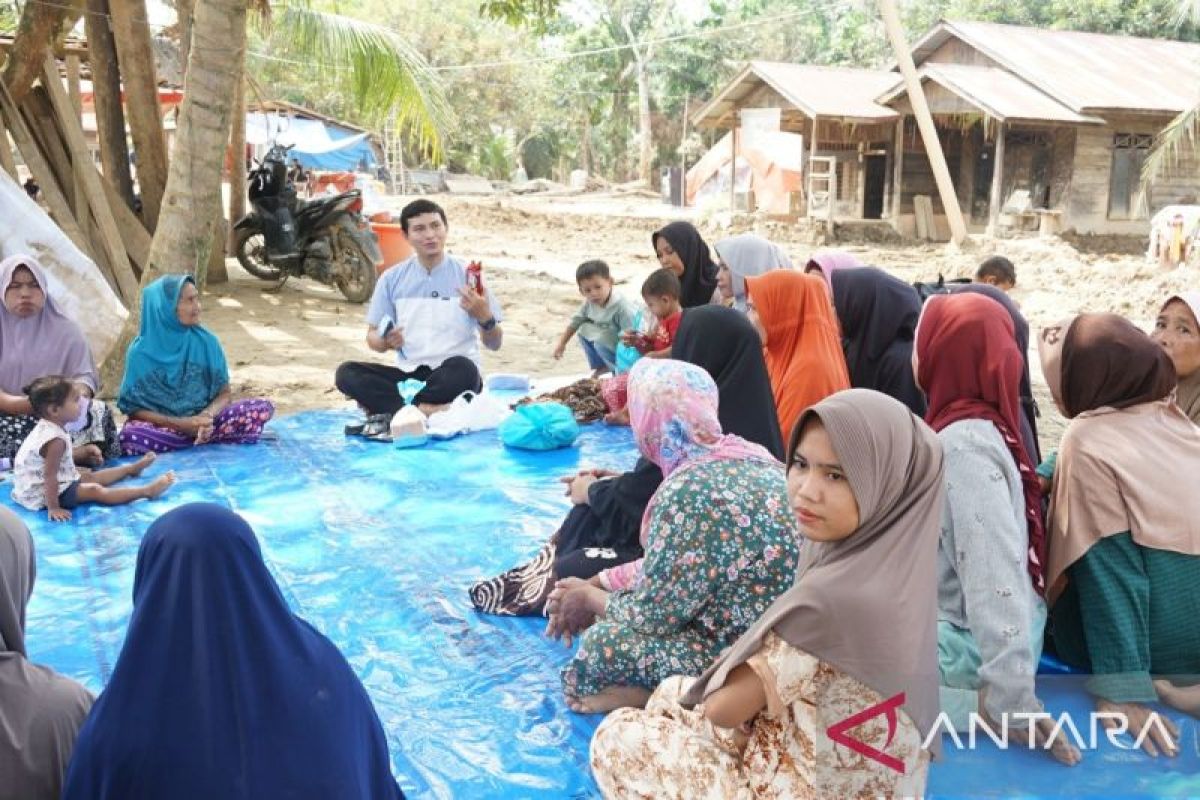
Jakarta (ANTARA) – Disasters often strike within hours, but their impacts can persist far longer than what is visible on the surface.
When flash flooding swept through several regions in Sumatra recently, the most apparent damage was broken bridges, ruined roads, and isolated villages.
Behind all this, another story has slowly emerged after the waters receded – how communities struggle to maintain their families’ basic needs, particularly access to nutritious food.
This story is now being experienced by residents in Serba Village and Pematang Durian, Aceh Tamiang Regency. In this region, the recovery of daily life extends beyond cleaning homes or repairing public facilities; it is fundamentally about how communities regain access to adequate food sources for their families.
Ersyad, a health educator at Sekerak Health Centre, described how the journey to obtain food remains a challenge for residents. Some community members must travel considerable distances to obtain food supplies.
Residents from Pematang Durian Village must travel one to two hours to reach places that supply food. This distance feels increasingly long because of infrastructure damage sustained after the flash flooding.
A bridge that previously served as the main route into the village was destroyed by the flood surge. Consequently, access to the village now requires a roundabout route that is more than three times longer than the normal route.
This situation has transformed what used to be a simple journey into one requiring significantly more time, effort, and expense.
This situation has also affected the types of food available to the community. With limited logistics access, the aid most easily distributed typically consists of convenience foods, such as instant noodles and sweetened condensed milk.
These foods do have advantages because they are easy to store, easy to distribute, and can be consumed immediately by those in need.
In the emergency phase, convenience foods are indeed a very helpful solution. However, health workers emphasise that in the long term, communities still require more diverse nutritional intake, particularly for children in their growth phases.
Ersyad cited the example of continuous consumption of sweetened condensed milk, which is not ideal for children.
The high sugar content can create a false sense of fullness, making children feel adequately fed when their nutritional needs have not actually been met comprehensively.
This effect can influence children’s eating patterns. When sweetness becomes dominant, children may become less interested in other more nutritious foods. In certain conditions, this situation has the potential to affect child development and growth if it persists over a long period.