
Chair of Commission VIII: Additional Hajj Costs Must Be Borne by the State, Not Passed on to Pilgrims
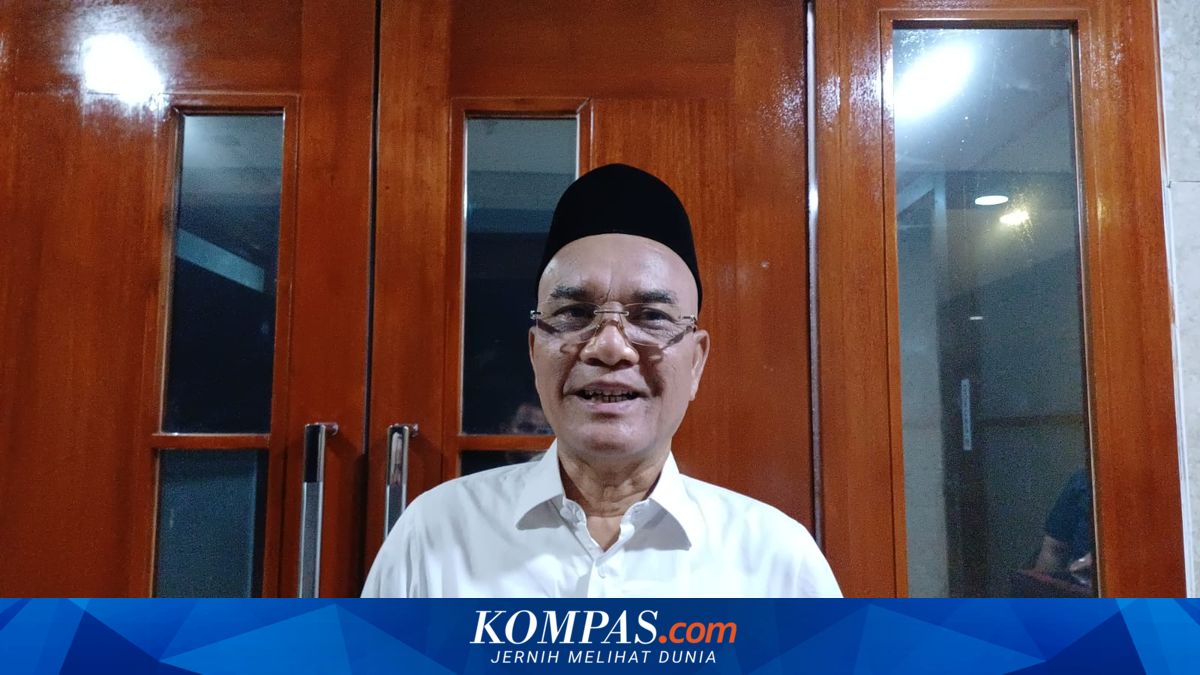
JAKARTA - The Chair of Commission VIII of the Indonesian House of Representatives, Marwan Dasopang, emphasised that the discrepancy in the proposed additional Hajj flight costs must be covered by state finances and should not be passed on to prospective Hajj pilgrims.
Marwan requested that the Ministry of Hajj and Umrah conduct cross-ministerial and inter-agency coordination in accordance with legal provisions to ensure the use of state budget is accountable.
“The government needs to carry out cross-ministerial and inter-agency coordination so that this financing scheme can be implemented accountably and in accordance with regulations,” he said during a Working Meeting with the Ministry of Hajj and Umrah in Senayan, Jakarta, on Tuesday (14/4/2026).
The total flight costs have surged from Rp 6.69 trillion to Rp 8.46 trillion. This is triggered by a proposed increase from Garuda Indonesia of Rp 974.8 billion and from Saudi Airlines of Rp 802.8 billion.
Marwan requested that the additional cost proposal be recalculated by the Ministry of Hajj, considering that global oil price fluctuations remain highly dynamic.
Therefore, in the next meeting, a detailed decision must be made on the actual amount of the flight cost increase.
According to him, based on Law No. 14 of 2025, the flight cost component for pilgrims is sourced from the Hajj Worship Management Fee (BPIH), while the kloter officials’ costs are sourced from the State Budget (APBN).
“Regarding the flight cost increase proposed by the airlines, the Ministry of Hajj and Umrah is currently coordinating with the Attorney General’s Office and related parties to ensure the force majeure status and the legality of the funding source,” said Irfan.
However, he requires legal safeguards to avoid problems in the future.
Referring to the regulations, the Hajj cost component is sourced from the Hajj Worship Management Fee (BPIH), which comes from funds managed by the Hajj Financial Management Agency (BPKH).
“If it does not comply with the law, we also dare not use the APBN. We need strong legal backing,” said Dahnil.
However, the funds managed by BPKH are the funds of prospective Hajj pilgrims who are still waiting in line.
Therefore, said Dahnil, they require strong legal protection.