
Cepu Block Successfully Boosts Oil Production to 12,300 Barrels per Day
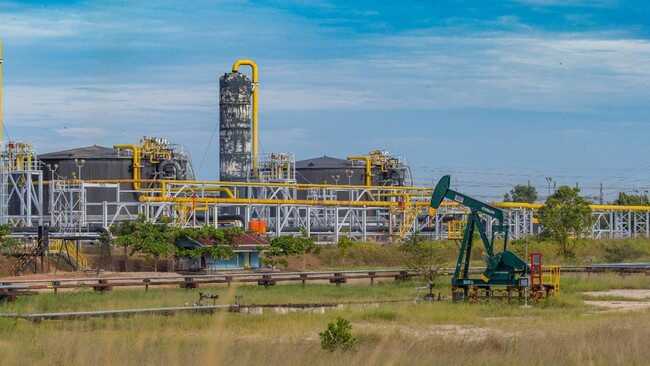
Jakarta, CNBC Indonesia - The Special Task Force for Upstream Oil and Gas Activities (SKK Migas) disclosed that there has been additional oil production from the Banyu Urip field, Cepu Block, following a successful well maintenance programme carried out by the Joint Venture Contractor (KKKS) ExxonMobil Cepu Limited (EMCL).
The success came from Well Services (WS) at Banyu Urip A07 through Water Shut-Off (WSO). This programme aims to reduce undesired water inflow within the well.
Through this programme, production from Banyu Urip A07 rose sharply. Production which previously sat at around 4,800 barrels per day (bpd) surged to around 12,300 bpd, an increase of roughly 7,500 bpd. This far exceeded the initial additional production target of 1,000 bpd.
The Banyu Urip field has long been known as the backbone of national oil production. Therefore, every additional barrel produced from this field has a strategic impact on stabilising supply and strengthening the national energy security.
The WSO programme was implemented to stop unwanted water flow from the lower zone of the well so that the well can produce a higher proportion of oil and optimise its production potential.
The techniques applied included installation of a bridge plug, re-perforation, and acidising stimulation. This technological approach has proven effective in optimising the potential of existing wells without the need for new drilling, enabling faster and more cost‑effective additional production.
Head of SKK Migas Djoko Siswanto expressed his appreciation for the achievement. This success demonstrates that intervention in existing wells can deliver a significant uplift in production within a relatively short period.
“This is evidence that optimising existing wells can directly boost the lifting of national oil production,” Djoko said in a written statement, on Wednesday (4/3/2026).
He added that efficiency is an important value in this programme. “In addition to increasing production, this activity also demonstrates cost and time efficiency. Best practices like this should be replicated in other fields to accelerate the achievement of national lifting targets and strengthen energy availability,” he added.
Operationally, all work was performed without a rig (rigless operation) by utilising a wireline unit, making the implementation faster and more economical. In terms of budget, realised costs were around 57 percent of the total approved budget, reflecting effective and efficient programme management.
The success of the Well Services at Banyu Urip A07 confirms that optimising existing wells is a concrete and cost-effective step in maintaining momentum in lifting national oil production.
This success will serve as a lesson for other KKKS to adopt technology appropriately in their own production enhancement efforts. With the right technological innovations, the upstream oil and gas sector can deliver additional production sustainably to strengthen Indonesia’s energy resilience and availability.