
Central Papua takes four steps to resolve customary border conflict in Kapiraya
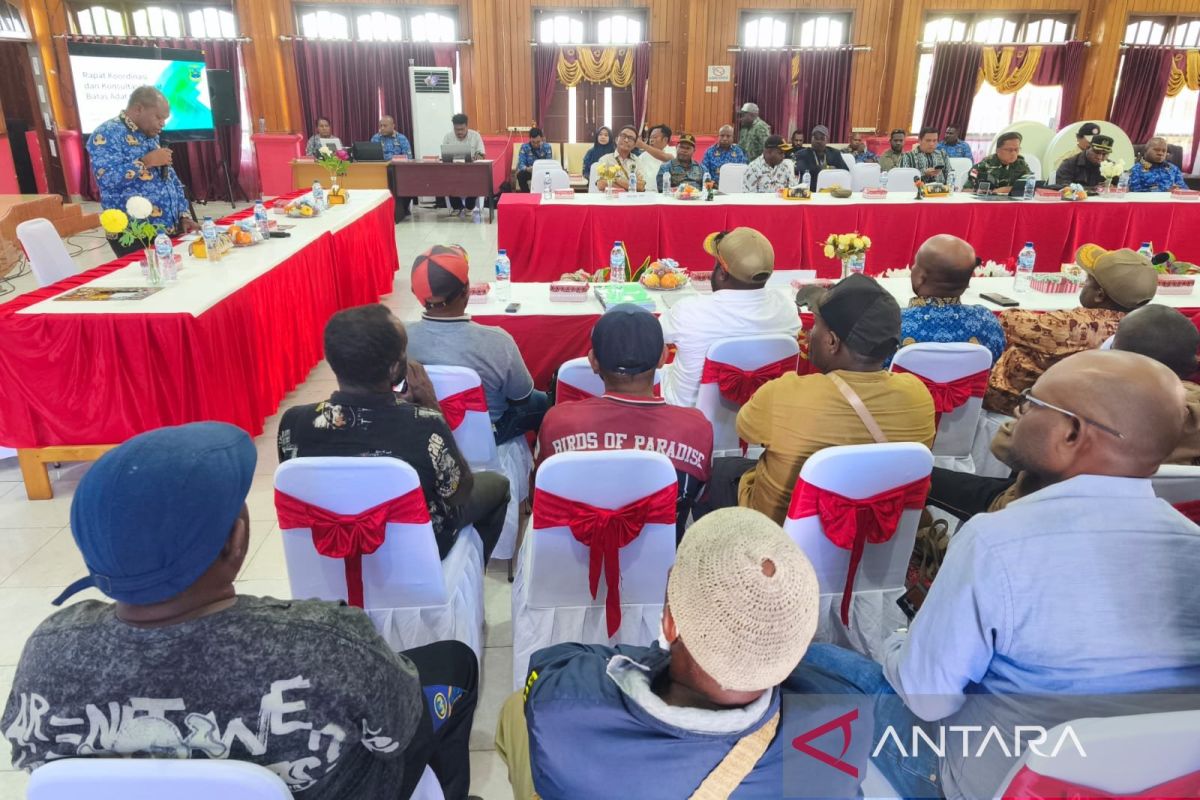
Nabire (ANTARA) - The Central Papua provincial government has so far taken four strategic steps to resolve the customary border conflict in Kapiraya between the Kamoro tribe in Mimika Regency and the Mee tribe in Deiyai and Dogiyai Regencies.
Chair of the Kapiraya Conflict Handling Team of the Central Papua Provincial Government, Marthen Ukago, in Nabire on Thursday, said the conflict is a long-standing issue that requires a structured approach based on law and local wisdom.
“The provincial government has prepared an action plan for handling the conflict that includes several important stages to ensure this conflict does not drag on,” he said.
He explained that the four steps taken are consolidation and issuance of a decree (SK) for the provincial-level conflict resolution team as well as the formation of harmonisation teams at the regency level.
Next, data inventory was conducted through meetings with indigenous communities that have been held several times, followed by participatory customary territory mapping involving indigenous communities.
“The next step is the first stage of customary dialogue carried out by the harmonisation teams of the three regencies together with each tribe in the Kapiraya area,” he stated.
According to him, all these stages have been implemented as a basis for comprehensive conflict resolution.
He added that the conflict resolution is guided by various regulations, including Article 18B of the 1945 Constitution, Law No. 5 of 1960 on Agrarian Principles, Law No. 2 of 2021 on Special Autonomy for Papua, and Law No. 7 of 2012 on Social Conflict Handling.
In addition, the resolution upholds Papuan customary law principles, such as communal, sacred, and hereditarily inherited ulayat rights, as well as determining customary territory boundaries based on history, ancestral agreements, and natural markers.
Marthen said the process has now entered the second stage of customary dialogue to strengthen inter-tribal agreements.
“If the three tribes have reached an agreement, it will be followed by the signing of minutes by the three regents, namely Mimika, Dogiyai, and Deiyai, together with the Governor of Central Papua in Kapiraya,” he said.
He explained that the results of the agreement will then be followed up with declarations, socialisation, as well as monitoring and evaluation to ensure no potential conflicts re-emerge.
The recommendations produced include the definitive determination of customary boundaries, participatory mapping, inter-tribal customary agreements, establishment of customary sanctions, and the formation of a joint customary forum as a cross-tribal communication platform.
“This customary forum is important for mediation, boundary supervision, and conflict prevention in the future,” he stated.
He emphasised that the conflict handling team is focused on the disputed area to curb conflict escalation, while encouraging active involvement of tribal leaders at all levels in maintaining sustainable peace.