
Central Java Set to Host Indonesia's Largest Dairy Farm
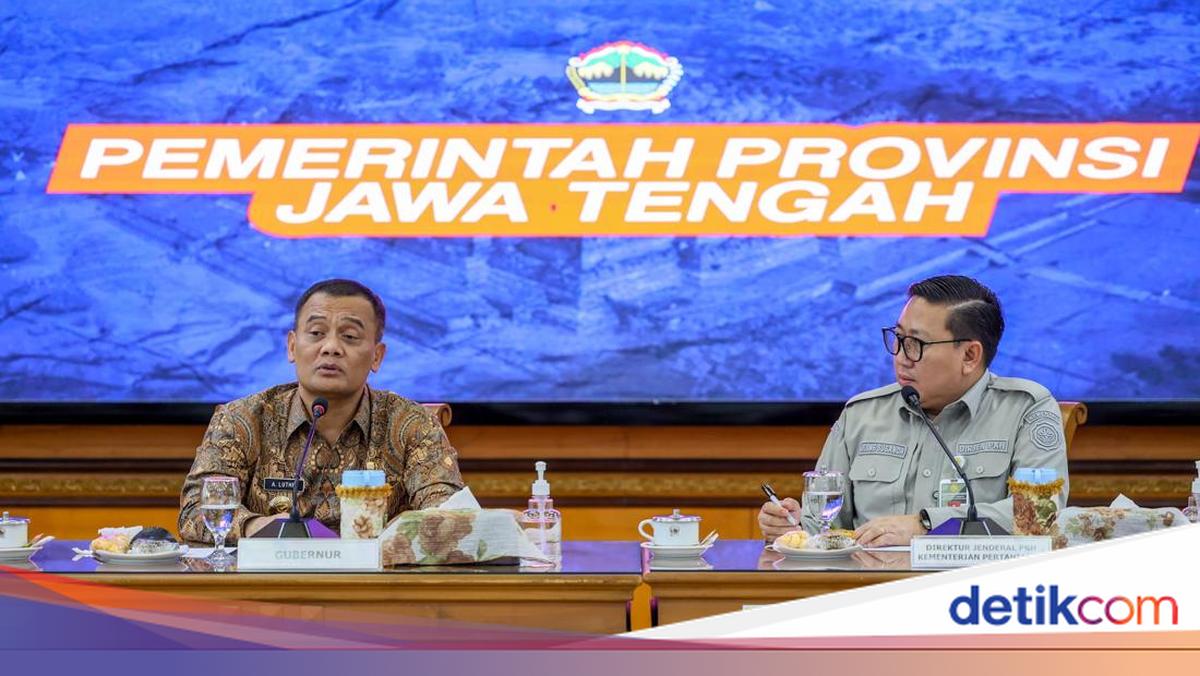
Director General of Livestock and Animal Health at the Ministry of Agriculture, Agung Suganda, conveyed this during an audience with Central Java Governor Ahmad Luthfi in Semarang on Thursday (16/4). The project, developed by PT Global Dairy Bersama (GDB), is expected not only to increase national milk production but also to significantly stimulate the regional economy. “If this is built, it will become the largest in Indonesia,” Agung stated in a written remark on Thursday (16/4/2026). He explained that the mega farm is projected to contribute up to 18% of the total national milk production. Currently, domestic milk production reaches around 1 million tonnes per year, while national demand is 4.7 million tonnes, meaning about 80% of needs are still met through imports. “With the additional production from Brebes, this will significantly reduce import dependency,” he added. This additional production also has the potential to elevate Central Java’s position as one of the national milk producers. Currently, Central Java ranks third, behind East Java and West Java. “If this proceeds, Central Java could rise to second place, even matching East Java,” he continued. The central government is also preparing various supports, from providing imported cattle breeds from Australia, the United States, New Zealand, to Brazil, as well as strengthening animal health systems to prevent diseases like Foot and Mouth Disease (FMD) and Lumpy Skin Disease (LSD). On that occasion, Ahmad Luthfi expressed his support for the establishment of the farm. He emphasised that Central Java has now become one of the main investment destinations, both national and international, thanks to security stability, legal certainty, ease of permitting, and availability of competitive labour. He stressed that Central Java opens opportunities for investments that support food self-sufficiency, including the livestock and milk production sectors. “The Central Java Medium-Term Regional Development Plan (RPJMD) 2026 focuses on food self-sufficiency. Therefore, investments like this are very strategic and will receive our full support,” explained Ahmad Luthfi. Meanwhile, PT GDB representative Ihsan Mulia Putri stated that the project is designed as an integrated dairy farm based on modern and sustainable technology with a land area of 710 hectares. “This is not just a farm, but an integrated ecosystem from upstream to downstream,” clarified Ihsan. The concept used is a closed-loop system, where livestock waste will be processed into biogas as an energy source, while the residue is utilised as fertiliser for fodder land. A water recycling system is also implemented in its operations. The mega farm is targeted to produce up to 180,000 tonnes of milk per year, accompanied by milk processing facilities, a feed mill, and a corn plantation area to support livestock feed. “With this scale, the contribution to national milk production could reach 18 percent. Even for Central Java, production could double,” she said. From a socio-economic perspective, the project will also involve around 5,000 farmers for fodder supply on 2,000 hectares of land, as well as partnering with around 8,000 herders in cattle development. “This is not just an industrial project, but also community empowerment,” she asserted. The land preparation process through cut and fill will begin in June 2026. PT GDB targets the construction to be completed and operational by the end of 2027, with first milking planned for December 2027. Furthermore, Brebes Regent Paramitha Widya Kusuma welcomed the investment and described it as a great opportunity for regional economic improvement. “This is our pride. This investment is not just at the regency level, but national. It can become a solution to improve the welfare of Brebes society,” Paramitha concluded. The presence of this mega farm is expected to open up employment opportunities, increase community income, and strengthen the livestock sector as part of food security.