
Central Java Provincial Government Intensifies Affordable Food Campaign and Market Operations to Stabilise Staple Prices
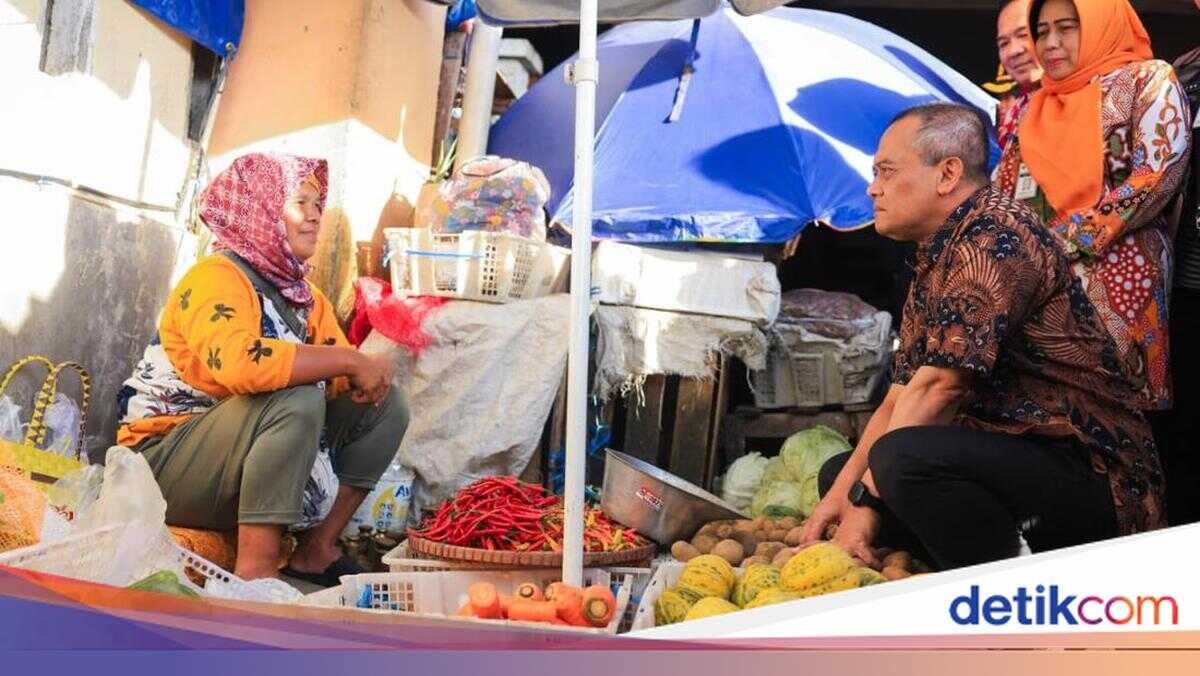
During an inspection visit, Governor Ahmad Luthfi toured the market and spoke with traders and visitors about food prices. Based on his review, food prices were found to be relatively stable at the market.
However, there were price increases for several key staple goods. Red cayenne chillies and shallots, for instance, were both priced above the government reference purchase price (HAP).
During the inspection, Luthfi immediately instructed the Director of Jateng Agro Berdikari (JTAB) to conduct market operations targeting the staple goods that had experienced price rises.
“Coordinate with the relevant agencies and institutions,” Luthfi said in a written statement on Friday (20 February 2026).
To ensure food stocks, price stability, and affordability of food staples, Luthfi, through the Provincial Food Security Agency, will hold 308 Affordable Food Campaign (Gerakan Pangan Murah/GPM) events.
“These activities will be held through March 2026 across all regencies and cities,” he explained.
Meanwhile, Sri Broto Rini, Head of the Food Availability and Supply Stabilisation Division at the Central Java Food Security Agency, said Central Java has a large food surplus, particularly in rice. However, demand has been increasing ahead of the religious holiday period.
“Entering Ramadan, stocks of all 12 strategic food commodities in Central Java remain secure,” Rini said.
Rini explained that food prices had indeed risen in recent weeks, particularly as Ramadan approached. One commodity that has risen significantly is chilli, with the average price in Central Java at around Rp 80,000 per kilogram at the consumer level.
“There have also been increases in several food commodities at the consumer level, such as chicken and beef. Prices have started to rise but have not yet reached the HAP threshold, so they are still within safe limits,” she explained.
Regarding the price increases for chillies and other key commodities, Rini said these were also influenced by rising demand from outside Central Java, particularly from Jakarta. Chilli prices in Jakarta have currently reached around Rp 100,000 per kilogram, prompting many traders to ship supplies there.
“As a result, prices in Central Java have also risen, although not as significantly as in Jakarta,” she said.
To address the chilli price increases, the provincial government has carried out a number of interventions, including consumer-level price subsidies.
“We have assigned JTAB to sell chillies at Rp 65,000 per kilogram, so that consumers can afford them more easily,” she concluded.