
Central Information Commission Partially Grants Former KPK Employees' Request Regarding Nationalism Insight Test
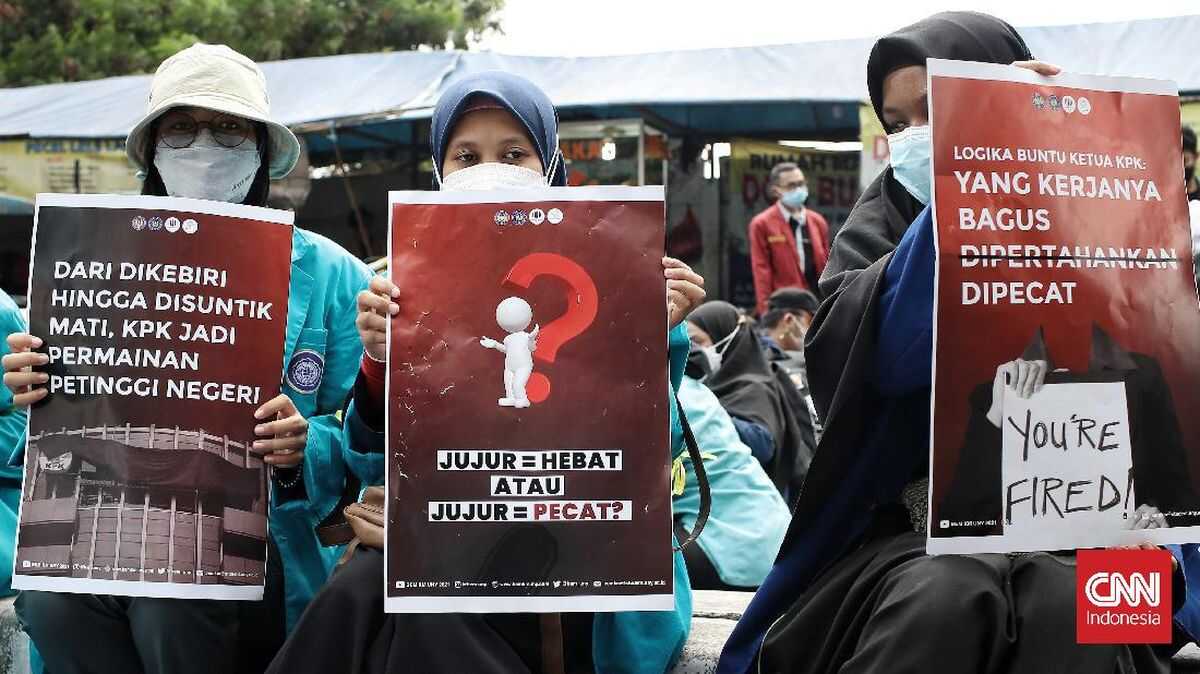
The Central Information Commission (KIP) panel has partially granted the request of former Corruption Eradication Commission (KPK) employees who were victims of the Nationalism Insight Test (TWK) conducted as part of the transition process to civil servant (ASN) status.
The KIP panel declared that TWK documents constitute partially open information, meaning the applicants may obtain access to them with the names of assessors redacted, in accordance with the information access mechanism stipulated under Article 22 paragraph 7 letter e of the KIP Law in conjunction with Article 50 paragraphs 2 and 3 of the KIP Regulation on Public Information Service Standards (Perki SLIP).
“The information requested by the Applicant as referred to in paragraph 4.28 is declared Partially Open Information solely for the Applicant, provided it does not contain personal confidential information of other parties as outlined in Article 17 letter h points 4 and 5 of the KIP Law,” said KIP Panel Chairperson Rospita Vici Paulyn whilst reading the verdict of dispute number 043/XI/KIP-PS/2021 at BSG Wisma Annex Building, Central Jakarta, on Monday (23 February).
The information dispute was adjudicated by KIP Panel Chairperson Rospita Vici Paulyn with members Arya Sandhiyudha and Samrotunnajah Ismail. The substitute clerk was Sri Mulyani Sutar.
The KIP panel annulled the determination by the Information and Documentation Management Officer (PPID) of the National Civil Service Agency (BKN) Number 2 of 2021 concerning the Classification of Exempt Information.
The KIP panel ordered BKN to provide the information requested by the Applicant as referred to in paragraph 6.3 solely to the Applicant, in accordance with the information provision mechanism stipulated under Article 22 paragraph 7 letter e of the KIP Law in conjunction with Article 50 paragraphs 2 and 3 of Perki SLIP, namely by redacting or obscuring exempt information material concerning the personal information of other parties.
“The Respondent (BKN) is ordered to provide the information requested by the Applicant as referred to in paragraph 6.4 to the Applicant after this ruling has obtained permanent legal force (inkracht van gewijsde) and to charge the copying costs to the Applicant,” the judge stated.
In its considerations, the KIP panel stated that BKN had erred and been inconsistent by classifying public information as exempt public information without first having possession of the information in question, rendering BKN’s consequentiality test irrelevant and properly inadmissible.
The KIP panel considered that BKN, as the administrator of governmental duties in the areas of formulating and establishing technical policies, guidance, service delivery, control over the implementation of ASN management technical policies, and oversight of the merit system’s application — and having been granted authority in administering the selection process at the Applicant’s workplace — possesses the requested information.
“Considering that regarding the information requested by the Applicant as outlined in paragraph 4.28 point 2 letters d and e, as well as point 7 in the examination of Related Parties as described in paragraphs 2.15 through 2.18, and being of the opinion that with consideration of public interest aspects which reveal the identities and assessment results of assessors who are also protected by personal confidentiality interests, as per the application of Article 17 letter h, this also applies to other parties in this dispute,” the KIP panel stated.
“Therefore, the panel is of the opinion that this constitutes partially open information solely for the Applicant and may be provided only to the Applicant, so it is appropriate that the Respondent grant access to the information in question only to the Applicant by redacting or obscuring the names of assessors in accordance with the information access mechanism for public information applicants based on Article 22 paragraph 7 letter e of the KIP Law in conjunction with Article 50 paragraphs 2 and 3 of Perki SLIP,” the panel added.