
Celios: Energy transition and APBN revision to safeguard the fuel supply amid conflict
Jakarta (ANTARA) - The Center for Economic and Law Studies (Celios) believes that an accelerated energy transition and revisions to the APBN can safeguard the reliability of the fuel supply amid the escalation of conflict in the Middle East that could disrupt supply chains and prices.
Celios Executive Director Bhima Yudhistira Adhinegara, contacted in Jakarta on Wednesday, said the measures the government can implement to accelerate the energy transition include maximising the use of renewable energy sources such as hydro, wind and solar.
‘Accelerate the energy transition by utilising renewable energy sources from water, wind, and solar,’ he said.
According to him, faster electrification, especially in public transport based on electric vehicles (EVs), will help reduce Indonesia’s dependence on imported fuel.
In addition, reducing the dependence of power generation on fossil fuels will be key to dampening the impact of global oil price volatility on the domestic economy.
On the other hand, Bhima stressed the importance of strengthening fiscal cushions to safeguard the financial health of energy state-owned enterprises, particularly Pertamina and PLN.
He assessed that the APBN revision, standing for Anggaran Pendapatan dan Belanja Negara (State Budget/General Budget), needs to be undertaken promptly to anticipate a surge in energy subsidy burdens if world oil prices continue to rise.
Budget reallocations, he continued, should be carried out by shifting non-priority spending rather than through new debt, so that fiscal risks remain under control.
‘Budget reallocations to energy subsidies are urgently needed. It is estimated that an additional allocation of up to Rp340 trillion will be required to prevent the deficit from widening. Reallocation should not involve new debt,’ he said.
In other news, the United States and Israel carried out a series of strikes against targets inside Iran, including in Tehran, with reports of damage and civilian casualties.
Iran responded with missile attacks on parts of Israel and US military facilities in the Middle East as an act of self-defence.
Iran has launched the ninth wave of attacks against Israel and American targets in the Middle East, according to a statement by the Islamic Revolutionary Guard Corps (IRGC) on Sunday, 1 March.
‘The ninth wave of Operation True Promise 4 has begun against targets across the occupied territories and US targets in the Middle East,’ IRGC said, cited by IRIB television.
IRGC stated that Iran’s air force had destroyed the THAAD missile defence system in an attack on Al Dhannah, United Arab Emirates.
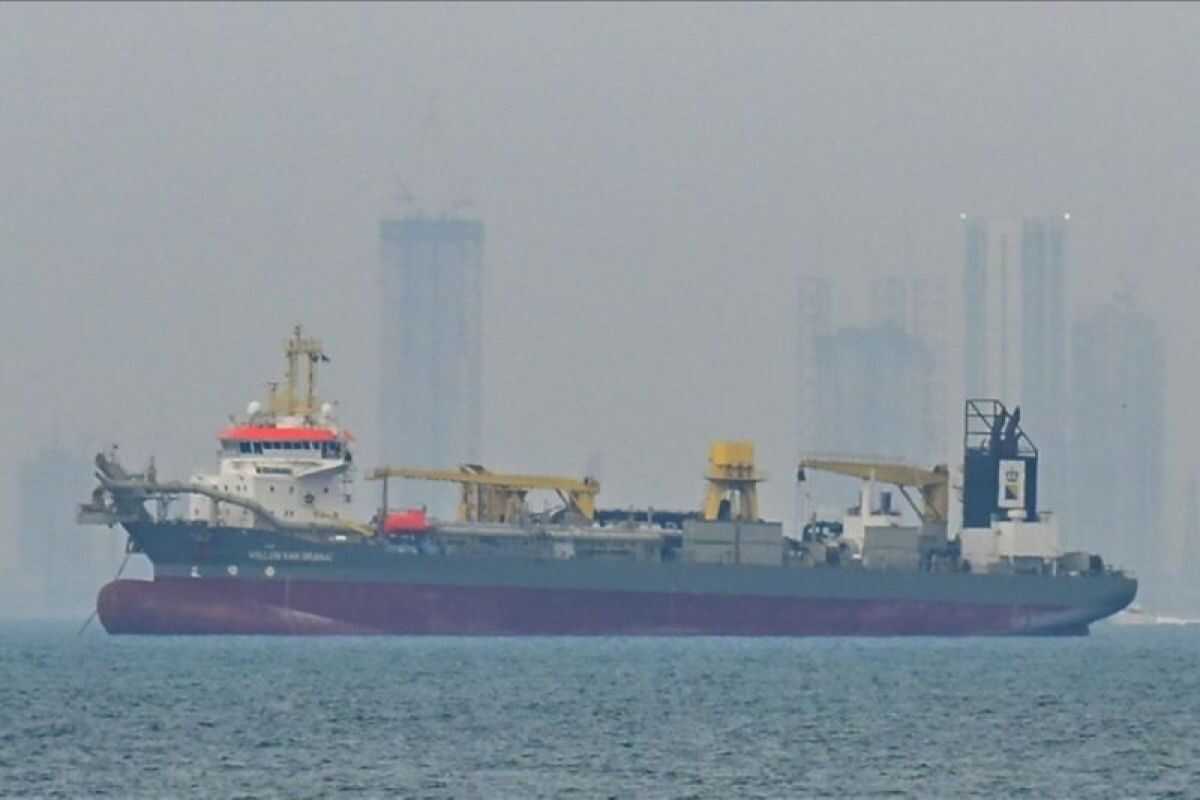
As a result of the conflict, around 200 tankers are stuck at the entrance to the Strait of Hormuz in the Gulf of Oman on Tuesday, 3 March, increasing the total number of stuck vessels to 300, according to MarineTraffic data analysed by RIA Novosti.
Currently no tanker is transiting the Strait of Hormuz, which connects the Persian Gulf with the Gulf of Oman and the Arabian Sea. Geographically, the north coast of the Strait belongs to Iran, while the southern coast is shared between the United Arab Emirates and Oman.
The intensifying conflict in the Middle East has halted shipments through the Strait of Hormuz, the main route for world oil and LNG supplies from Gulf states.