
Celios Assesses that Raising Non-Subsidised Fuel Prices Can Safeguard Fiscal Space
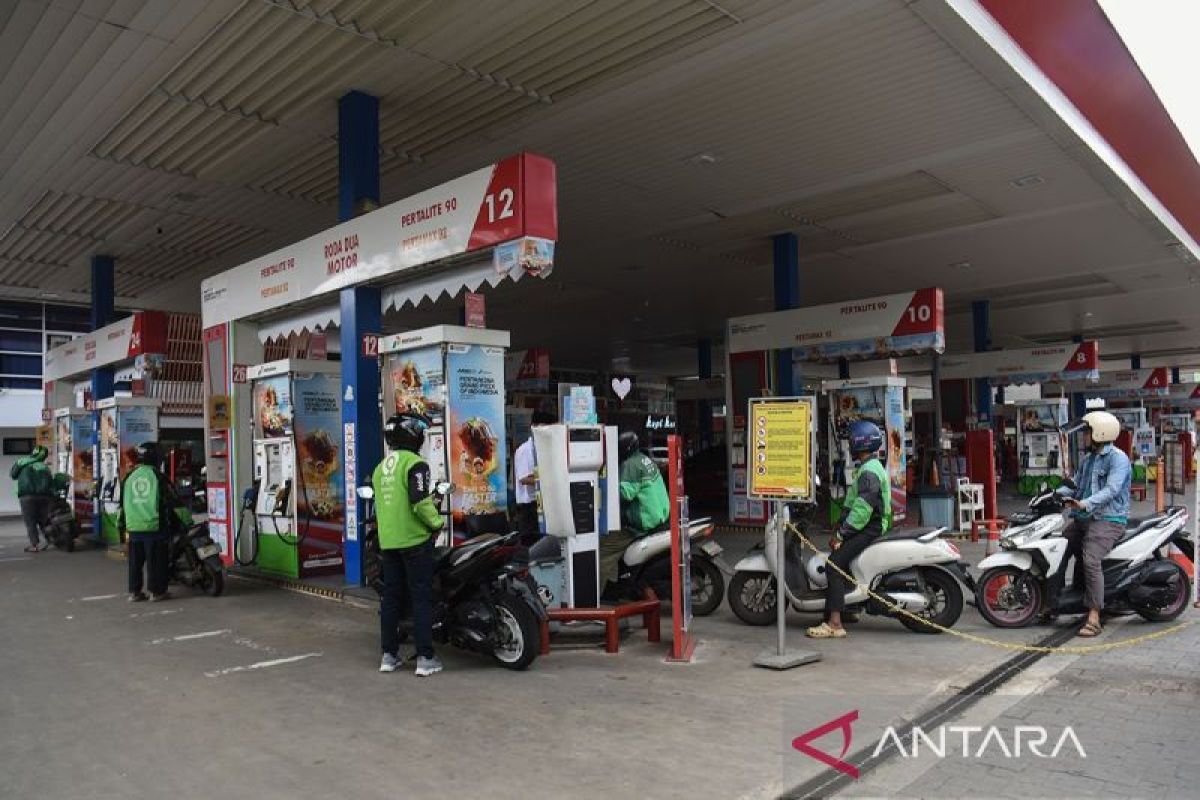
Jakarta (ANTARA) - Public Policy Director of the Center of Economic and Law Studies (Celios), Media Wahyudi Askar, assesses that the government’s plan to raise prices of non-subsidised fuels (BBM) can safeguard fiscal space amid high global oil prices.
“Raising the price of non-subsidised BBM is principally correct. The reasons are, first, the pressure on our state budget is quite significant and global oil prices remain very high,” Media stated in his remarks received in Jakarta on Tuesday.
According to him, global oil prices remain very high, so if non-subsidised BBM prices are not adjusted, it will increasingly pressure the State Revenue and Expenditure Budget (APBN) as well as the performance of state-owned and private enterprises.
“Thus, the state’s fiscal burden increases due to energy subsidies and compensations,” Media said.
Media believes that by raising non-subsidised BBM prices, fiscal space can be maintained because it reduces the need for subsidies. He noted that non-subsidised BBM prices have historically followed market developments.
If global market prices rise, the selling price will also increase. If not, it would cause Pertamina to incur losses.
Nevertheless, Media stated that the option to raise the price of Pertamax 92 still carries risks. So far, Pertamax 92 consumers are classified as middle to upper-class society.
Media is concerned that this increase could cause shifts, with those who previously consumed Pertamax 92 switching to Pertalite.
“There are certain vehicles that end up shifting from Pertamax to Pertalite. Thus, Pertalite consumption becomes higher and this actually burdens the APBN as well. This must be anticipated,” he said.
Media also highlighted subsidies that are not well-targeted, which then imply significant pressure on the APBN.
According to him, it is time for the distribution of subsidised BBM to be data-based, not commodity-based, so that subsidised BBM is no longer enjoyed by affluent society. Another solution is to improve public transport.
“Public transport such as trains, buses, and good urban planning need to be supported with better efficiency and comfort standards. In this way, the use of private vehicles can be reduced,” he said.
Overall, to prevent this pattern from recurring, Media hopes the government seeks long-term solutions so that national energy resilience no longer depends on imports.
He encourages strengthening domestic production and efficiency of existing refineries. In addition, Media also assesses the need to accelerate the energy transition to renewables.
Minister of Energy and Mineral Resources (ESDM) Bahlil Lahadalia conveyed that the next stage of non-subsidised fuel (BBM) price adjustments will be influenced by global oil price developments.
Bahlil stated that the first stage of price adjustments has taken place. As of 18 April 2026, Pertamina Patra Niaga will implement new non-subsidised BBM prices for Pertamax Turbo, Pertamina Dex, and Dexlite.
The details of the price changes are: Pertamax Turbo from Rp13,100 per litre to Rp19,400 per litre, Dexlite from Rp14,200 per litre to Rp23,600 per litre, and Pertamina Dex from Rp14,500 per litre to Rp23,900 per litre.
For now, the price of non-subsidised BBM type Pertamax (RON 92) is still maintained at Rp12,300 per litre and Pertamax Green at Rp12,900 per litre.
Pertamina is also still maintaining the price of subsidised BBM type Pertalite at Rp10,000 per litre and Biosolar at Rp6,800 per litre.