
Ceasefire and the Reconfiguration of Geopolitical Hegemony in the Middle East
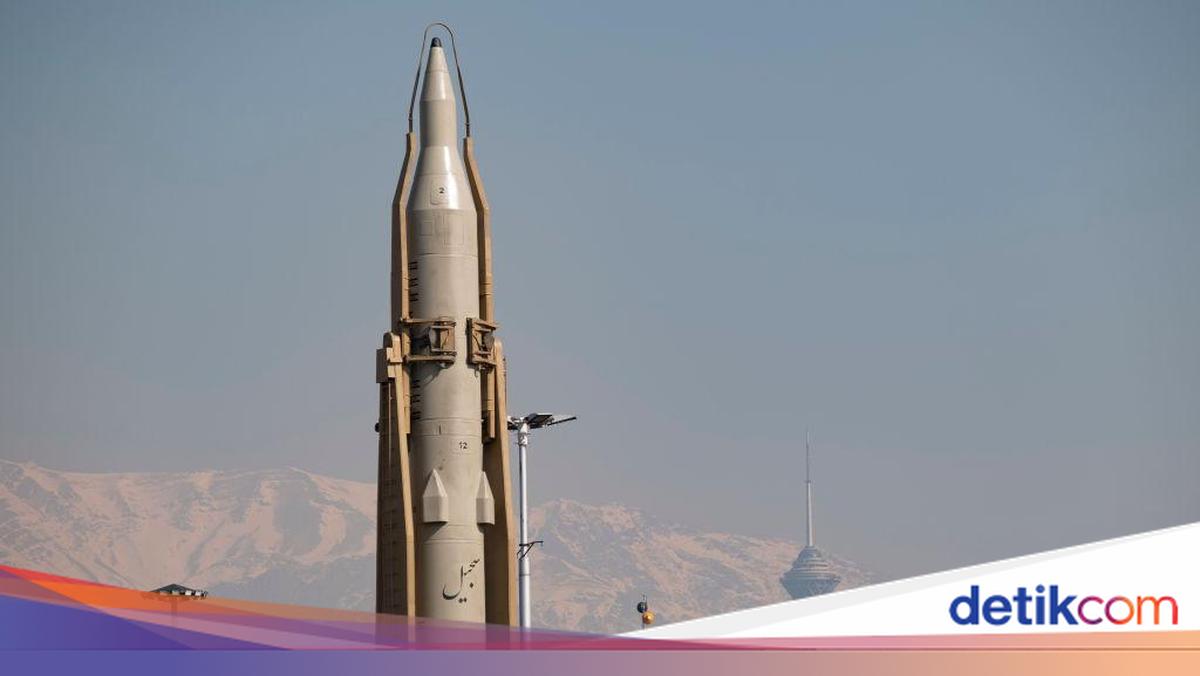
Developments in Middle Eastern geopolitics in recent years have shown increasingly evident changes. The open conflict involving Iran, Israel, and the United States during the 2025–2026 period became a crucial turning point marking a new chapter in regional dynamics. This war was not merely an ordinary military clash but illustrated a fundamental shift in the global power structure, particularly the fading of the traditional dominance of the United States and Israel, alongside the emergence of a new, more flexible power pattern no longer centred on a single country.
Since the collapse of the Cold War, the United States has positioned itself as the world’s primary power with significant influence in the Middle East. Strategic relations with Israel have strengthened that position, evident in various military interventions, influence over energy routes, and a dominant role in shaping the region’s security system.
However, the latest conflict has revealed a new reality. Conventional military superiority does not automatically guarantee strategic victory or long-term geopolitical control.
Diminishing Conventional Military Dominance of the US–Israel Alliance
Examining the post-ceasefire geopolitical situation, the joint US and Israeli military strikes aimed at weakening Iran’s military capabilities and nuclear programme have instead produced outcomes not entirely in line with expectations. Iran did not collapse as predicted. On the contrary, the country demonstrated strategic resilience through a combination of limited military strength, asymmetric warfare strategies, and support from regional allied networks.
Iran’s ability to maintain national stability, launch counterattacks, and retain influence over global energy routes such as the Strait of Hormuz indicates that the concept of military power has undergone change. High-technology dominance is no longer the sole determining factor. Resilience, disruption of enemy systems, and sustained pressure have become new elements in modern warfare strategy.
On the other hand, the fact that Israeli territory remains penetrable by missile attacks despite advanced air defence systems highlights the limits of the effectiveness of classic military supremacy. The concept of deterrence is undergoing redefinition. Technological superiority is no longer absolute when facing dispersed and unpredictable hybrid warfare strategies. Changes are also evident in the position of the United States itself.
The tendency to avoid large-scale ground wars, the reconfiguration of troop deployments, and domestic and international political pressures limit Washington’s role as the “world’s policeman”. This conflict confirms that military interventions do not always produce stability and often create power vacuums that other actors then exploit.
Israel also faces a new reality. As a regionally dominant military power long regarded as such, Israel now contends with multi-front conflicts, pressures from non-state actors, and strategic dependence on US support. This situation shows that Israel’s strength does not stand entirely independently and is heavily influenced by shifts in global alliance configurations.
A Network-Based “Super Power” Model
Amid the weakening dominance of these two powers, a new phenomenon has emerged in Middle Eastern security politics: network-based military power. This power does not manifest as a single hegemonic state but as an interconnected system of influence. Iran serves as the centre of this pattern, leveraging networks of militias and non-state actors in various regions such as Lebanon, Iraq, and Syria to expand influence without always engaging in direct conventional warfare.
This change marks a shift from a state-oriented power model to a network-based one. In this new situation, the ability to coordinate various actors and maintain indirect conflict pressure becomes more important than mere formal military strength. The meaning of “super power” has thus changed. It is no longer a state with the largest arsenal but an actor capable of controlling conflict dynamics sustainably.
In addition to Iran, several regional countries such as Turkey, Saudi Arabia, and the United Arab Emirates are also strengthening the independence of their geopolitical and military strategies. They no longer fully rely on the US security umbrella but are building pragmatic approaches through more flexible alliances, including relations with other global powers such as China and Russia.
This transformation aligns with changes in the international system towards a multipolar world. Indirect support from Russia and China for Iran demonstrates that the Middle East has now become a far more complex arena of great power competition. Single dominance is increasingly difficult to maintain, while dispersed power becomes the hallmark of the new global order.
Modern warfare is also no longer confined to physical battlefields. Conflict dimensions have expanded to technology, cyber, economic, and informational realms. Narrative battles, influence over global energy markets, and psychological pressure on adversaries are now integral parts of military strategy. Therefore, the concept of “military super power” is increasingly multidimensional.
From these dynamics, the Iran–Israel–United States conflict can be seen as a catalyst for major changes in the Middle Eastern geopolitical structure. The dimming of US and Israeli dominance does not mean the loss of their influence but signals that the old power model is no longer fully relevant in facing a new, more fluid, asymmetric, and fragmented reality.
Looking ahead, the Middle East no longer appears to be under the shadow of one or two great powers. The region is moving towards a new configuration determined by interactions among various actors with diverse interests, strategies, and capacities.