
Caught in the crosshairs: China’s pushback against US sanctions signals tougher era for global business
analysis East Asia
Caught in the crosshairs: China’s pushback against US sanctions signals tougher era for global business
China has invoked its “Blocking Rules” for the first time to counter US sanctions, marking a shift from rhetoric to enforcement, leaving companies caught between conflicting legal systems.
SHENZHEN: When the United States sanctioned five Chinese refiners accused of trading Iranian oil last month, the move was hardly unusual.
But China’s response was.
For the first time, it invoked its “Blocking Rules”, a 2021 measure formally known as the Rules on Counteracting Unjustified Extraterritorial Application of Foreign Legislation and Other Measures.
In essence, it ordered its citizens and companies not to recognise or comply with US sanctions.
Analysts say the move marks one of Beijing’s clearest attempts yet to shift from diplomatic protest towards active enforcement.
“It signals that China is no longer just drafting technicalities - it is building a systemic legal fortress to shield its industry and supply chain,” Carl Li, an equity partner at Zhong Lun Law Firm in Shanghai, told CNA.
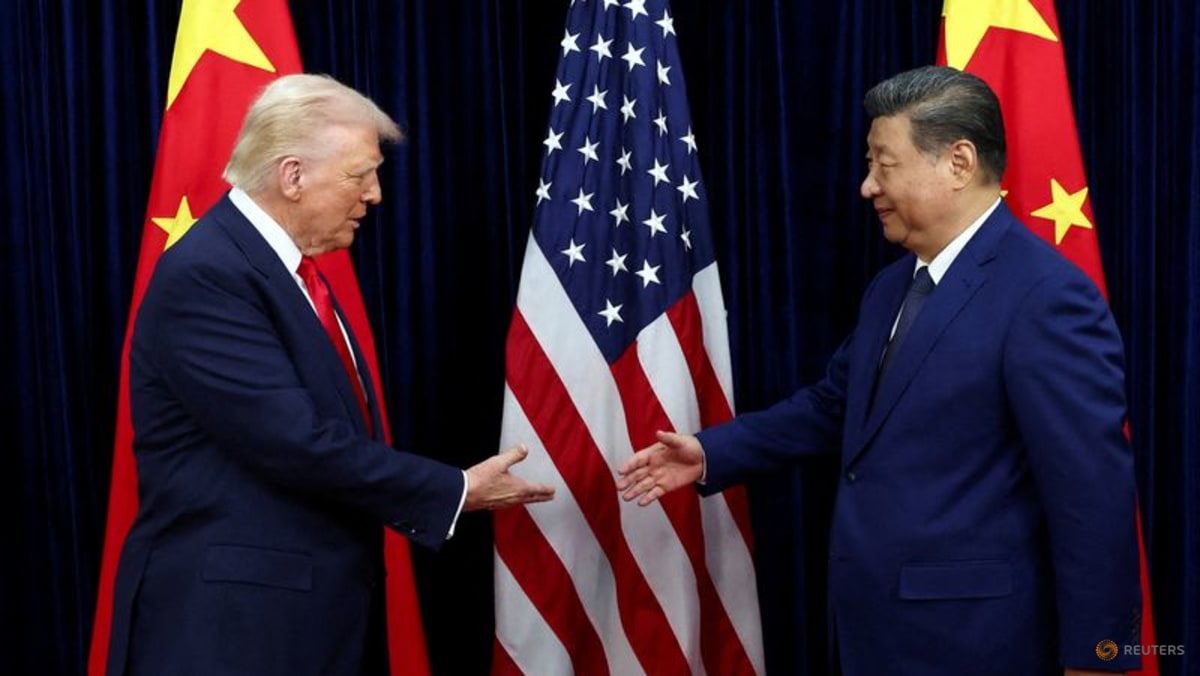
The move comes ahead of a high-stakes meeting between US President Donald Trump and Chinese President Xi Jinping in Beijing next week, underscoring how sanctions are increasingly being wielded as leverage in broader strategic competition.
It also puts companies squarely in the crossfire of competing US and Chinese rules, creating what analysts describe as a compliance catch-22.
FROM RHETORIC TO ACTION
China is a key customer for Iranian oil, much of it processed by smaller independent “teapot” refineries that rely on discounted crude from the Islamic Republic.
Tensions escalated in late April when the US imposed sanctions on Hengli Petrochemical, a Chinese petrochemical giant, along with four other smaller Chinese refiners over their purchases of Iranian oil.
China’s commerce ministry responded - issuing a ban prohibiting any recognition, enforcement or compliance with US sanctions imposed on the five Chinese companies, according to a statement released on May 2.
“The move is aimed at safeguarding national sovereignty, security, and development interests, and protecting the legitimate rights and interests of Chinese citizens, legal persons, and other organisations,” the ministry said, adding that the prohibition order “took effect immediately”.
“The Chinese government opposes illicit unilateral sanctions that have no basis in international law or authorisation of the UN Security Council,” read a report published on May 6 by the Global Times state tabloid which quoted Chinese foreign ministry spokesperson Lin Jian.
WHY NOW?
So why is Beijing pushing back now - right before the planned Trump-Xi meeting?
“Showing one’s red line before entering the negotiating room is more effective than trying to fight for principles after sitting down at the table,” said Yan Xing, a research fellow at the Guangzhou Institute of the Greater Bay Area (GBA).
Yan said the Iranian oil trade “is not an issue Beijing is willing to quietly concede”.
The timing also carries both legal and diplomatic significance, coming amid tensions linked to Iran and uncertainty surrounding the upcoming meeting, highlighting how energy security and sanctions are increasingly tied to broader US-China relations.
“This is the game-changing phase,” Cameron Johnson, a Shanghai-based senior partner at supply chain consultancy Tidalwave Solutions said.
“(China) views supply chain security as national security.”
Experts said the latest measures also form part of a legal and regulatory “toolbox” that includes export controls, data rules and national security reviews.
Recent moves - such as the blocking of Meta’s proposed acquisition of AI startup Manus - could also be viewed within this broader framework.
But some caution against viewing the latest step as a full-scale escalation.
Yun Sun, director of the China programme at the Stimson Center, believes China’s response to US sanctions “could have been more intense”.
“The Chinese authorities did not impose counter-sanctions on US companies - nor did they touch on the sensitive issue of rare earth minerals,” she said.
CAUGHT BETWEEN TWO SYSTEMS
The latest anti-sanctions measures leave companies facing a stark choice: comply with US sanctions or Chinese law.
This creates legal tension for companies operating across US and Chinese systems.
Complying with US sanctions risks violating Chinese rules, while ignoring US restrictions could trigger American penalties, including losing access to the US financial system.
Zhong Lun Law Firm’s Li said multinational firms were increasingly facing what he described as an “Odysseus dilemma” - where complying with one side could expose them to penalties from the other.
“Complying with US sanctions may put a company in direct violation of Chinese blocking orders, while ignoring those US mandates leads to severe risks in US markets,” he said.
Foreign banks, for example, that handle payments for Chinese clients may face pressure from Washington to cut ties with sanctioned entities.
But refusing transactions with such clients could also create legal risks in China under the anti-sanctions framework.
Dai Menghao, a Shanghai-based partner at King & Wood specialising in export controls and sanctions, said banks were among the sectors already paying close attention given their role in handling accounts, loans and payments tied to sanctioned entities.
“In previous practice, banks would close accounts … for special accounts, like US dollar accounts, they would block (them),” he said.
“In some cases, they would demand companies repay outstanding loans in advance - but right now, they (banks) will be more cautious about making such decisions.”
The impact extends well beyond the refiners, analysts said - affecting banks, insurers, shipping firms, suppliers and multinational companies operating across sensitive supply chains.
Sectors tied to strategic industries - including