
Caucus (for) Peace
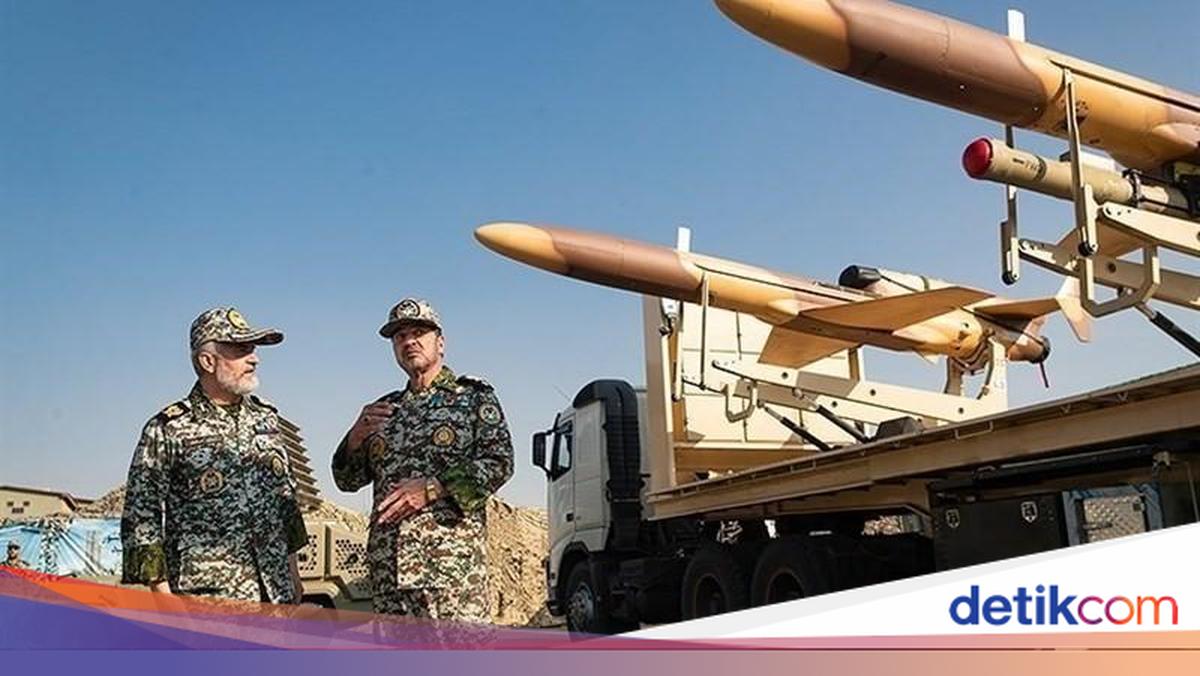
The US-Israel attacks on Iran, which have been ongoing for more than a month, have now expanded to surrounding areas. Not only have they driven up global fuel prices, but the conflict has also had a “direct impact” on Indonesia, particularly following the deaths of three TNI soldiers involved in the UNIFIL mission in southern Lebanon. Several international media reports indicate that the attack was carried out by the Israeli Defence Forces (IDF), although Tel Aviv has denied this. Condemnations of Israel have come from around the world, given that the assault on UN-flagged forces—borrowing the words of a UNIFIL official—is something “unacceptable”. This is diplomatic language to express strong condemnation.
Parliaments in various countries have been seeking ways to de-escalate tensions in the region since the beginning. This includes Indonesia’s House of Representatives (DPR RI), which at the opening of its session on 10 March 2026, condemned the invasion of a sovereign state and also expressed condolences for the death of Ali Khamenei. The DPR Speaker, Puan Maharani, stated that the conflict in the Middle East, which relies on military force, has disregarded the principle of respect for state sovereignty. “It demonstrates the domination of one country over another. It ignores the role of multilateral institutions in preventing broader conflicts, as well as the failure of the global security system, which is no longer able to guarantee a balance of interests between nations.”
Following up on this step, it is important for the Indonesian parliament (DPR and DPD) to expand—even formalise—the DPR Speaker’s call through various diplomatic channels. The same has been done by the Inter-Parliamentary Union (IPU), the parent organisation of world parliaments. The IPU has emphasised several issues, including respect for international law. In this context, the IPU stresses the obligation of all parties to respect the UN Charter, appreciate the principle of state sovereignty, and comply with international law. This shows that the IPU operates as a norm entrepreneur, not a military actor.
Optimising the IPU
In addition, the IPU has highlighted the war’s humanitarian impacts, including expressing concern over the significant number of civilian casualties. Therefore, the forum views the escalation as a serious threat to regional and global stability. Consequently, the IPU promotes de-escalation through parliamentary diplomacy, urging all parties to return to dialogue and continue negotiations. Furthermore, the alliance offers support to facilitate parliaments of member states and encourages peaceful solutions based on diplomacy.
In an effort to continue the IPU’s role and the DPR Speaker’s mandate, the DPR and DPD recently initiated a caucus in parliament to push for an end to the use of violence. Thus, the World Peace Parliamentary Caucus (WPPC) was born, declared on 6 April. This forum is an informal network that voluntarily invites all members of the DPR, DPD, and MPR RI.
In the short term, the WPPC will conduct global peace campaigns to the public, issue demands to the government, and encourage world involvement in resolving conflicts by prioritising non-violent methods. Furthermore, WPPC members will also communicate with ambassadors of conflicting countries (Iran, US), as well as influential countries (Vatican, European Union, Arab League, ASEAN), and others.
The considerations for promoting the birth of the Caucus are, first, that the war situation that began with Russia vs Ukraine in 2022 has not yet ended. Added to this is Israel’s attacks and genocide against Gaza since 2023 until now. Second, that the armed conflict between the Islamic Republic of Iran and Israel and the United States (US) has developed into an open multi-front war that threatens global stability, triggers a humanitarian crisis, and disrupts world energy and food security.
Third, that military escalation in southern Lebanon has increased risks to UN peacekeeping forces, including Indonesia’s contingent in the UNIFIL mission. Fourth, that the fall of three TNI soldiers in carrying out the world peace mandate is a humanitarian tragedy as well as a serious violation of the principle of protecting peacekeepers.
The foundation of this movement is based on the mandate of the Constitution of the Unitary Republic of Indonesia (NKRI), particularly the Preamble of the 1945 Constitution, which affirms that “Independence is the right of all nations and colonialism in the world must be abolished,” and “… to maintain world order based on eternal peace, independence, and social justice”. After a series of discussions with the declarators, ten demands of the WPPC were agreed upon in responding to the current situation.
Protect Peacekeepers
First, condemning military aggression. The Indonesian Parliament (DPR/DPD/MPR RI) strongly condemns all forms of military aggression carried out by any party that expands conflict and causes civilian casualties. Second, ensuring the safety of Hajj implementation. The importance of pursuing de-escalation throughout the Middle East to guarantee the safety of Hajj pilgrims who will soon perform the pilgrimage. Third, rejecting war as a political instrument. Affirming that war is not a legitimate solution in resolving international conflicts and contradicts International Humanitarian Law.
Fourth, calling for an immediate ceasefire and end to the war. Urging the implementation of a total and unconditional ceasefire in all conflict areas, including Iran, Israel, Palestine, and Lebanon. Fifth, the importance of protecting civilians. Demanding that all parties respect the Geneva Conventions, stop attacks on civilians, medical personnel, and public facilities.
Sixth, protection of UN peacekeeping forces. In this regard, the Caucus strongly condemns Israel’s attack on UNIFIL forces, especially over the deaths of three TNI soldiers, and demands full security guarantees for all peacekeepers.
Seventh, strengthening Indonesia’s position as a frontline guard of world peace.