
Cattle Traders in Sleman Anxious as Sacrificial Animal Sales Slump This Year: Usually Sold 30 Already
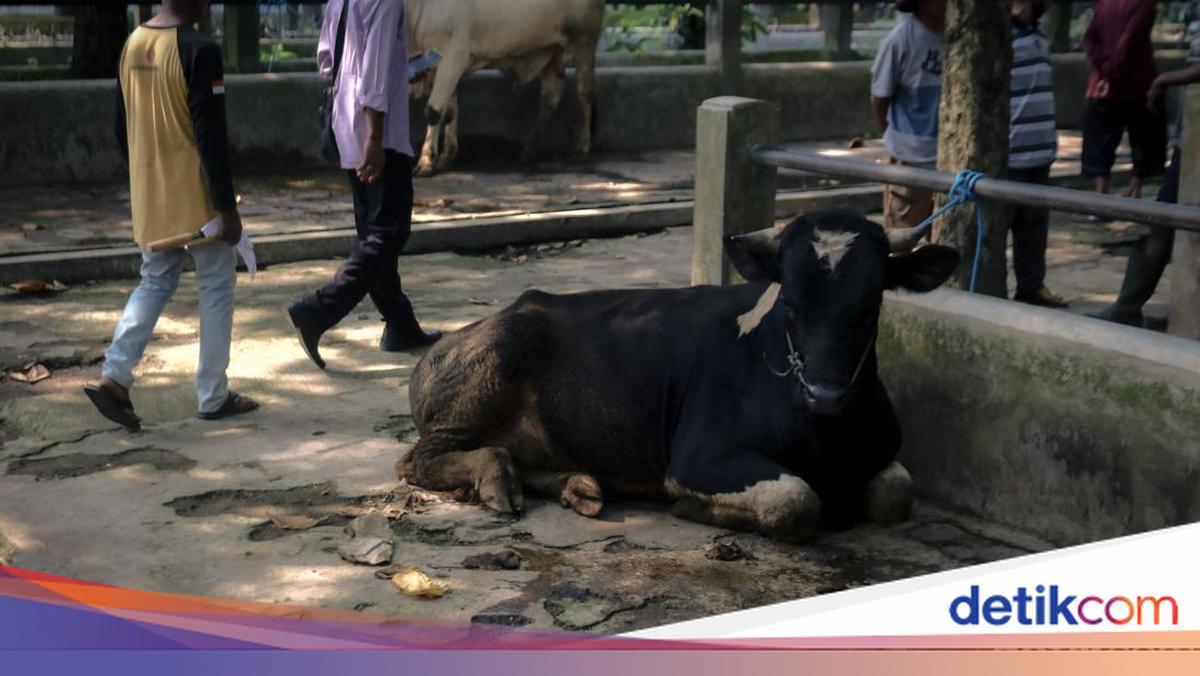
The atmosphere at Ambarketawang Livestock Market is not as bustling as in previous years. Approaching Eid al-Adha 2026, several traders are complaining about the lack of buyers, even though the need for sacrificial animals in Sleman is still far from sufficient.
Among the rows of tethered cattle, Sajiyo, a cattle trader from Prambanan, appears to be waiting for buyers who do not arrive. He claims to have brought seven heads of Limousin and Simmental cattle, but not a single one has been sold.
“It’s quiet; right now I’ve brought seven and none have sold. Last year it wasn’t this quiet,” said Sajiyo, when speaking with reporters on Tuesday (5/5/2026).
Based on experience, buyers usually start coming in crowds about two weeks before Eid al-Adha. He hopes something similar will happen this year.
“Usually, two weeks before Eid al-Adha is when it gets busy,” he said.
Nevertheless, cattle prices are still rising. Sajiyo mentioned that prices this year have increased by around Rp1 million to Rp2 million per head. Currently, the cattle he brought are sold starting from Rp27.5 million.
“The cattle are sourced from Wonosari; if the market is busy, it’s there,” he added.
Similar complaints were voiced by Marwanto, a trader from Bantul. He feels there has been a decline in sales compared to the previous year.
“This year it’s down. Usually, I’ve already sold 30 heads by now; this time only 10,” he said.
According to Marwanto, economic conditions are suspected to be one of the factors affecting people’s purchasing power.
“I’m not sure why it’s down. Maybe because of the current economic situation,” he stated.
Amid the traders’ complaints, a different situation comes from the breeder level. Marwanto mentioned that the supply of cattle at the breeder level actually feels insufficient.
“In the villages, directly from breeders, the info is that there are fewer cattle. But for traders, there are few buyers,” he explained.
Meanwhile, Acting Head of the Sleman Regency Agriculture, Food, and Fisheries Office, Rofiq Andriyanto, confirmed the discrepancy between the availability and needs of sacrificial animals, particularly cattle and sheep.
Based on monitoring data, the availability of cattle in Sleman reaches 3,854 heads. However, the estimated need is 9,235 heads. As for sheep in Sleman, there are 7,811 heads recorded, while the need is predicted to be 15,750 heads.
“Thus, there is still a shortage of around 5,381 cattle and 7,939 sheep,” said Rofiq.
Rofiq explained that his office continues to monitor livestock markets and breeder groups to ensure availability as well as the health of sacrificial animals. This is also related to vigilance against animal diseases such as Foot-and-Mouth Disease (FMD) and anthrax.
“Inspections are carried out by checking the animals’ physical condition and their origin details,” he said.
He added that ahead of Eid al-Adha, the number of livestock entering Ambarketawang Livestock Market has actually increased by about 10 percent. Prices have also risen, with cattle increases ranging from Rp1 million to Rp2 million per head.
“Goat or sheep livestock comes from Sleman, Muntilan, Magelang, Gunungkidul, Temanggung, Wonosobo, and Klaten. As for cattle, breeders in livestock groups source some from Sleman, Gunungkidul, Kulonprogo, Magelang, and Klaten,” he concluded.