
Casual stroll hit by rocket debris threatens all life on Earth
Casual stroll hit by rocket debris threatens all life on Earth
Jakarta, CNBC Indonesia - The Earth’s orbit is increasingly crowded with human-made objects. In addition to functioning satellites, space around the Earth is filled with space debris from launches and defunct satellites.
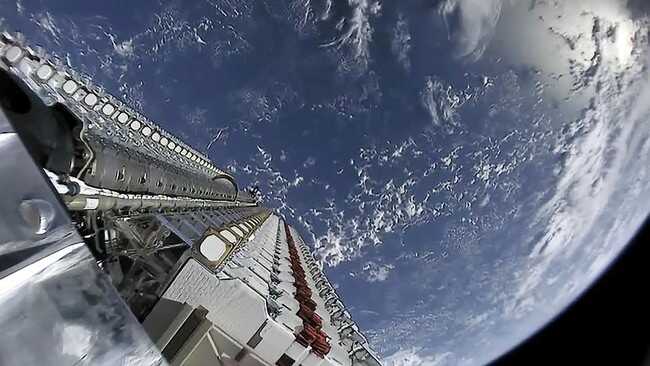
IFLScience states that the amount of space debris in recent years has been accumulating, driven by the ambitions of two of the world’s richest individuals to build a satellite internet network: SpaceX of Elon Musk with Starlink and Amazon of Jeff Bezos with Kuiper.
The number of launched objects has surged. In 1996, there were only 77 launches of objects to outer space. By 2025, 4,000 objects had been launched. There are now more than 18,000 satellites in Earth orbit, half of which are Starlink satellites.
The surge in launches naturally increases the risk of space debris re-entering the Earth. A large portion of SpaceX boosters have fallen on farmland in Canada. Fragments from a Starship that exploded during a launch test in Florida were found in the Caribbean.
Uniquely among the many launches and space debris incidents, only one person has ever been struck by ‘rocket debris’.
According to Guinness World Records, the only documented instance of a person being struck by space debris occurred on 22 January 1997, in Tulsa, Oklahoma. A woman named Lottie Williams who was walking in a park felt an object strike her shoulder and fall to the grass.
The dark object was fibreglass, 12.7 cm long and weighed around the same as an empty can of fizzy drink. Although it fell from space at high speed, the object reportedly slowed significantly by the time it struck Williams. The incident left Williams frightened, though she remained curious. She then retrieved the object from the grass and took it to The University of Tulsa. The university’s astronomy club then contacted CORD, the Centre for Space Debris Research, which confirmed the item as a piece of rocket.
The object that struck Williams was identified as part of a Delta II rocket. In addition to the debris that struck Williams, a 250-kilogram liquid rocket tank was found to have landed in Texas.
Delta II was launched on 24 April 1996. This means the booster had been in orbit for months and partially burned up in the atmosphere.
The potential for similar incidents remains substantial, even though most rocket launches nowadays account for the fall location and timing of rocket debris, including ensuring all parts burn up in the atmosphere.
Recent research using data from 1992-2022 estimates that of 1,500 rockets that have left orbit, 70 per cent have been uncontrolled. Using a population model, the researchers estimate there is a 10 per cent chance of someone being struck by space debris by 2032.