
Career or Family? Stop the Classic Question that Corners Women
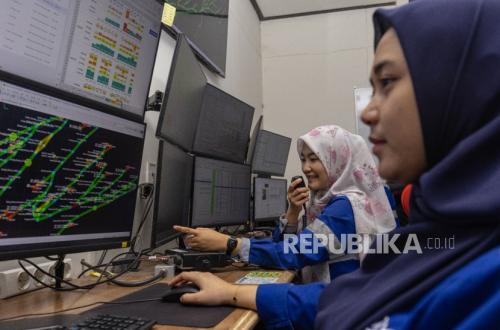
Since 1964, Indonesian society has commemorated 21 April as Hari Kartini. The struggle of Raden Ajeng Kartini in advocating for women’s emancipation and equality has been echoed for the past 61 years.
The question then arises: has equality been realised in the world of work today? Recruitment professional and founder of Headhunter Indonesia, Haryo Suryosumarto, assesses that gender equality in Indonesia’s workplace has not yet been fully achieved. According to him, there remains a quite significant gap between male and female participation in the labour force.
Referring to data from the Central Statistics Agency (BPS) for February 2024, it shows that the female labour force participation rate (TPAK) is at 55.41 percent, while for males it reaches 84.02 percent. “This means that out of 100 women of working age, only about 55 enter the labour force. Meanwhile, for males, around 84 out of 100 are actively working. There is a gap of around 29 points indicating quite significant inequality,” explained Haryo when contacted by Republika on Monday (20/4/2026).
Haryo reveals that the most common inequality appears in the recruitment and selection process. He highlights the presence of subtle signals in candidate requirement descriptions that can indirectly point to a preference for a certain gender.
For example, the term for a candidate who is “tough” or resilient is often interpreted as a candidate who does not take much leave for family reasons and is ready to undertake long business trips. “This indirectly benefits male candidates even though it does not explicitly mention gender discrimination,” said Haryo.