
Carbon Asia Moment: Entering an Era of Real Action and Technology Transparency
For years, discussions on Asia’s carbon market have been confined to discussions of potential and framework development. However, entering 2026, that negotiation phase has officially ended and shifted to an era of real implementation.
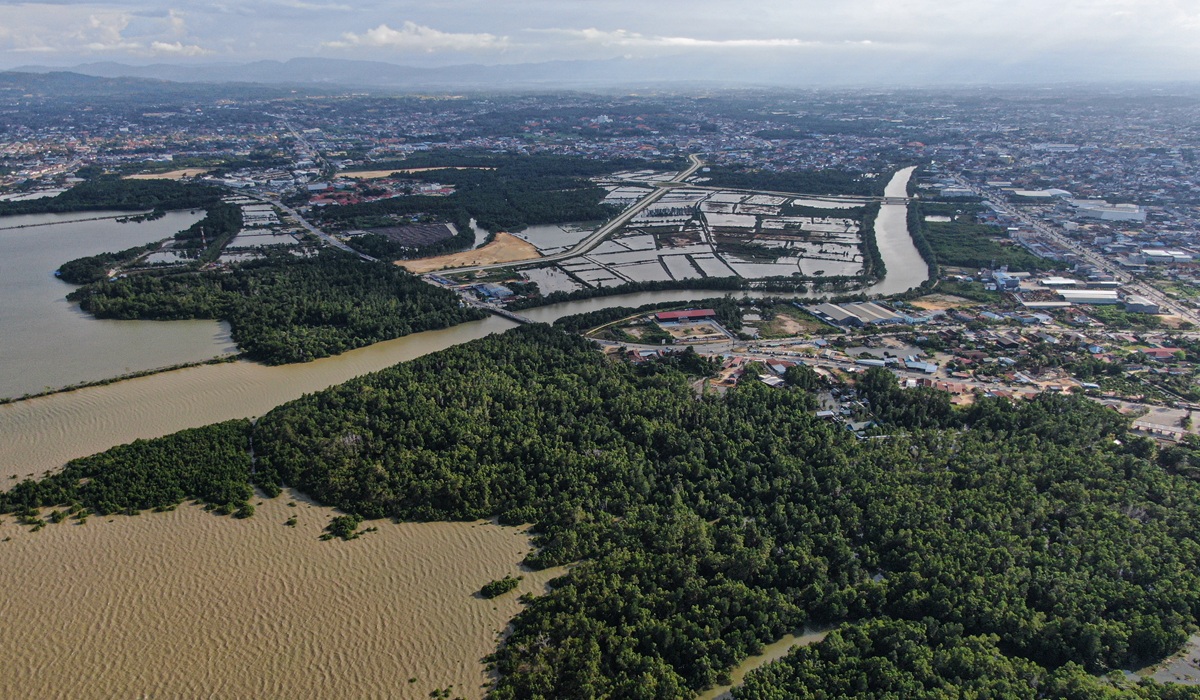
CEO and Chairman of The GrowHub Limited, Lester Chan, emphasised that Asia’s position is crucial in the global climate landscape. “Asia now accounts for more than half of global emissions. The region also possesses some of the world’s most important natural carbon sinks, such as mangrove ecosystems, tropical forests, and mountainous areas,” he said.
According to him, the primary challenge at present is how quickly and credibly the region can generate verifiable impact.
In line with global trends, Southeast Asian countries have begun strengthening their carbon pricing mechanisms. Indonesia, for instance, has launched a carbon exchange called IDX Carbon. This move is supported by Law Number 4 of 2023 on the Development and Strengthening of the Financial Sector (P2SK) and derivative regulations from the Financial Services Authority (POJK Number 14 of 2023).
Neighbouring countries are keeping pace. Thailand has passed a Climate Change Amendment Bill, Vietnam has begun pilot testing an emissions trading system (ETS), and Malaysia is preparing to implement a carbon tax.
This development sends a strong message to the business community that carbon is no longer merely an ancillary issue in ESG reports, but rather a determining factor in corporate costs, risks, and competitiveness.
As the number of projects increases, scrutiny of carbon credit quality has become increasingly stringent. Data shows a market shift away from cheap emission avoidance credits towards high-integrity emission reduction and carbon sequestration projects.
In 2025 alone, investment in new carbon projects tripled, surpassing US$10 billion.
Amid these transparency demands, Measurement, Reporting, and Verification (MRV) has become a vital element. Without reliable data on baselines and the sustainability of impact, the market will lack confidence.
In response to this challenge, Singapore-based technology company The GrowHub Limited has developed an AI and blockchain-based carbon emissions management solution. AI technology is used to monitor and model project performance, whilst blockchain ensures that the data trail generated cannot be altered from the field to the registry.
“This capability is no longer merely an added feature, but rather a basic standard for projects seeking long-term credibility,” said Lester Chan.
Asia’s carbon market is now at a turning point. The coming years will determine whether the region can leverage its natural resources with the integrity the world demands.
The highest priority at present is disciplined and quality implementation, with investors and project developers needing to support robust governance aligned with government policy. Technology support and mature regulation are expected to transform Asia’s considerable potential into measurable real impact for global climate change mitigation efforts.