
Capturing Advertising Potential in the Railway Ecosystem
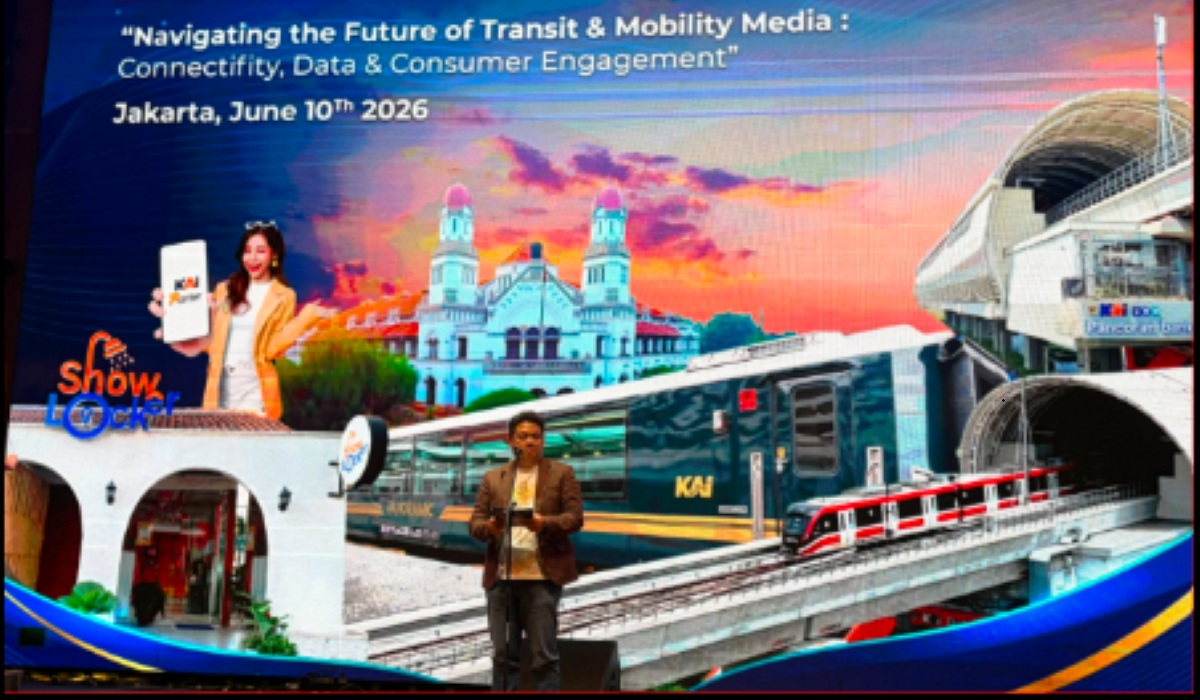
The increasing dynamism of urban mobility has positioned public transport hubs—ranging from KRL, MRT, and LRT stations to airports—as crucial points in daily activities. This phenomenon has led to the emergence of new vertical spaces for the advertising industry, known as Transit & Mobility Media.
Unlike conventional static billboards, media within the transport sector is currently transforming into experiential media. By utilising Digital Out-of-Home (DOOH) technology, mobility data integration, and programmatic advertising, this medium offers the advantage of a captive audience with significant dwell time.
PT Kereta Api Indonesia (KAI), through its subsidiary KAI Wisata, is now managing an extensive media ecosystem. These strategic assets span 9 Operational Areas (Daop) and 4 Regional Divisions (Divre) across Indonesia.
The President Director of KAI Wisata, Raden Agus Dwinanto Budiadji, revealed that KAI currently possesses total assets covering 270 million square metres, spread across 629 stations along 6,957 kilometres of railway tracks. This entire potential is being marketed digitally to reach a broader market.
“As a subsidiary of KAI, we are maximising these assets, from major stations to train carriages, as branding media that reaches more than 430 million passengers annually,” said Agus Dwinanto in a statement on Wednesday.
KAI Wisata offers various collaboration models that can be tailored to brand marketing strategies.
The transformation of these assets is expected to not only increase non-transportation revenue for the KAI Group but also provide added value for creative industry players and brands in reaching the right audience amidst high levels of public mobility.