
Cap Go Meh in Singkawang: The Beauty of Diversity and Tolerance that Brings Positive Energy
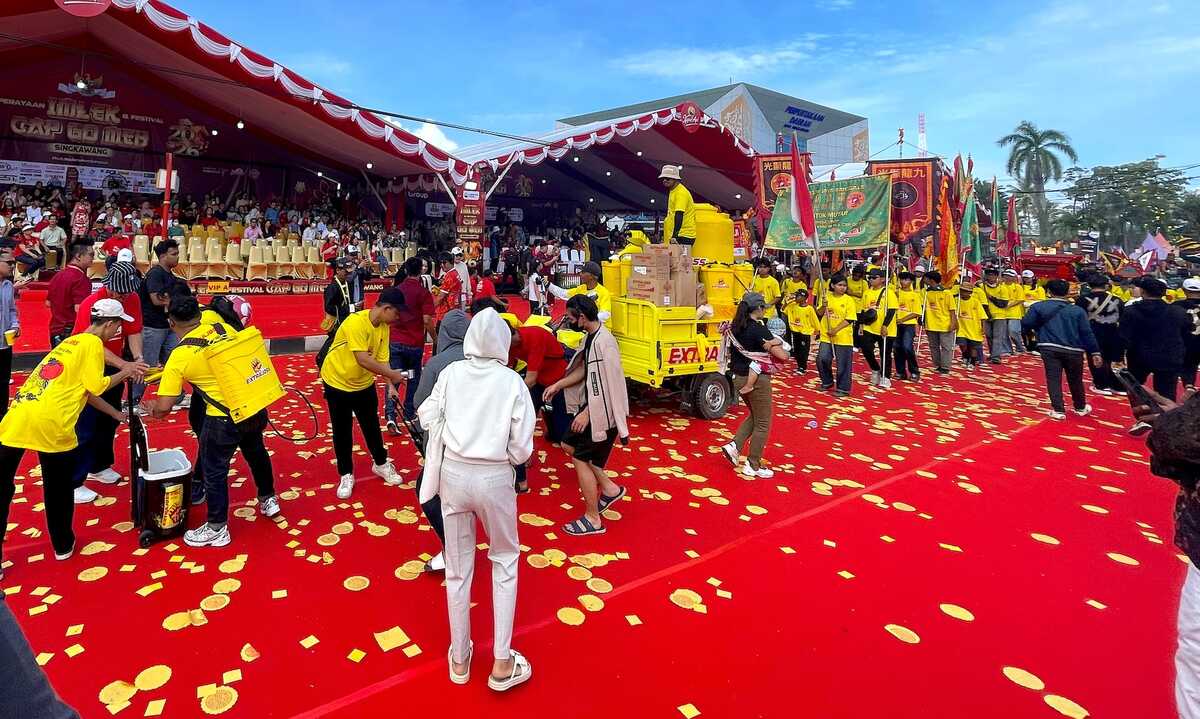
Two major celebrations—Ramadan and Cap Go Meh—were observed simultaneously in early March, reflecting the complexity of Indonesia’s calendar. Muslims observed fasting during the holy month of Ramadan, while Chinese-descended communities celebrated Cap Go Meh on March 3, marking the end of the Lunar New Year. In Singkawang, West Kalimantan, the moment carried extra meaning, as thousands gathered to fill streets with colour and energy.
The city, known as one of the largest Cap Go Meh hubs in Indonesia, buzzed with activity in every corner. Lions danced on the streets, tatung performed ritual dances with deep significance, and parades attracted attention, while a range of local culinary specialties tempted visitors. This year, the festivities were considerably enriched by Extrajoss’s return alongside Bobon Santoso for the third time to celebrate Cap Go Meh. Now in its third year of supporting the festival, Extrajoss continues to demonstrate its commitment to accompanying Cap Go Meh Singkawang and to reinforcing its position as a popular energy drink among residents.
For the Chinese community, Cap Go Meh is not merely a closing ceremony; it symbolises perfection, togetherness, and hopes for ongoing fortune. In Singkawang, the meaning is broader still. The celebration acts as a mirror of daily life: a diverse community living in harmony and mutual respect.
Arwin Nugraha Hutasoit, Head of Marketing at PT Bintang Toedjoe, shared his reflections as he joined the celebration: ‘Singkawang shows how diversity can be nurtured well. Here people remain harmonious, continue to preserve their cultures, and respect one another. This is tangible positive energy.’
Singkawang is often cited as a symbol of harmony. People from Chinese, Malay, Dayak, and various other ethnic groups live side by side, safeguarding their respective traditions without treading on others. Cap Go Meh in this city is not only an annual cultural tourism event but a real embodiment of cooperation that has taken root in the daily life of its residents.
This sentiment is reflected in the SETARA Institute’s 2024 City Tolerant Index, which ranked Singkawang second among Indonesia’s most tolerant cities, just behind Salatiga, out of 94 cities assessed nationally. The score is not just a number; it represents a space of tolerance that is cared for and cherished by the community.
Amid recent challenges faced by society, Singkawang presents a warm and calming picture of Indonesia. Traditions remain alive and continue to develop. Diversity is not merely accepted but celebrated. Differences are not barriers but colours enriching the whole.
Bobon Santoso adds a distinct flavour to this year’s festival. Known as the Indonesian People’s Chef, Bobon has consistently elevated cuisine from various regions as a simple yet potent way to celebrate diversity. For him, food always has a sincere way of uniting people. At Cap Go Meh in Singkawang, Bobon did not merely attend as a public figure; he mingled with the tatung community and shared energy by distributing Extrajoss during the programme.
‘In my view, Cap Go Meh is not only a cultural celebration but also a celebration of taste. Cap Go Meh lontan (Lontong Cap Go Meh) is, for example, a symbol of acculturation—a fusion of Chinese and Nusantara cultures on one plate. That’s what makes Indonesia special,’ he said.
This year, Cap Go Meh coinciding with Ramadan demonstrates real and tangible tolerance. Nothing dominates; no one is disturbed; everyone follows their own share, with mutual respect.
‘Celebrating Cap Go Meh during Ramadan is very beautiful. Those who fast remain devout, those who celebrate continue with joy. Everything proceeds side by side without intruding on others. This is a real example of how diversity can be a strength,’ Bobon Santoso added.
For Extrajoss, participating in the celebration carries meaning beyond mere attendance at a cultural event. As a brand associated with energy and an indefatigable spirit, Extrajoss hopes its presence will symbolize support for the togetherness growing in Singkawang, including distributing Extrajoss for free to 20,000 spectators and the tatung community as a symbol of energy. The energy to stay optimistic in the face of challenges. The energy to maintain unity. The energy to move forward together.
In Singkawang, the celebration serves as a reminder of one simple but important truth: Indonesia always has room to live together. From a small city in West Kalimantan, that message feels real.
‘Through this momentum, Extrajoss hopes the spirit of tolerance and togetherness from Singkawang can inspire communities across the archipelago. Because in the face of any challenge, positive energy and mutual respect will always be the foundation of Indonesia. In Singkawang, Cap Go Meh is not simply a celebration. It is about hope. About the belief that differences can walk side by side. And about the good energy that, if nurtured together, can strengthen the nation,’ concluded Arwin Nugraha Hutasoit. (H-2)
One matter he wishes to highlight is the controversy surrounding the purchase of land for Rumah Sumber Waras that had attracted public attention under previous administrations.
The Cap Go Meh celebration was organised by the Jakarta Provincial Government through the Department of Tourism and Creative Economy (Disparekraf) Jakarta at the Glodok Pancoran Chinatown area, West Jakarta.
Mendagri Tito Karnavian attended the Chinese New Year and Cap Go Meh celebration in 2026 in Singkawang. He praised the spirit of tolerance and cohesion.