
Cap Go Meh and Ramadan Celebrations Coexist in Singkawang
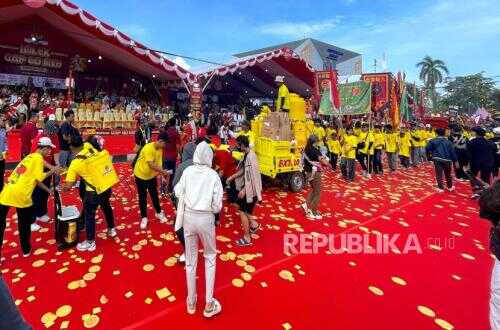
Singkawang, Kalimantan Barat, witnessed two major momentum in early March 2026 running almost concurrently. Muslims observed Ramadan while residents of Chinese descent celebrated Cap Go Meh as the close of the Lunar New Year. In Singkawang, the two celebrations ran side by side without friction, reinforcing the tolerance that has long been rooted in the city. On 3 March, thousands of residents and tourists crowded the city centre to witness the Cap Go Meh festivities. Lion dances, cultural processions, and tatung rituals returned to attract crowds. The event featured Extrajoss again joining Bobon Santoso for the third time to celebrate Cap Go Meh. On the other hand, Muslims maintained their fasting with devotion. There was no dominance, no disturbance. Both momentum unfolded in their own respective measures. Cap Go Meh in Singkawang is not merely a yearly cultural programme; it has become a symbol of a diverse society — Chinese, Malay, Dayak, and other ethnic groups living side by side in daily life. Traditions are guarded, differences respected. This climate of tolerance is also reflected in SETARA Institute’s 2024 City Tolerant Index report, in which Singkawang ranks second among the most tolerant cities in Indonesia, just after Salatiga, out of 94 cities assessed nationally. As a culinary creator who has become a Muslim convert, Bobon Santoso regards Cap Go Meh not just as a cultural celebration, but also as a symbol of the encounter between Chinese and Nusantara cultures on a single plate. “Lontong Cap Go Meh, for example, is a symbol of acculturation. It blends Chinese and Nusantara cultures on one plate. That is what makes Indonesia special,” Bobon said in a press release received on Thursday (5 April 2026). According to Bobon, the celebrations overlapping with Ramadhan showcase concrete tolerance in practice. “Celebrating Cap Go Meh in the midst of Ramadhan, in my view, is very beautiful. Those observing the fast remain devout, while those celebrating do so with joy. Everything proceeds side by side without interfering with one another. This is a real example of how diversity can be a strength,” he added. Head of Marketing at PT Bintang Toedjoe Arwin Nugraha Hutasoit, who attended the celebration, described Singkawang as offering a concrete example of how diversity is nurtured in daily life. “Singkawang shows how diversity can be well maintained. The community remains harmonious, preserves culture, and respects one another. This is a positive energy that is real,” he said. He described his company’s involvement in Cap Go Meh as part of participating in cultural community activities. He noted that the timing with Ramadhan reinforced that religious differences do not prevent creating a shared living space. However, beyond ceremony and participation, public attention remained on the substance of the celebration — social harmony that endures. Amid national social and economic challenges, Singkawang again provides a concrete example that diversity is not just a slogan but everyday practice. From this coastal city in West Kalimantan, a simple yet strong message is reaffirmed: Indonesia has room for difference, and that space can be nurtured together.