
Canadian Students Travel to Bogor to Learn Waste Processing with Maggots
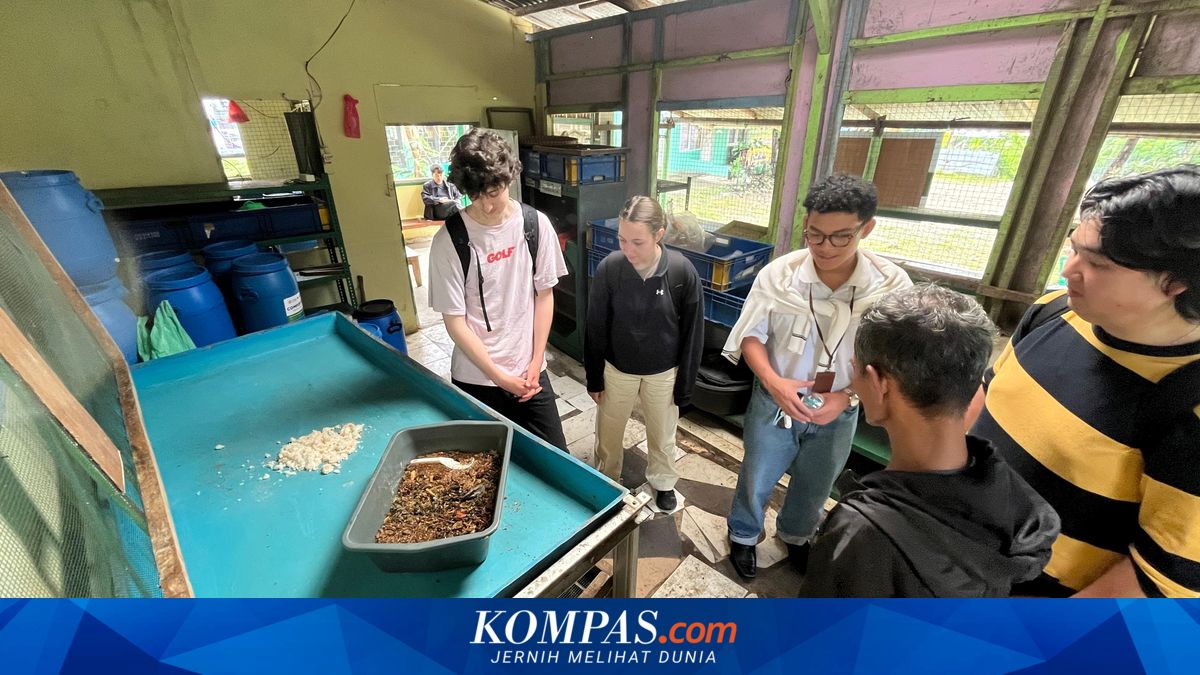
Three students from the University of British Columbia (UBC), Canada, are interested in learning about waste processing using Black Soldier Fly (BSF) maggots as implemented at Bank Sampah Siliwangi, Sukamulya, Bogor City. The three students, namely Adam, Emese, and Nathan, visited the site as part of a collaborative project with Bogor Agricultural Institute (IPB) on environmentally based waste management. For Adam, waste processing using BSF maggots is a method he had never considered before. “And it seems this has brought many (opportunities), I don’t know, many opportunities for the community,” said Adam to Kompas.com in Sukamulya on Tuesday (12/5/2026). Meanwhile, Emese assessed that the use of maggots is not only beneficial for processing waste but can also be utilised as animal feed. “So it’s interesting to see that there is another alternative besides machines. And we need to return to more natural processes rather than always focusing on machines and technology,” she said. A similar opinion was expressed by Nathan. He assessed that Bank Sampah Siliwangi presents a nature-based waste management solution that is relevant for implementation in the community. “And besides the nature-based solution, I feel it’s amazing that they also focus on education for younger communities to, yes, raise awareness about the importance of waste sorting and environmental protection,” he said. For information, Bank Sampah Siliwangi in Sukamulya, Bogor City, has utilised BSF maggots to break down food waste residues. According to Dadang, the use of maggots initially caused disgust among some residents when first introduced. However, over time, that perception changed after residents understood its benefits in waste processing. “At first, many were squeamish. But gradually they got used to it, even now some hold maggots without gloves,” said Dadang. In addition to being able to break down organic waste quickly, BSF maggots also produce residue that can be used as organic fertiliser, while the larvae can be used as economically valuable animal feed. Dadang hopes this method can become more widely known and implemented as one of the solutions for reducing waste at the source.