
Can Thailand's New Government Fulfil Its Economic Promises?
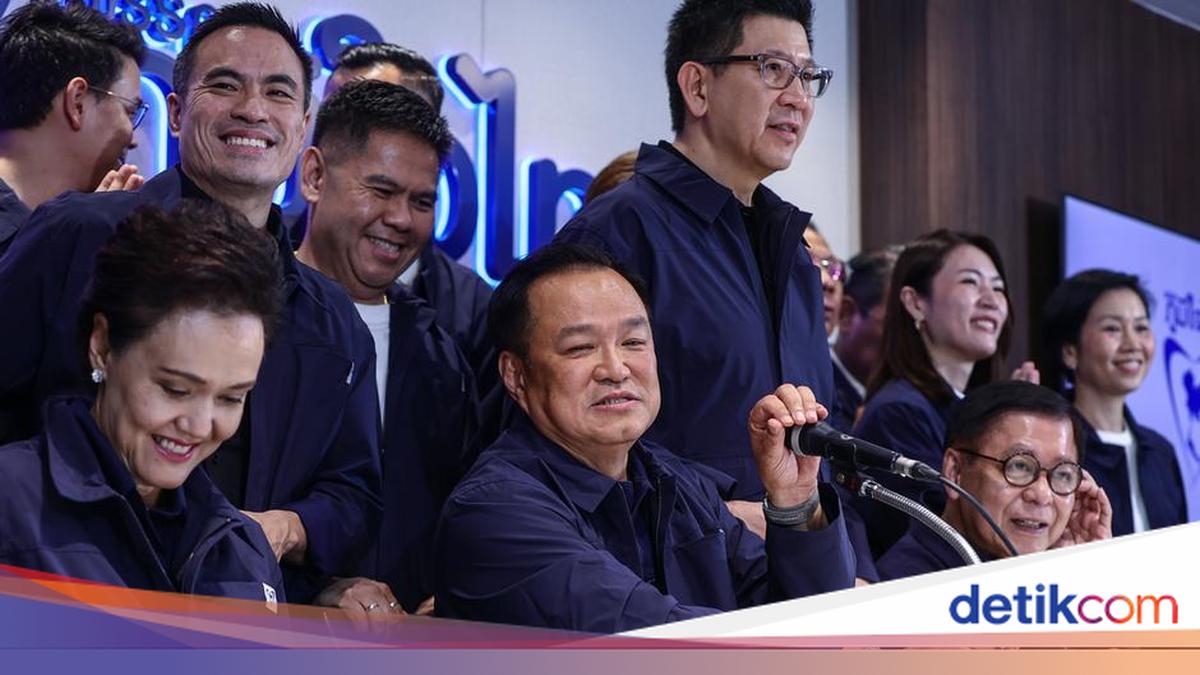
Last week, Thailand’s parliament approved Anutin Charnvirakul as prime minister after his conservative party, Bhumjaithai, achieved a resounding victory in last February’s general election. This election makes him the first Thai prime minister to be re-elected in the past twenty years.
His coalition, which includes the populist Pheu Thai party, now controls 292 seats in the new parliament. Most pre-election polls had anticipated a tighter race with the progressive People’s Party, successor to the Move Forward Party, which had previously taken first place in the 2023 election.
Many view this victory as indicating the public’s priority on stability over change, and nationalism over reform, especially after Anutin successfully made the Thailand-Cambodia border conflict a central campaign issue.
Aim Sinpeng, a lecturer at the University of Sydney, told DW that Anutin’s re-election shows support for the status quo, rather than a conservative reaction to progressive changes in Thailand.
“Voting for Bhumjaithai means no major changes are expected at a time when surveys show that the majority of Thais are most worried about economic uncertainty and vulnerable living conditions,” she added.
The government faces economic challenges
High household debt, weak domestic demand, a strong baht value, trade uncertainty, and pressure on exports have weakened Thailand’s economic growth in recent years.
Economic concerns could determine Anutin’s second term. Thailand’s economy remains among the weakest in the region, with various forecasts placing 2026 growth at around 1.6 to 2 percent.
Among Southeast Asian countries, Vietnam records faster GDP growth than Thailand, while Malaysia ranks higher in the World Economic Forum’s Global Competitiveness Index.
Bhumjaithai states it will improve economic conditions through a combination of consumer subsidies, cheap credit, business-friendly technocrats, and promotion of a “green economy”.
Their campaign platform includes support for community solar panel projects and efforts to lower household electricity bills, but experts deem this far from sufficient.
“The government’s green economic policies tend to focus narrowly on promoting renewable energy projects and carbon credits,” said Prapimphan Chiengkul, an associate lecturer at Thammasat University, to DW.
“However, a genuine green transition in Thailand requires far more fundamental and structural changes across all sectors, such as sustainable agriculture, and investment in adaptation projects,” she added.
Geopolitical pressures often loom
Thailand is also still dealing with the aftermath of last year’s border war with Cambodia, which was the worst conflict between the two countries in over a decade.
The clashes killed at least 149 people and displaced hundreds of thousands before a second ceasefire was agreed upon at the end of December.
Phnom Penh insists on using the International Court of Justice to resolve the dispute, while Bangkok rejects the court’s jurisdiction and states that the matter should be settled bilaterally.
More urgently, Anutin’s government must also address the impact of the US-Israel war with Iran.
Thailand is entirely dependent on imported oil and gas, and the conflict in the Middle East has triggered a surge in fuel prices. Anutin’s first task is to handle soaring inflation and rising living costs.
“In the short term, there is no chance for Anutin to deliver economic success, because the geopolitical landscape around him is shifting,” said Mark Cogan, an associate professor of Peace and Conflict Studies at Kansai Gaidai University in Japan, to DW.
“Worst of all, Anutin provides little certainty. There are calls for people to grow their own vegetables and raise chickens, an emergency self-sufficiency strategy borrowed from another era,” he added.
Changes in Thailand’s political dynamics
Since the end of absolute monarchy in 1932, Thailand has repeatedly swung between elected governments and military or judicial interventions. In the past two decades, Thailand has experienced two coups, a series of protests, and court rulings that ousted five prime ministers.
Anutin built his career on tactical flexibility. This former construction tycoon and son of a former cabinet minister has served as deputy prime minister, health minister, interior minister, and Thailand’s COVID-19 coordinator.
He has long been seen as an adaptive broker rather than a national leader, and is known for advocating cannabis decriminalisation in 2022.
However, his real strength lies in his ability to navigate between competing power centres in Thailand without antagonising the military, judiciary, or monarchy.
Anutin first became prime minister in September 2025 after Prime Minister Paetongtarn Shinawatra from Pheu Thai was dismissed for violating ethics rules in handling the dispute with Cambodia, including leaked secret phone conversations with former Cambodian leader Hun Sen.
He immediately dissolved parliament to seek a stronger mandate, and his strategy succeeded. Campaigning amid a wave of nationalism triggered by the border conflict, he positioned himself as a candidate prioritising stability.
This victory affirms the decline of the once-dominant Shinawatra family’s influence, which has shaped Thai politics for the past 25 years.
After Thaksin Shinawatra was ousted in the 2006 military coup, his sister Yingluck became prime minister in the subsequent election, but she too was toppled in 2014. Her daughter, Paetongtarn, who became prime minister in 2023, was dismissed by the Constitutional Court last year.
Other concerns for Anutin a