
Can Kevin Warsh Save America and the World?
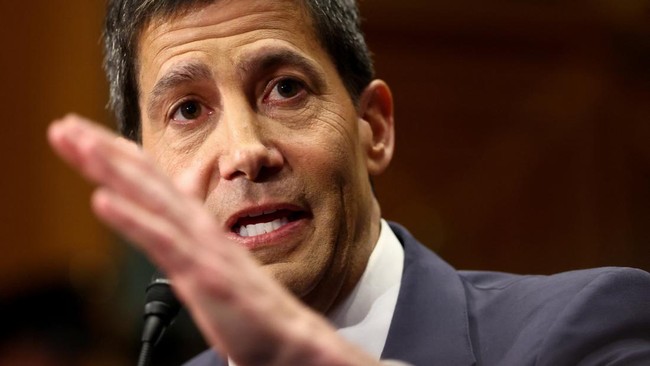
Kevin Warsh is increasingly close to becoming the Chair of the United States Federal Reserve (the Fed). Warsh will replace Jerome Powell.
The position of Fed Chair places the institution under constant scrutiny. As the controller of the dollar worldwide and the steward of monetary policy for the US superpower, any statement or policy from the Fed profoundly influences both America and the global economy.
President Donald Trump’s chosen candidate has just passed a key stage after his nomination was approved by the US Senate Banking Committee.
In the vote on Wednesday (29 April 2026) local time, Warsh’s nomination was approved along partisan lines. Thirteen Republican senators supported Warsh, while 11 Democratic senators opposed him.
However, Warsh is not yet officially the Fed Chair. His nomination must still go to the full US Senate for final approval. The vote could be held as early as 11 May.
If ultimately approved by the Senate, Warsh will replace Jerome Powell, whose term as Fed Chair is scheduled to end on 15 May.
Kevin Warsh Is Not the Perfect Choice
Warsh is not without his flaws. In The Economist’s view, he is not the ideal candidate to lead the Fed.
One major criticism of Warsh is his change in stance. He has long been known as a hawkish figure, tougher on inflation. Yet, in his pursuit of the Fed Chair position, his views have shifted to dovish, favouring interest rate cuts.
Warsh is also seen as not as strong as Chris Waller on the technical aspects of monetary policy. Waller was previously mentioned as a Fed Chair candidate. Moreover, Warsh lacks deep economic background and, for over a decade, has frequently criticised the Fed in ways deemed excessive and lacking analytical sharpness.
During his confirmation hearing on 21 April, Warsh drew attention for not firmly denying claims that the 2020 US presidential election was stolen from Donald Trump.
However, these notes may not ultimately determine how Warsh will be remembered in Fed history.
Warsh’s Greatest Test Is Trump
Warsh’s biggest challenge is not merely technical management of interest rates, but how he handles political pressure from President Donald Trump.
Trump has continually pressured the Fed to lower interest rates. Yet, US inflation has remained above target for the past five years. This situation has led to one of the Fed’s greatest credibility crises in the last 50 years.
Warsh once delivered a speech titled “An Ode to Independence”, emphasising the importance of central bank independence. In the confirmation hearing, he also stressed the importance of the Fed’s credibility.
Thus, the true test for Warsh is whether he can withstand pressure from Trump. If he can preserve the Fed’s independence and steer the US central bank towards greater stability, Warsh could be remembered as one of the great Fed Chairs.
Interest Rates as the First Test
Warsh’s first test will come very soon, regarding the direction of interest rates. For context, the Fed has just decided to hold its benchmark interest rate at 3.50%-3.75%.
This decision indicates that the Fed remains cautious about easing monetary policy.
Earlier this year, there were still grounds for cutting interest rates. However, the situation has changed. Spikes in oil prices and a still-strong US labour market have narrowed the room for rate cuts.
Under these conditions, Warsh will not easily convince other Fed officials to cut rates. Although the Fed Chair is usually highly influential, Warsh still has only one vote out of 12 in monetary policy decisions.
He might use his colleagues’ positions as a reason when explaining to Trump why rates have not yet fallen. However, Warsh must be careful not to open the door for Trump to apply even more pressure or attempt to remove other Fed officials.
In this regard, Warsh is seen as having distanced himself from the MAGA group’s plans to purge regional Fed bank presidents. Five of them have voting rights on monetary policy at certain times.
Warsh’s Reform Agenda
On the other hand, Warsh also brings a reform agenda for the Fed. He wants the US central bank to shrink its balance sheet, reduce public communication on future interest rate directions, and consider a broader range of data in decision-making.
Warsh calls this idea a “regime change”. However, it is not particularly radical.
The Bank of England, for example, is also reviewing its balance sheet strategy. Among central bankers, Warsh is not entirely viewed as a revolutionary figure. Central bankers can still distinguish between Warsh’s political statements and his monetary policy preferences.
In other words, Warsh still has room to resist Trump’s pressure on interest rates while implementing relatively reasonable reforms internally at the Fed.
Warsh’s chances of success will be greater if he is surrounded by technocratic and institutionally strong Fed officials.
One important factor is the Supreme Court case regarding Trump’s attempt to dismiss Lisa Cook, one of the Fed governors, over alleged violations in old mortgage documents.
Additionally, Powell has made a significant decision. On Wednesday, he stated he would remain as a member of the Fed Board of Governors. Powell’s term as governor actually ends in 2028.
This decision by Powell differs from