
Can Currency Swaps Become a Solution to Stabilise the Rupiah?
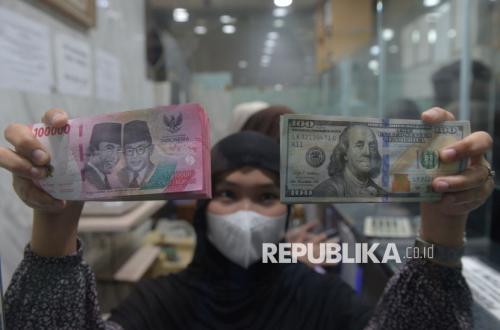
Executive Director of the Institute for Development of Economics and Finance (Indef), Esther Sri Astuti, believes that currency swap cooperation between countries can help maintain the stability of the rupiah’s exchange rate in the short term amid pressures from global dynamics.
“I think currency swaps have their positives, but this is not a long-term solution,” Esther said in Jakarta on Thursday (7 May 2026).
She explained that one positive impact of the policy is to help stem the rupiah’s depreciation against foreign currencies by strengthening access to foreign currency liquidity. Additionally, non-dollar financing cooperation is seen as capable of strengthening foreign exchange reserves and supporting transaction needs as well as foreign debt payments.
“Strengthening liquidity bolsters foreign exchange reserves and ensures the availability of funds for transaction needs or foreign debt payments,” Esther stated.
According to her, diversification of financing is also important to reduce dependence on the US dollar through the use of local currencies in international transactions. She added that the cross-currency swap scheme can also help businesses mitigate risks from exchange rate and interest rate fluctuations.
Based on Bank Indonesia data, Indonesia’s foreign exchange reserves position at the end of March 2026 was recorded at $148.4 billion, which is deemed sufficient to support external sector stability and the national financial system. Meanwhile, the rupiah exchange rate closed stronger at around Rp17,387 per US dollar in trading on Wednesday (6 May 2026), after the previous close at Rp17,424 per US dollar.
Nevertheless, Esther cautioned that the policy is not a long-term solution for strengthening domestic economic fundamentals. “Swaps are a temporary stabilisation tool, not the main ‘medicine’ for strengthening domestic economic fundamentals,” she said.
She believes that strengthening economic fundamentals still needs to be done through enhancing liquidity and diversifying financing to avoid excessive dependence on the US dollar. Esther views that Bank Indonesia still needs to maintain exchange rate stability through market operations if foreign exchange reserves are deemed adequate.
“Bank Indonesia must also conduct market operations to keep the exchange rate stable, provided that US dollar foreign exchange reserves are sufficient,” she stated.