
Can ASEAN's 50-year-old treaty hold against geopolitical pressures?
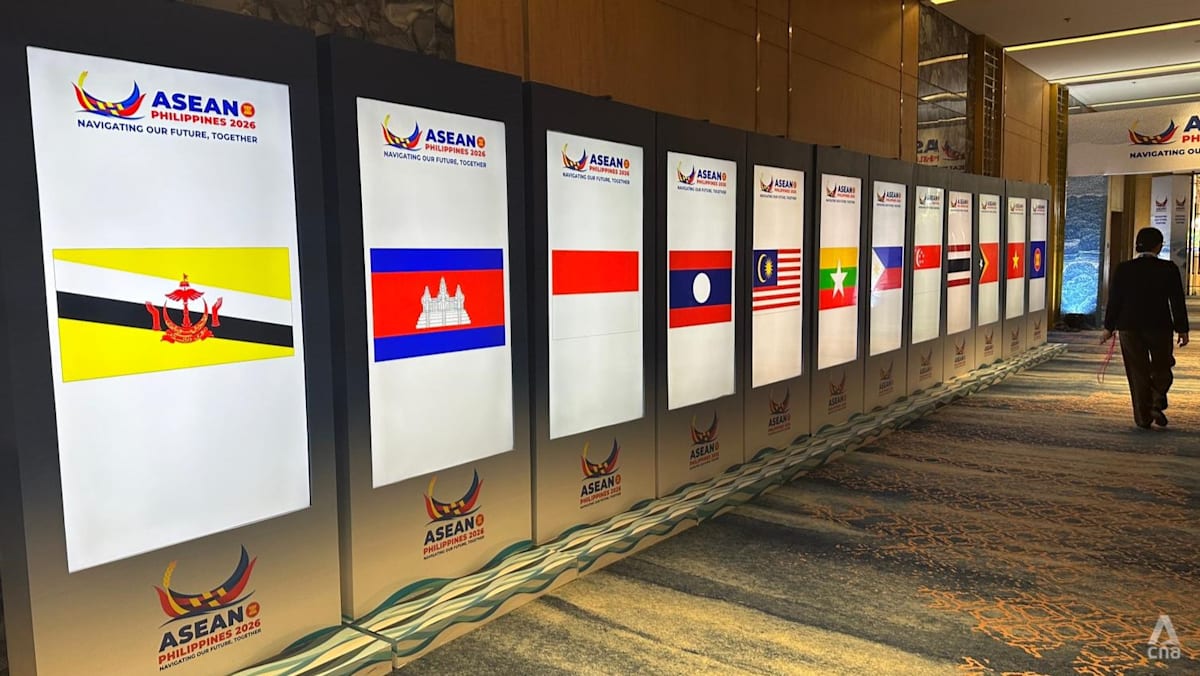
Can ASEAN’s 50-year-old foundational peace treaty hold in a more uncertain world? The Treaty of Amity and Cooperation in Southeast Asia has been seen for much of its history as a cornerstone of the region’s relative stability. The Association of Southeast Asian Nations (ASEAN) on Tuesday (Feb 24) marked the 50th year since the establishment of its foundational peace deal – the Treaty of Amity and Cooperation in Southeast Asia (TAC). It is a pact built on a simple idea – countries are stronger together than apart. But the strength of that unity – whether it is iron-clad, flexible, or too weak to withstand pressure – depends on how it is forged. GROWING GLOBALLY In 1976, the bloc’s five founding members – Indonesia, Malaysia, the Philippines, Singapore and Thailand – moved to institutionalise those principles in a region once marked by confrontation and mistrust. The result was the TAC, designed to anchor peace and guide interstate relations in Southeast Asia. Over the past five decades, countries from across the world have acceded to the treaty. Today, 58 parties, which represent about 30 per cent of countries globally, are parties to the agreement. At its core, the TAC commits signatories to four key principles: - Respect the sovereignty and territorial integrity of all nations - Refrain from interfering in each other’s domestic affairs - Settle disputes by peaceful means - Renounce the use or threat of force The treaty, which is legally binding, has been seen for much of its history as a cornerstone of Southeast Asia’s relative stability. Ridzwan Rahmat, principal defence analyst with defence and security intelligence platform Jane’s, said it has been effective to a large extent. “If you were to look at the rest of the world after World War II and after the Cold War, there has never been a war between ASEAN states – of course, prior to the conflict that erupted between Thailand and Cambodia,” he noted. Last year’s border clash, which led to the worst fighting between the two neighbours in more than a decade, is a “classic example of how the TAC has not worked out”, added Ridzwan. STILL RELEVANT Despite its limitations, experts said the treaty remains highly relevant. “I think TAC will still remain relevant, because this is the only code of conduct that we have that governs interstate relations,” said Joanne Lin, senior fellow and coordinator of the ASEAN Studies Centre at the ISEAS - Yusof Ishak Institute. But she noted that improvements may be needed, particularly in how disputes are managed. “There should be some clearer guidance on how the High Council can be triggered, what its mandate would be, and how recommendations are being communicated,” Lin added. Under the treaty, the High Council comprises representatives from the TAC’s high contracting parties – the countries that have acceded to the treaty – and is aimed at settling disputes. But it has not been used yet. On top of that, a common and longstanding concern is that the TAC lacks teeth when it comes to enforcement. “These are the laws that require political commitment, and because (it involves) intergovernmental cooperation and not supranational cooperation, and because there is no supranational authority to govern all these laws, the likelihood of compliance will really depend on each country’s political commitment,” said Lin. MOUNTING PRESSURES Concerns about the treaty’s resilience are growing as the global order becomes increasingly unpredictable. From rapid swings in United States President Donald Trump’s tariff policy to his recent unilateral actions against Venezuela and his ongoing threats to annex Greenland, geopolitical volatility has intensified. At the same time, the use of “grey zone” tactics is also on the rise, including on the maritime front. These operations – such as the use of maritime militia, surveillance drone incursions and cyber operations – are aggressive but fall short of outright war. Lin warned that such tactics directly go against the spirit of the TAC. “These actions may not look like some classic armed conflict, but they can directly challenge the TAC principles of the non-use of force and mutual respect,” she said. Another challenge, she added, lies closer to home – internal division within ASEAN. Ridzwan described the TAC as a “stabilising baseline” of how states are expected to conduct themselves, but one whose limits must be acknowledged given the absence of an enforcement mechanism. In terms of what safeguards ASEAN has, given that the TAC is mainly a diplomatic tool, Ridzwan said that while the bloc is not a military alliance, overlapping security arrangements among member states could play a greater role in times of crisis. “We have many mini lateral military groupings that can be deployed in the event of an adversary attack on one of the member states,” he noted. One example, said Ridzwan, is the Five Power Defence Arrangements – a defence pact that was formed in 1971 against the backdrop of armed conflict across Southeast Asia. It comprises Singapore, Malaysia, Australia, New Zealand and the United Kingdom. “In the face of the threats that we are facing today, mini lateral groupings will elevate in terms of importance,” he added.