
Can Amsal Sitepu Be Imprisoned? Here Are the Conditions
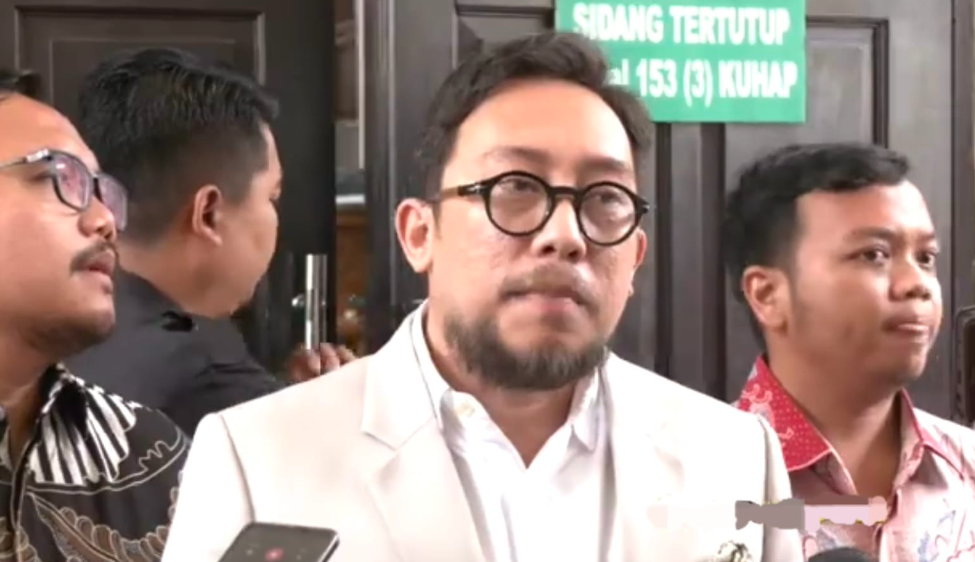
The case ensnaring videographer Amsal Sitepu is currently a hot topic of discussion. He is accused of harming the state due to an alleged markup on the promotional village video work he undertook. According to the prosecutor, he has been proven to have committed the criminal act of corruption harming state finances under Article 3 of the Anti-Corruption Law (UU Tipikor). On that basis, criminal law expert and founder of Dalimunthe & Tampubolon Lawyers (DNT Lawyers), Boris Tampubolon, stated that Amsal Sitepu can only be imprisoned if there is a kickback.
“In principle, Articles 2 or 3 of the UU Tipikor are indeed problematic. Because there is no element related to ‘intent’ in those articles. This makes them elastic clauses. Thus, law enforcement officials in their application only look at the formal fulfilment of the article. As if what matters is that there is harm to the state and that there is enrichment of oneself or others. The person charged under Articles 2 or 3 of the UU Tipikor should have their mens rea (evil intent) proven to harm the state,” he said in an official statement on Monday (30/3).
Furthermore, Boris said, in the context of the element of enriching oneself or others, in relation to government procurement, the prosecutor must be able to prove there is a kickback from the project winner to rogue officials. Thus, it is proven that there are fraudulent or illegal methods to obtain the project/work. That is where the evil intent is evident, so the guilt is proven.
“If there is no kickback, then that person cannot be imprisoned. As per the principle of criminal law, there is no punishment without guilt. In the context of Amsal Sitepu, as long as he only offered a work proposal for video production services according to his expertise and there is no evidence of a kickback from him to officials so that he wins the project, then he cannot be imprisoned,” he explained.
He stated that the erroneous calculation of state losses should not be used as evidence. One correct method that auditors must carry out according to standard state financial examination rules is to seek statements and confirmation from all parties, including the suspect. This is done so that the audit results are valid, because they are based on valid, true, fair, and objective evidence. So not only based on evidence from investigators. But not listening to or examining evidence from the suspect/defendant.
“If the audit results are not based on the correct calculation method, then the truth of the results is also doubtful. That makes the audit results invalid. The legal consequence is that it must be set aside as evidence or cannot be accepted as evidence,” he revealed.
According to him, Amsal Sitepu is also entitled to economic rights from the video work he created. The promotional video work made by Amsal is protected by its economic rights under the law. This includes copyright protected by the Copyright Law, namely Article 8 in conjunction with Article 9, which regulates the Creator’s Economic Rights. Economic rights are the exclusive rights of the creator or copyright holder to obtain economic benefits/financial gains from their creation.
“So it is very inappropriate if the payment request for video production services that Amsal submitted is considered corruption. Or said to be a markup. That is the price of his services. Services have no fixed measure. A person selling services can set the price as they wish, according to their expertise. If a user feels the price is too high, they can negotiate or reject it. And find another service provider,” he concluded.
The Constitutional Court (MK) has ruled that violations regulated in sectoral laws such as forestry, banking, or environmental living can still be prosecuted under the UU Tipikor.
The Constitutional Court’s (MK) decision to remove the phrases “directly” and “indirectly” in Article 21 of the Anti-Corruption Law (UU Tipikor) has drawn criticism.
Law enforcement in cases using Articles 2 and 3 of the Anti-Corruption Law requires clear evidence related to conflicts of interest, bribes, or gratuities.
The Corruption Eradication Commission (KPK) is investigating allegations of extortion in village apparatus recruitment in Pati, including budget planning and alleged position dowries. Four suspects have been named.
Legal practitioner Febri Diansyah highlighted the 18-year prison demand and Rp13.4 trillion restitution against Kerry Riza in the alleged corruption case of PT Pertamina’s oil governance.
Commission III of the Indonesian House of Representatives (DPR RI) has officially scheduled a Working Meeting for Rights and Duties (RDPU) to address allegations of injustice in the village video project corruption case ensnaring videographer Amsal Sitepu in Karo.