
Campus at the Heart of Downstreaming
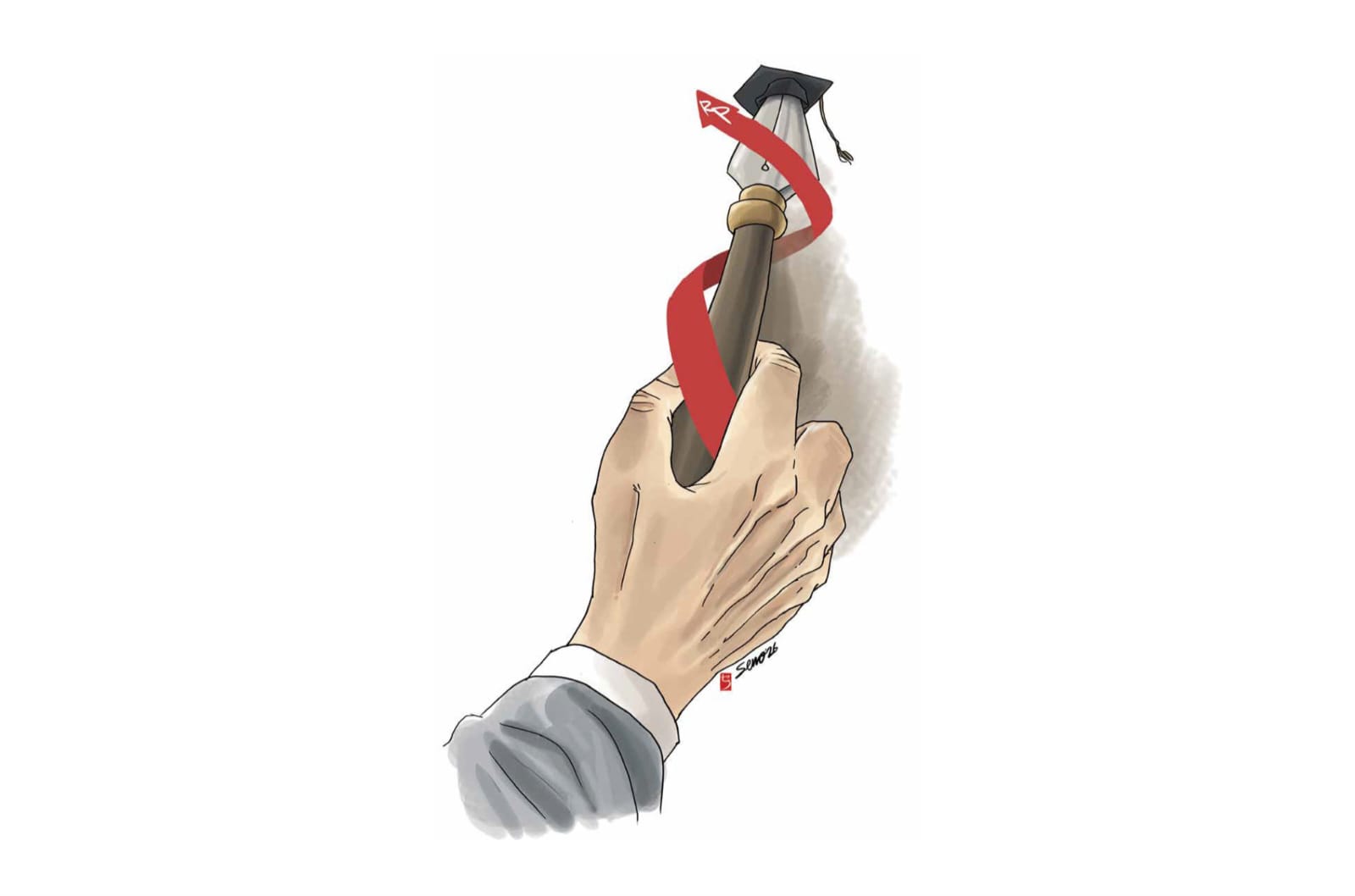
Indonesia is taking serious steps in its downstreaming agenda. Nickel is no longer exported raw, palm oil is being pushed towards higher-value products, and strategic foods are being processed domestically. This is not merely an economic strategy. Rather, we want to set prices, not just accept them.
Amid this major flow, there is a fundamental question that is often overlooked: where is the position of higher education in the downstreaming value chain?
The common answer is that campuses prepare human resources for industry. That view is not entirely wrong, but it is too narrow. Downstreaming is not just about building factories and filling them with educated workers.
Downstreaming is a long process of transforming knowledge into sustainable economic value. It is at this point that higher education should play a far more strategic role.
CLOSING INSTITUTIONAL GAPS
Higher education in Indonesia does not lack innovation. Research is continuously produced, prototypes are developed, and scientific publications are increasing. However, most of it stops in laboratories or academic journals.
Post-harvest technologies are available, but farmers still sell their produce raw. Superior varieties are produced, but not all reach production fields. Derivative products from commodities are successfully formulated, but fail to penetrate markets.
What is happening is not just a research outcome gap, but also a systemic gap. The problem is not physical distance, but institutional distance, namely the absence of strong mechanisms to connect knowledge with industry and community needs.
Experiences from other countries show that this gap can be bridged.
Thailand has successfully increased cassava productivity and become a major exporter of its derivatives through close collaboration between universities, government, and industry. The Netherlands, through Wageningen University & Research, has built the Food Valley ecosystem that brings together campuses and the business world on a large scale.
Campuses do not stand alone, but become part of a living innovation ecosystem.
GOING BEYOND DOWNSTREAM
One trap in understanding downstreaming is narrowing it to processing and marketing stages. In fact, the value chain is much longer.
On the upstream side, higher education plays a role in maintaining raw material sustainability, such as developing superior varieties, cultivation efficiency, and adaptation to climate change. Without that foundation, downstreaming will only give birth to industries lacking supply.
In the middle, campuses contribute to process innovation, with processing technology, quality improvement, energy efficiency, to the development of derivative products that open new markets.
On the downstream side, the role of higher education extends to strengthening business models, branding strategies, financing access, and global market networks.
Downstreaming that is only strong at one point will be fragile. What is needed is continuity from upstream to downstream. This is where campuses should be present as connectors of knowledge across stages, not just suppliers of labour.
LEARNING FROM THE FIELD
IPB University’s long experience shows that downstreaming cannot stop at technological innovation alone. It requires connectors, in the form of actors who understand the language of science as well as the language of farmers, the language of the laboratory as well as the language of the market, the language of innovation as well as the language of institutions.
The one village one CEO (OVOC) programme is an example of how campuses can directly enter village economic ecosystems. Students do not just learn, but assist local commodity-based businesses, by improving processing, applying campus innovations, building packaging, opening market access, and designing more sustainable business models.
The results include Cikajang coffee penetrating export markets, Calina papaya entering modern retail networks, and areca nut commodities from various regions reaching international markets. This is not solely technological success, but also success in building an ecosystem from upstream to downstream.
That role is strengthened through science and technology parks (STP), which bridge research with commercialisation. However, experience shows that physical infrastructure is not the main factor. The real key is institutional capacity in managing the entire innovation flow.
The existence of STPs should not stop as symbols in some major campuses. Instead, they should become locomotives that pull other higher education carriages through collaboration, research consortia, and living lab development.
Vietnam provides an important lesson. Instead of centralising innovation in a handful of campuses, they distribute it through regional university networks based on flagship commodities. The result is a faster and more even transformation from raw materials to value-added products.
PLACING CAMPUSES AT THE CENTRE
Indonesia has greater capital. However, that potential has not been fully integrated into the downstreaming ecosystem. The challenge ahead is to ensure access to downstreaming programmes is not only enjoyed by established campuses. If administrative barriers are too high, only those who were strong from the start will develop.
Downstreaming will succeed if its chain is intact, from seeds in the fields, technology in laboratories, to products in global markets. Higher education has a unique position to stitch together the entire chain.
Campuses become producers of knowledge, connectors of interests, and drivers of innovation.
The question is no longer whether campuses need to be involved, but how much space is given so that campuses can play a full role. If Indonesia is serious about making downstreaming a sovereignty strategy, higher education must be placed at its heart, not on the sidelines. It is at that point that added value is not only created, but also rooted and sustainable.