
Cak Imin Grateful for Changes in Budget Politics in Prabowo Era, More Felt by the Public
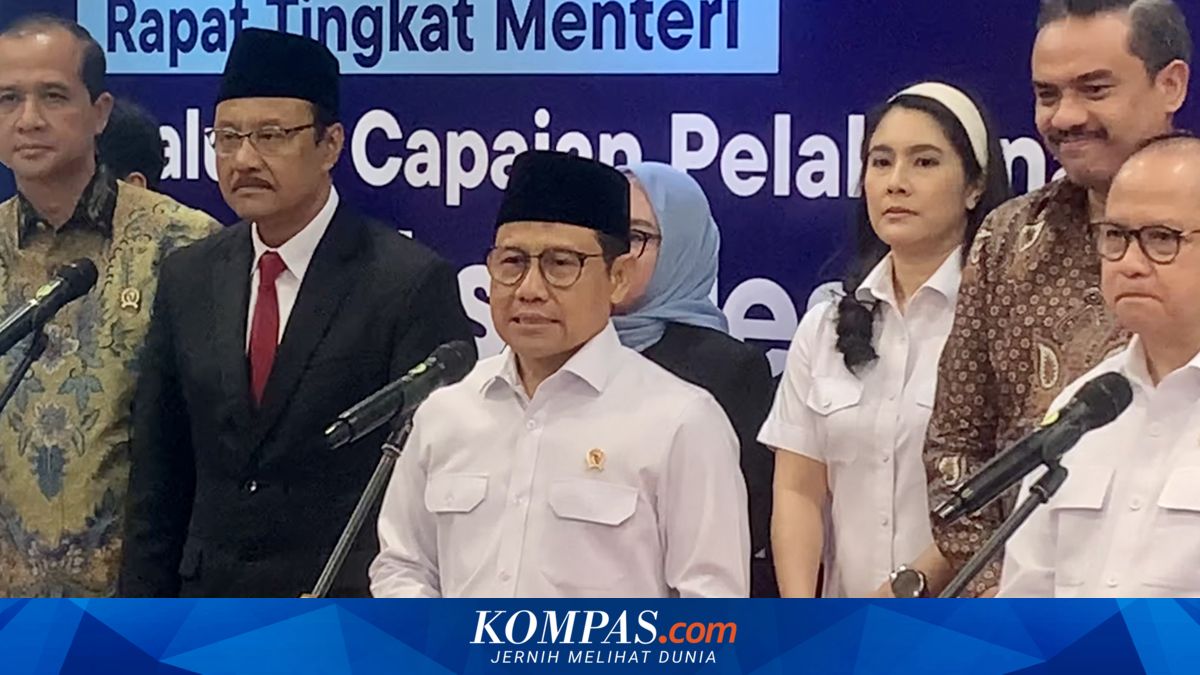
JAKARTA - Coordinating Minister for Community Empowerment Muhaimin Iskandar, or Cak Imin, has expressed his gratitude for the changes in budget politics during the leadership of President Prabowo Subianto. According to Cak Imin, this is influenced by budget efficiency measures that redirect funds to strategic programmes as instructed by the Head of State. “One of the things we are grateful for under President Prabowo’s leadership is the change in budget politics. It makes the budget more directly felt by the public,” said Cak Imin after the Ministerial Level Meeting at Plaza BP Jamsostek, Kuningan, South Jakarta, on Monday (27/04/2026). “Every rupiah spent impacts the increase in people’s income. It takes time for the entire budget, such as social assistance amounting to approximately Rp 508 trillion, plus regional budgets of around Rp 129 trillion,” he explained. Through efficiency, the budget can be better absorbed for priority-scale programmes, including reducing extreme poverty rates in Indonesia. “We will continue to push for it to have three characteristics: directly enjoyed, impacting income increases for the public, and providing new job opportunities,” he stated. According to Cak Imin, budget politics with efficiency will align with priority scales and the real needs of the community. Previously, the Coordinating Minister revealed that extreme poverty has successfully decreased from 1.26% in March 2024 to 0.78% in September 2025. “Thus, our extremely poor population has become 2.2 million people from previously 3.56 million. This is something to be grateful for, while we still have a responsibility for 2.2 million,” said Cak Imin when opening the Ministerial Level Meeting. However, Cak Imin acknowledged that there are still several challenges that the government must address immediately because thousands of families in decile 1 groups or extreme poverty have not yet received assistance. In addition, there are still 8.1% of families that have not received aid, as well as 60.2% of decile 1 families who have only received one to two programmes.