
Cabinet Secretary Teddy Reveals Prabowo Requests Acceleration of This Project in Major Cities
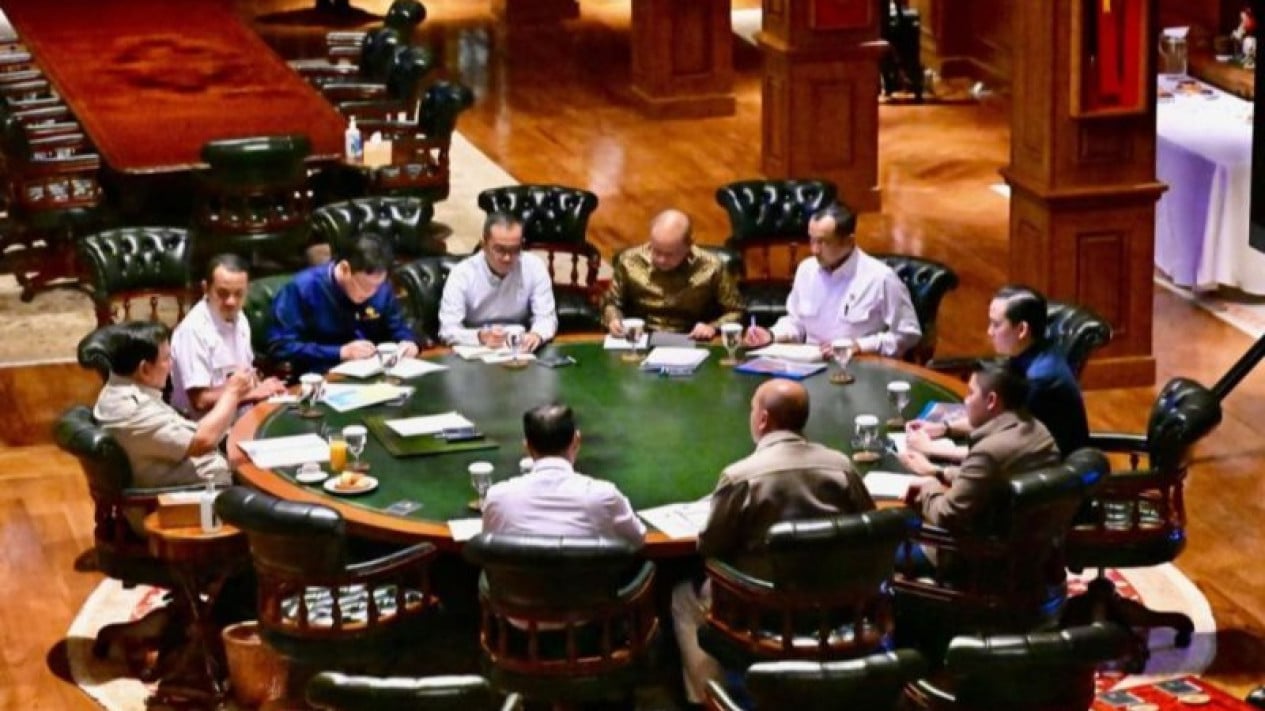
President Prabowo Subianto has ordered the acceleration of waste-to-energy (WTE) management in major Indonesian cities to realise sustainable alternative energy usage more quickly.
This was stated by President Prabowo when receiving the Minister of Investment and Downstreaming, who is also the Head of the Nusantara Future Investment Management Agency (BPI Danantara), Rosan Perkasa Roeslani, along with several ministers from the Red and White Cabinet at the President’s private residence in Hambalang, Bogor, West Java, on Wednesday, 25 March 2026.
“Danantara Head Mr Rosan Roeslani reported on the progress of the waste-to-energy programme or the waste management into energy programme across Indonesia, particularly in densely populated major cities such as DKI Jakarta, Tangerang, Bandung, Semarang, Surabaya, Medan, Bali, and other cities in Indonesia,” said Cabinet Secretary Teddy Indra Wijaya in a written statement.
Teddy explained that the WTE programme could serve as a strategic solution to address waste problems that have not been optimally handled thus far. Additionally, the WTE programme will support the provision of sustainable alternative energy.
He conveyed that President Prabowo desires quick and integrated steps from the central government to tackle waste issues in the regions. The Head of State hopes that long-standing waste accumulations, which have been problematic, can be promptly cleared, eliminated, and utilised as an energy source, particularly electricity.
“President Prabowo wants the central government to immediately manage waste that has long been poorly handled in the regions to be quickly cleared, eliminated, and utilised to become energy, especially electricity,” said Teddy.
This step reinforces the government’s policy direction in building a modern technology-based waste management system, while also strengthening national energy resilience through the utilisation of domestic resources that are environmentally friendly.
With an integrated downstreaming approach, the waste-to-energy programme is expected not only to resolve environmental issues but also to open new economic opportunities, create jobs, and drive Indonesian cities towards a cleaner and more sustainable future.