
Cabinet Secretary Teddy attends meeting on energy policy and economic stimulus
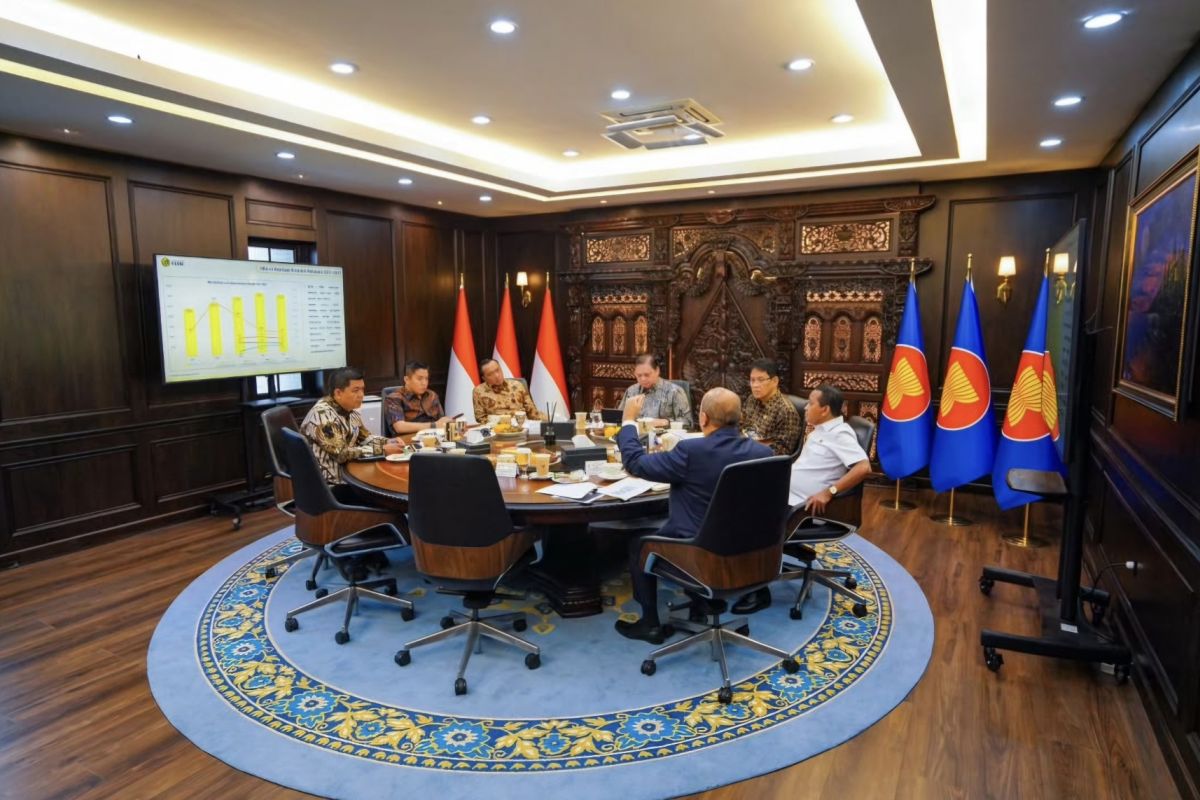
Jakarta (ANTARA) - Cabinet Secretary Teddy Indra Wijaya attended a meeting discussing energy policy and economic stimulus led by Coordinating Minister for the Economy Airlangga Hartarto in Jakarta on Friday, as part of the government’s efforts to maintain price stability and strengthen national economic growth.
Based on a post from the official Instagram account of the Cabinet Secretariat, the meeting forms part of the government’s strategic initiatives to ensure energy availability, safeguard public purchasing power, and promote sustainable economic growth amid global dynamics.
The meeting was also attended by State Secretary Minister Prasetyo Hadi, Finance Minister Purbaya Yudhi Sadewa, Minister of Investment and Downstreaming Rosan Roeslani, Minister of Energy and Mineral Resources Bahlil Lahadalia, and Deputy State Secretary Juri Ardiantoro.
The meeting discussed and agreed on government policy plans focusing on the energy sector and economic stimulus as primary instruments to maintain national stability.
The government assures that Indonesia’s economic stability remains intact amid global uncertainties due to geopolitical escalations and increasing financial market volatility.
Previously, Spokesperson for the Coordinating Ministry for the Economy Haryo Limanseto stated that the government ensures Indonesia’s current economic fundamentals remain strong and resilient, supported by several key factors.
He emphasised that Indonesia’s macroeconomic stability remains maintained, with 2025 economic growth at 5.11 per cent (year-on-year) and inflation within the target range of 2.5 per cent plus or minus 1 per cent.
From the domestic side, public consumption remains the main pillar of growth, supported by fiscal stimulus and social assistance, while manufacturing activity recorded a Purchasing Managers’ Index (PMI) of 53.8, in the expansion phase.
In addition, fiscal resilience remains strong with tax receipts up to February 2026 growing 30.4 per cent (year-on-year), supported by tax reforms and digitalisation through the Coretax system.
The government is also strengthening food and energy resilience, including through self-sufficiency in several commodities and an energy production surplus based on biodiesel, as a buffer against global turbulence.
Looking ahead, the government is optimistic that Indonesia’s economic growth can reach around 5.4 per cent in 2026 while maintaining stability and continuing structural reforms, including industrial downstreaming, investment strengthening, and accelerating digitalisation.