
Cabinet Secretary Teddy Addresses Claims That US Products Can Enter Indonesia Without Halal Certification
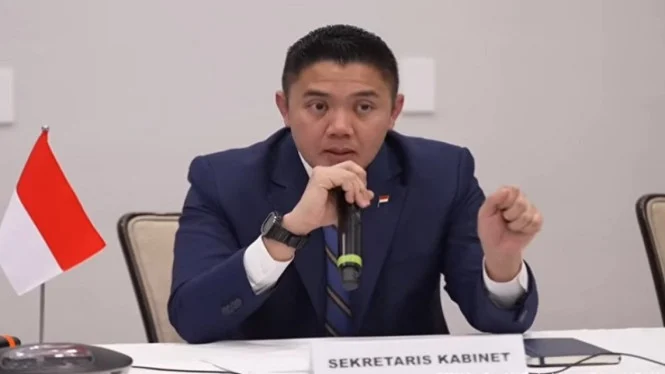
Jakarta — Cabinet Secretary Teddy Indra Wijaya has moved to correct claims that products from the United States can enter Indonesia without halal certification.
In a statement issued through the Cabinet Secretariat in Jakarta on Sunday, Teddy said the reports were untrue and misleading.
“That is not true,” he said.
He affirmed that all products required to hold halal certification must still display an official halal label, whether issued by a halal body in the US or by the relevant authority in Indonesia.
“Products that are required to be halal-certified must carry a halal label, whether from a halal body in the US or a halal body in Indonesia,” he said.
Teddy explained that halal certification is mandatory for food and beverage products. In the US, he noted, halal certificates can be issued by bodies such as Halal Transactions of Omaha (HTO) and the Islamic Food and Nutrition Council of America (IFANCA). In Indonesia, this authority falls under the Halal Product Assurance Agency (BPJPH).
Cosmetics and medical devices are also subject to oversight, Teddy added. Both categories must obtain distribution permits and certification from the Food and Drug Supervisory Agency (BPOM) before they can be sold on the domestic market.
“Cosmetics and medical devices must hold certification from BPOM,” he said.
He further noted that Indonesia and the US already have a Mutual Recognition Agreement (MRA) on halal standards. This agreement enables the equivalence of halal certification within global cooperation frameworks, without diminishing the standards and oversight applicable in each country.
Reports had previously circulated suggesting that Indonesia had relaxed halal rules for US products following the signing of a reciprocal tariff agreement by President Prabowo Subianto and US President Donald Trump in Washington.
Annex III, Article 2.9 of the agreement document references adjustments to halal regulations to facilitate exports of cosmetics, medical devices, and certain goods from the US, with further technical discussions to be held at the Office of the US Trade Representative (USTR).