
Cabinet Secretary Clarifies Free Nutritious Food Programme, Claims Education Remains Priority
Cabinet Secretary Teddy Indra Wijaya has categorically rejected claims linking the Free Nutritious Food Programme (MBG) to education budget cuts and programme reductions. He asserted that such allegations are unfounded and contradict the actual policies in operation.
According to Teddy, the MBG programme is designed to strengthen human resource quality from an early age, encompassing Early Childhood Education (PAUD) through senior secondary school. He emphasised that the education budget has been agreed upon by the government and parliament for 2026 implementation, encompassing allocations and programmes carefully planned.
“Does this nutritious food programme reduce the education budget? My answer is no. In fact, strategic education programmes from previous periods continue to operate and have even expanded,” Teddy told journalists at the Presidential Palace on Friday, 27 February.
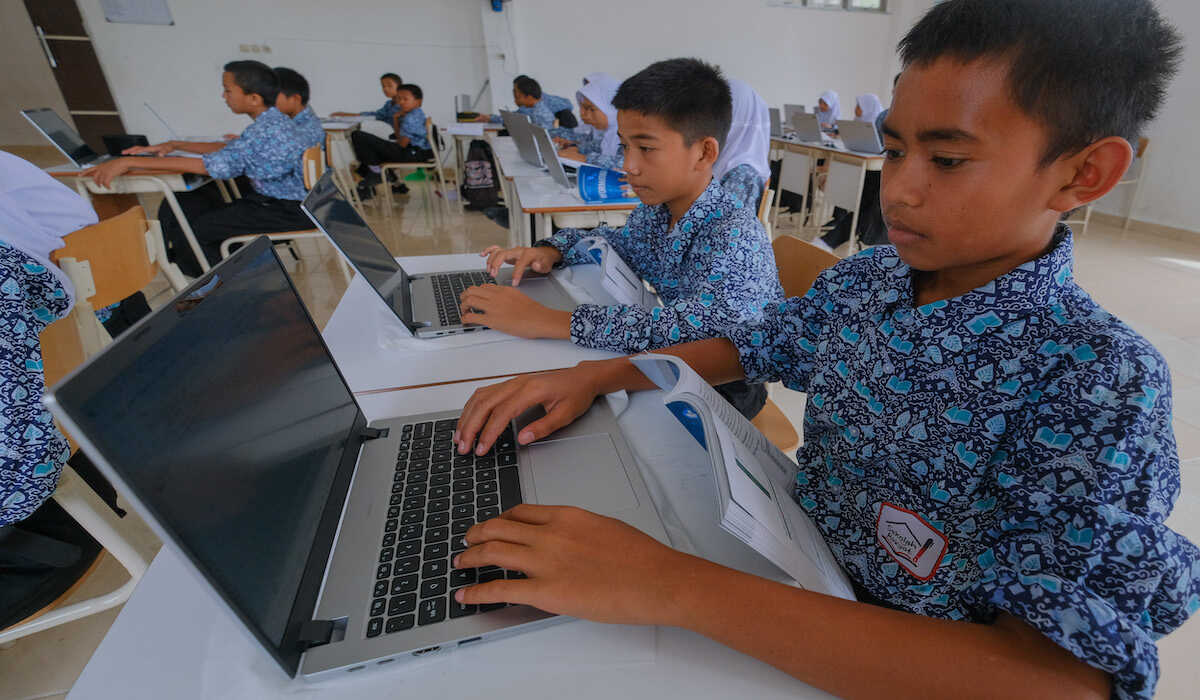
Teddy cited examples of education programmes continuing and developing, such as the Indonesia Smart Card, the Indonesia Smart Programme, and the expansion of Community Schools under President Prabowo Subianto’s administration. The Community Schools programme, targeting out-of-school children or those without formal education access, has achieved significant enrolment figures.
“Last year alone, between 16,000 and 22,000 students were registered in 166 schools. This year, we will establish 100 new schools,” Teddy explained.
Regarding complaints about abandoned school facilities, Teddy acknowledged that infrastructure damage has been a longstanding issue falling under local government jurisdiction. However, he assured that the central government has accelerated renovation efforts.
“In 2025, approximately 16,000 schools have been renovated, with a budget of around 17 trillion rupiah. All data is recorded and accessible,” stated Teddy.
The government is not only focusing on infrastructure but also on enhancing digital learning facilities. In 2025, 280,000 digital television units will be distributed to schools, with this figure set to increase further.
Additionally, Teddy revealed plans for integrated Garuda Schools and new university campuses as part of a broader education agenda.
Regarding teacher welfare, Teddy firmly rejected claims that educators are being neglected. He explained that incentives for contract teachers, which had not increased in 20 years, were raised under President Prabowo’s administration.
“Last year, contract teacher incentives increased to 400,000 rupiah, and non-permanent teacher allowances also rose from 1.5 million to 2 million rupiah,” he added.
The disbursement mechanism now operates monthly directly to teachers, ensuring more transparent payments.
Teddy also addressed claims that the 223 trillion rupiah MBG budget was drawn from education allocations. He reiterated that the education budget is constitutionally fixed at 20% of the national budget, with allocations agreed upon jointly by the government, parliament, and the parliamentary budget committee, which is chaired by a representative from the Indonesian Democratic Party of Struggle (PDIP).
“All of this was agreed upon last year, and there has been no reduction to the education budget,” he asserted.
Research by the Institute of Socio-Economic Development (RISED) shows that the majority of parents have experienced improvements in their children’s consumption patterns following the MBG programme implementation. The programme is designed not only to improve student nutrition but also to stimulate the economy in surrounding communities.
The Constitutional Court has scheduled a constitutional review hearing regarding the 2026 National Budget Law concerning allegations of education budget reductions due to the Nutritious Food Programme. The programme is considered a supporting policy that should not reduce the mandatory 20% education budget allocation, which is deemed essential.