
BYD unveils new autonomous driving chip for electric vehicles
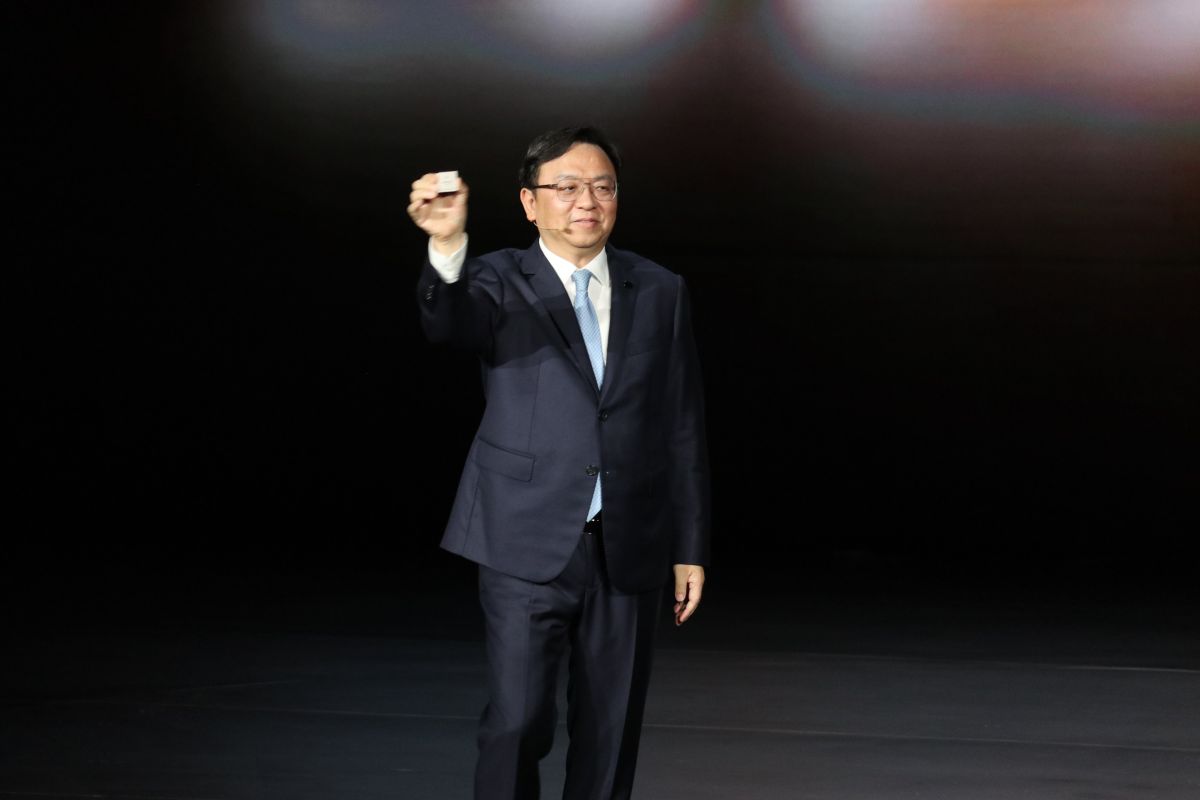
SHENZHEN (ANTARA) - Chinese electric vehicle manufacturer BYD has launched its latest technology, a 4-nanometer (nm) autonomous driving chip named Xuanji A3, hailed as a breakthrough for self-driving cars. ‘Here I share very exciting news: today, BYD’s 567th automotive chip, a high-computing autonomous driving chip, has arrived! This is the Xuanji A3, a fully BYD-developed 4-nanometer chip,’ said BYD CEO Wang Chuanfu during the launch event at the company’s Shenzhen headquarters in Guangdong province on Thursday (28 May). In an event attended by around 300 content creators and media from China and other countries, Wang stated that the chip boasts the industry’s best energy efficiency, consuming 20% less power than similar semiconductors. This semiconductor breakthrough surpasses Chinese tech giant Huawei, which currently produces 7-nanometer chips, though it has pledged to launch 1.4-nanometer chips by 2031. The nanometer unit measures transistor size on a chip. Smaller transistors allow more to be packed into a chip, enhancing its power. More importantly, Wang noted BYD has already begun mass-producing the chip at scale. The company stated its new integrated software platform accelerates performance across three previously separate EV domains: smart cockpit (dashboard controls), advanced driver assistance systems, and the core electric propulsion system. Wang added BYD has launched over 2,000 chip products, applied across smart vehicles, consumer batteries, household appliances like air conditioners and refrigerators, mobile phones, industrial equipment, and solar panels. BYD is currently awaiting official regulatory approval from the Chinese government to allow wider public deployment of autonomous vehicles. Although it does not yet offer full autonomous driving technology, BYD plans to expand partially automated driver assistance systems across all its vehicle models in China. BYD will also integrate Light Detection and Ranging (LiDAR) sensors—laser-based technology that measures distance and creates 3D environmental maps—into non-premium electric vehicles, despite the technology typically being reserved for luxury models. ‘We have good news today—we’ve achieved a breakthrough and will move to a ’mapless end-to-end’ model. We plan to push this via OTA (over-the-air software updates) in September this year. If successful, it will be rolled out to all users from December onwards,’ he said. Wang added even affordable models like the Seagull and Dolphin would feature intelligent driving experiences typically found in luxury cars. ‘Our additional feature packages are the cheapest in the industry, as we price them at production cost only,’ Wang said. Founded in 1995 as a rechargeable battery manufacturer, BYD now spans diverse business areas including automotive, rail transit, new energy, and electronics, with operations in over 30 countries worldwide. In recent years, BYD has launched technologies including Blade Battery, DM-i Super Hybrid Technology, e-Platform 3.0 Evo, CTB Technology, e⁴ Platform, DiSus Intelligent Body Control System, DMO Super Hybrid Off-road Platform, Flash Charging, and more. The company claims to be the world’s first automaker to halt fossil fuel vehicle production in its transition to electric vehicles and has maintained the top spot in China’s new energy passenger vehicle sales for 10 consecutive years amid a fiercely competitive market including rivals Xpeng Inc. and Xiaomi Corp.