
BYD pledges full warranty for 'God's Eye' driver assistance system
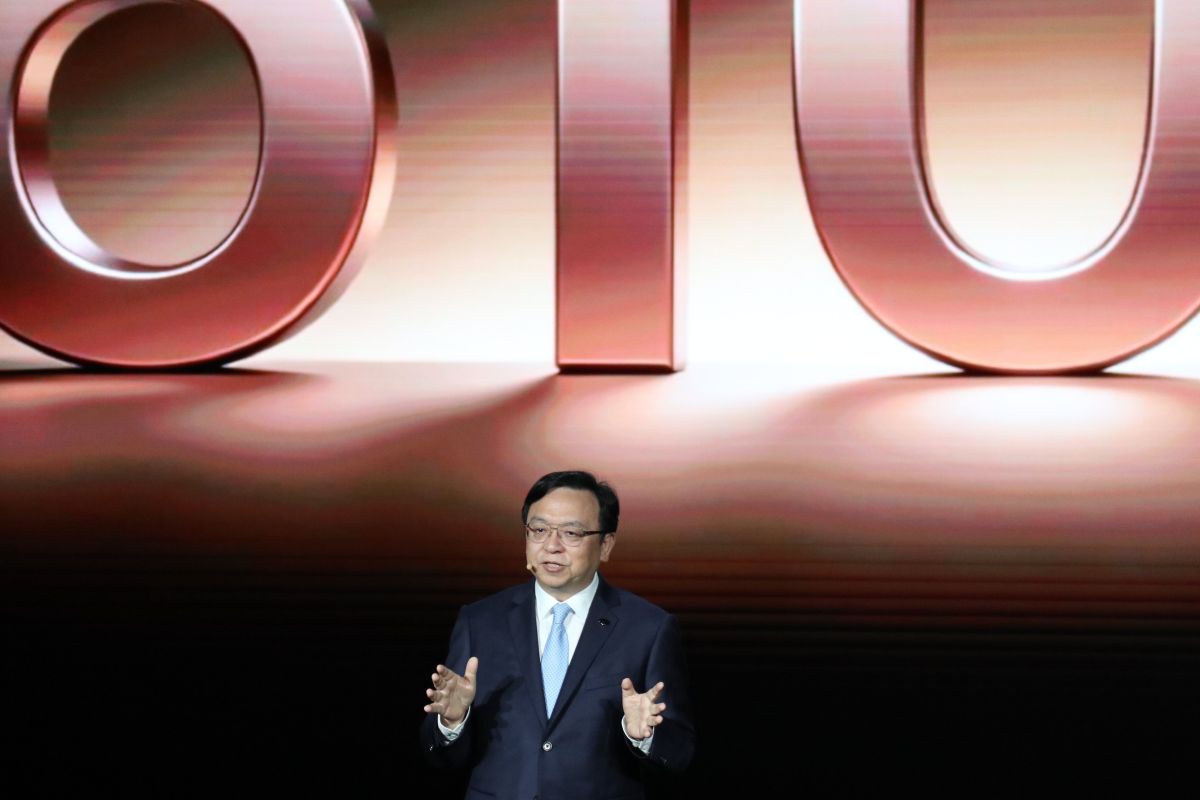
Chinese electric vehicle manufacturer BYD has pledged full coverage for accidents or malfunctions related to its ‘Urban Navigate on Autopilot’ (NOA) feature under the ‘God’s Eye’ driver assistance system in China.
‘Today, I officially announce: BYD is ushering in an era of selectable urban guidance; all series and models can be equipped with the laser-based ’God’s Eye’ driver assistance system, ensuring that good technology is accessible to everyone,’ said BYD Chief Executive Officer Wang Chuanfu during an announcement at the company’s Shenzhen headquarters in Guangdong province on Thursday, 28 May.
Last year, BYD made ‘God’s Eye’ a standard feature on most of its vehicles. However, in the initial phase, the system operated on a tiered structure: affordable models only received basic highway features, while advanced urban navigation was reserved for higher-priced models. The system had previously faced complaints for not functioning as promised.
Wang stated that BYD is now the world’s first automaker to offer such dual protection for its advanced driver assistance systems (ADAS).
‘Customers opting for ’God’s Eye’ can select this feature when purchasing. The option costs 12,000 yuan (approximately £1,350). Even budget models like the ‘Seagull’ can enjoy luxury-level autonomous driving experiences. This is the most sincere offering in the industry, already reflecting our core pricing. Are you satisfied?’ Wang said, drawing applause from the audience.
The offering goes beyond pricing alone. Sensors, algorithms, and data are all aligned, he added.
Wang outlined three ambitious goals: achieving ‘Zero Traffic Accidents’, enabling ADAS to act as a ‘super driver’, and making AI a ‘Super Personal Assistant’.
‘To realise this vision, the company will continue investing over RMB 100 billion in intelligent driving assistance research and development, focusing on safety technology for every driver and their family,’ he added.
BYD will also provide full one-year compensation coverage for new buyers and existing owners upgrading to the ‘God’s Eye’ 5.0 system in the Chinese market.
‘From today, for the next year, every purchaser of BYD’s new autonomous vehicle strategy will enjoy ’God’s Eye’ driver assistance protection for one year,’ Wang said.
To accelerate software development, BYD is leveraging its large market share to build a real-world data collection cycle.
The company stated that over 3.15 million of its vehicles equipped with advanced driver assistance hardware are currently on the road, collectively generating approximately 200 million kilometres (124 million miles) of driving data daily.
During the event, Wang also unveiled China’s first 4-nanometer automotive chip for self-driving cars, the Xuanji A3, which he claimed offers 20% higher efficiency than similar products.
The announcement comes as Chinese electric vehicle manufacturers increasingly focus on in-house chip development to enhance autonomous driving capabilities and reduce reliance on foreign technology suppliers.
BYD’s bold move comes amid eight consecutive months of year-on-year sales declines; in April 2026, sales dropped 16% compared to the same period last year. First-quarter net profit fell 55% to RMB 4.09 billion ($599 million) due to intense price wars in China and a stronger yuan squeezing profit margins.
Founded in 1995 as a rechargeable battery manufacturer, BYD now spans diverse businesses including automotive, rail transit, new energy, and electronics, with over 30 industries worldwide.
In recent years, BYD has launched technologies such as Blade Battery, DM-i Super Hybrid technology, e-Platform 3.0 Evo, CTB technology, e⁴ Platform, DiSus Intelligent Body Control System, DMO Super Hybrid Off-road Platform, and Flash Charging.
The company claims to be the world’s first automaker to cease internal combustion engine production in its transition to electric vehicles and has maintained the top position in new energy passenger vehicle sales in China for ten consecutive years, despite intense competition from Xpeng Inc. and Xiaomi Corp.