
BYD Management Reveals Timeline for Subang Plant Operations—Made in Indonesia Model
Jakarta — The construction process of BYD’s electric vehicle manufacturing facility in Subang, West Java continues to enter its final stage before commencing production. The company is currently conducting final integration and testing of various production equipment at the facility.
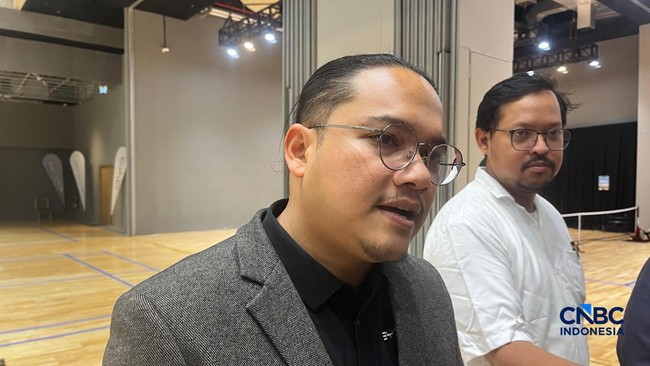
Luther T Panjaitan, Head of PR and Government, stated that the current process represents the integration stage along with final trials of all manufacturing equipment that has been installed at the plant.
“We are in the integration stage, the trial stage, the final trial of the equipment that we have already installed at the plant facility. Of course, the timeline depends on the process, but this is the final stage and it will not be long before we begin the production process,” Luther said.
According to him, several key requirements for commencing production have been completed. These include Domestic Component Level (TKDN) certification, safety standards certification, and vehicle identification numbers (WMI/NIK), which are prerequisites for automotive manufacturers to produce vehicles in Indonesia.
“The most important thing is that we have completed several requirements including certification, TKDN certification, safety standards certification, and WMI—which means NIK—we have already completed these. This means we are very eligible to begin production shortly,” he said.
Nevertheless, he emphasised that the equipment integration stage remains crucial to ensure the quality of vehicles that will eventually be produced in Indonesia.
“It is merely a matter of final integration between the manufacturing equipment. This is not just about connecting things together, but about the accuracy and precision of the vehicles that will be produced,” he added.
Regarding the official timeline for plant operations, Luther has not disclosed a specific date. However, he assured that an announcement will be made shortly.
“We will announce as soon as possible,” he said.
Meanwhile, regarding the vehicle model that will be produced first at the plant, Luther also has not provided detailed confirmation. One of the models being widely discussed is the Atto 1 and M6 from the company’s vehicle lines.
However, according to Luther, the decision on the first model will be tailored to business strategy and market demand.
“I cannot specify which one yet, but of course we will optimise our production strategy according to the highest volume and demand first,” he explained.
He also noted that locally produced vehicles do not need to be identical to the models currently being imported. What matters is the compatibility of electric motor capacity and battery capacity.
“Our requirement is that we must produce vehicles with motor capacity and battery capacity that is the same as what we import or could be higher. So it is not really tied to the specific model type, only to the battery capacity and motor capacity,” Luther said.
With the integration process already in its final stage, BYD’s Subang plant is said to be merely awaiting completion of equipment testing before officially beginning electric vehicle production in Indonesia.