
BYD Flash Charging Test Sparks Debate Over Battery Heat
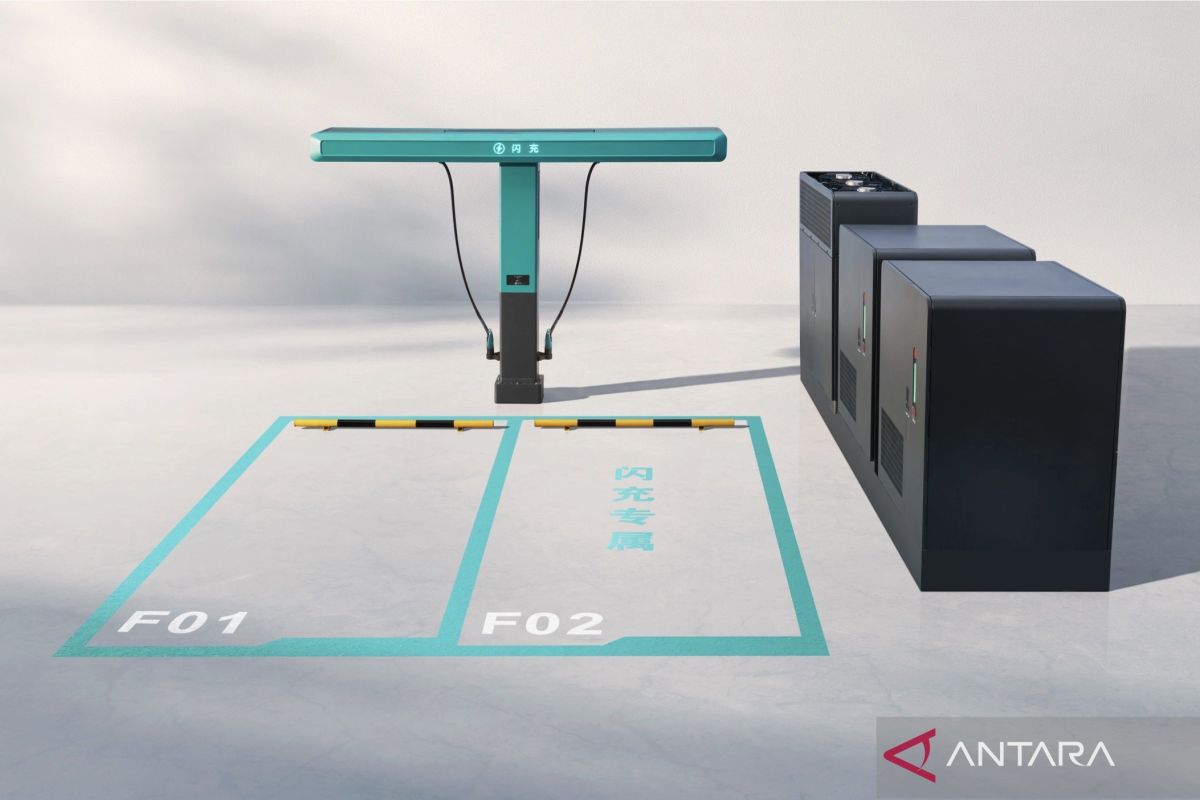
Jakarta (ANTARA) - A live broadcast session of an independent test of BYD’s flash charging technology has reportedly sparked debate after the battery temperature was recorded to exceed 76 degrees Celsius during the ultra-fast charging process.
As reported by Carnewschina on Friday (8/5) local time, the test was conducted by Chinese automotive blogger James Yu, known as “Caishendao”, charging the Fang Cheng Bao Tai 3 electric SUV from 8 percent to 97 percent state of charge (SOC).
An external temperature sensor attached to the centre underside of the battery pack recorded a peak temperature of 76.42 degrees Celsius.
Meanwhile, the vehicle’s diagnostic data showed a battery terminal temperature of around 71 degrees Celsius.
After the debate emerged on social media, Caishendao clarified that the tested vehicle was legally purchased from an official BYD dealer and had not yet been registered at the time of the test.
He also denied allegations that the battery pack had been drilled or structurally modified.
According to him, the five temperature sensors were merely attached to the surface of the battery cells without altering the battery structure. The liquid cooling system was said to have continued operating during the test, and the charging process would not proceed if the cooling system failed.
The test used two measurement methods: battery temperature data from the vehicle’s diagnostic system and independent temperature sensors placed at several points on the battery pack.
The measurement results showed a temperature difference of 6.5 degrees Celsius between the hottest and coolest points during charging.
The report also noted that external sensor readings began to show greater deviation compared to the vehicle’s data after the battery capacity passed around 70 percent SOC.
He stated that additional tests at the battery cell level would still be conducted.
The debate then spread on Chinese social media, where several parties questioned whether such high temperatures could accelerate battery degradation or increase safety risks in repeated fast charging use.
The article also referenced China’s GB/T 44500-2024 standard, which specifies a recommended battery temperature threshold of 65 degrees Celsius for lithium iron phosphate participation, although the standard is not yet officially mandatory.
Additionally, several cited academic studies discuss the decomposition and reconstruction of the SEI layer in lithium-ion batteries generally at temperature ranges of around 80–120 degrees Celsius, depending on battery chemistry and test conditions.
The report emphasised that the measured temperature was the battery surface temperature, not the internal core temperature of the battery cells.
There is no independently verified data on the internal cell temperature from the tested vehicle.
Meanwhile, BYD itself has not announced any changes to charging specifications following the emergence of the debate.