
BYD Drives Mutually Beneficial Global Expansion
Beijing (ANTARA) - As fuel prices surge, accelerating consumers’ shift to electric vehicles (EVs), Chinese automaker BYD has pledged to prioritise technological innovation and mutually beneficial cooperation to deepen its presence in global markets.
Demand for Chinese-made new energy vehicles (NEVs) in overseas markets is rising amid recent oil market shocks, reflecting market-driven choices and underscoring the appeal and cost-effectiveness of the company’s products, according to BYD’s comments in a written interview with Xinhua.
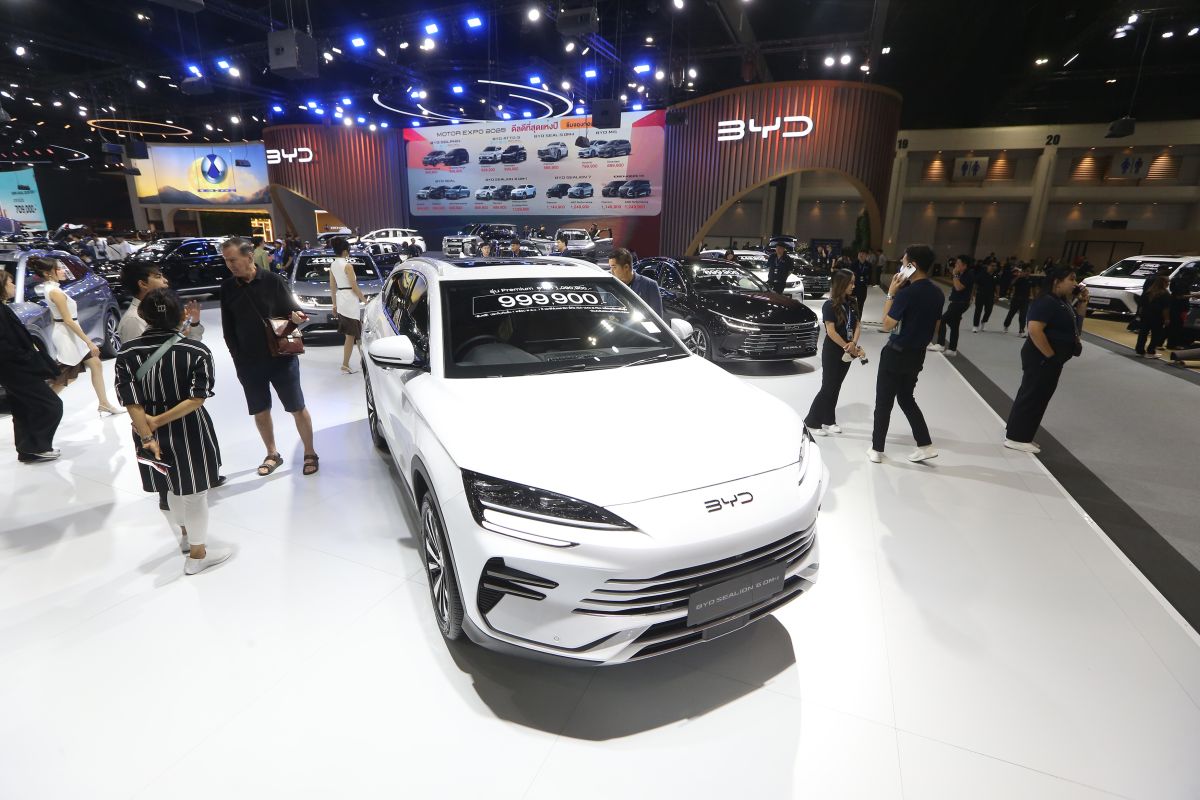
In Thailand, BYD has received support from prominent figures, including newly elected Thai Prime Minister Anutin Charnvirakul, who has been seen travelling in his BYD EV and visiting the BYD stand at the Bangkok International Motor Show on 28 March.
BYD’s EV sales in Thailand continue to grow strongly, with orders increasing steadily, the company revealed. The company attributes this momentum to Thai government-backed policies and the global rise in oil prices, which have highlighted the advantages of EVs.
BYD stated that this growth is also supported by a competitive product lineup and a robust localisation strategy that combines local production with an expanding network of sales and after-sales services.
“We will continue to deepen our presence in Thailand, using technological innovation to drive the automotive industry towards green and low-carbon development, and supporting Thailand’s transition to a low-carbon society,” said Ke Yubin, General Manager of BYD Thailand.
BYD entered the Thai market in 2022 and has since transformed from exporting products to building a fully localised production ecosystem. Its factory in Rayong, the company’s first overseas passenger vehicle plant, has an annual capacity of 150,000 vehicles, with more than 90 per cent of its workforce being Thai.
The Chinese carmaker’s global momentum is not limited to Southeast Asia. In 2025, the company sold more than 1.049 million vehicles overseas, a significant year-on-year increase of 145 per cent. Sales in the UK exceeded 50,000 vehicles, up 485 per cent year-on-year, while Germany, Spain, and Italy each recorded annual sales of more than 20,000 units. Australia also posted strong performance, with over 50,000 vehicles sold, placing BYD among the top 10 brands, according to BYD data.
The company attributes its market expansion to product quality, design, and localised operations, while refuting narratives of “overcapacity” and “dumping” regarding Chinese EVs.
“Our production aligns with market demand, and overseas prices are generally higher than domestic ones, with no low-price dumping practices,” BYD said.
Supported by a fully integrated supply chain, from batteries and components to vehicle assembly, Chinese manufacturers have achieved a blend of cost competitiveness and rapid innovation. This comprehensive strength is becoming increasingly prominent as rising fuel prices prompt consumers to rethink their transportation choices.
In countries like Thailand and Australia, showrooms selling Chinese NEVs report noticeable increases in walk-in visitors, test drives, and eventual bookings, amid geopolitical tensions causing volatility in the global energy market since March.
This popularity reflects a precise alignment of quality, performance, and price with local consumer needs, giving Chinese EVs a distinct and hard-to-replicate edge over traditional internal combustion engine vehicles, said Zhou Fatao, secretary-general of the Guangdong New Energy Vehicles Industry Association.
“The global automotive industry is undergoing a profound transformation centred on electrification, intelligence, and connectivity, and China is at the forefront of this shift,” Zhou added.