
Buya Hamka: From Religious Scholar and Writer to Imprisoned Dissident and National Hero
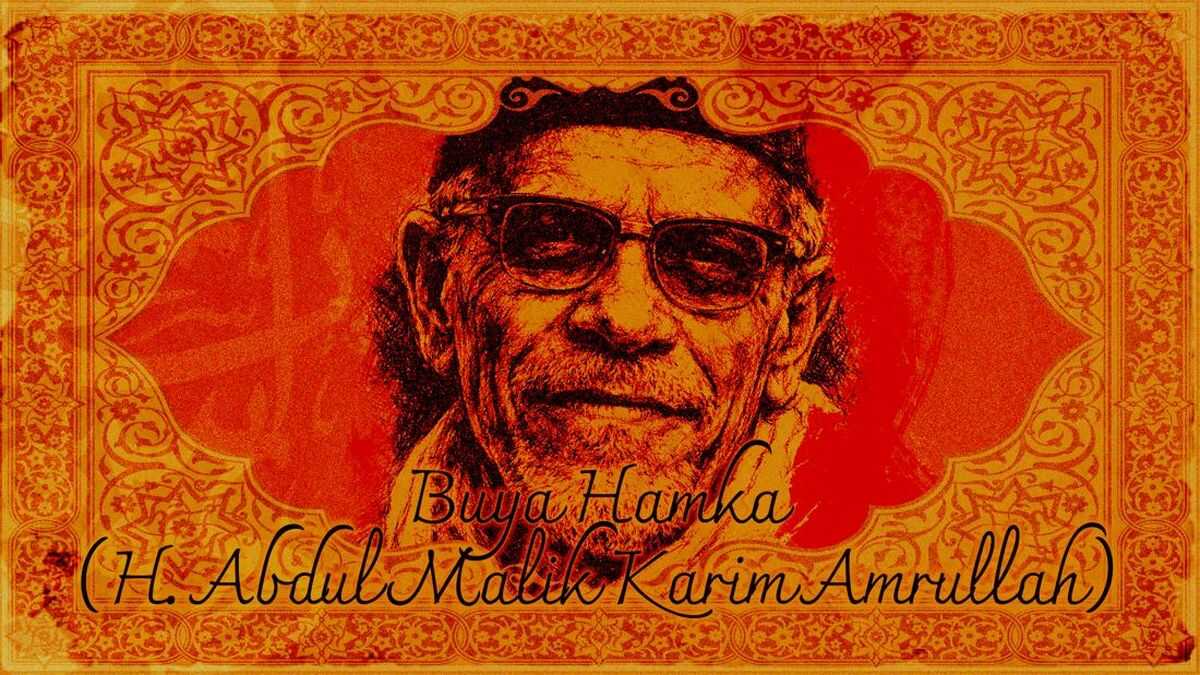
Abdul Malik Karim Amrullah, or Buya Hamka (1908–1981), was no ordinary religious figure. This scholar, who was appointed as an Indonesian National Hero on 7 November 2011 through Presidential Decree No. 113/TK/2011, was renowned as a religious scholar, writer, and had even been imprisoned by a political regime.
Several popular literary works by Buya Hamka include “Beneath the Protection of Ka’bah” (1938) and “The Sinking of the Van der Wijck” (1938). His Islamic literature includes the series “Tafsir Al Azhar” (Qur’anic Commentary of Al Azhar). In one of his books, Buya Hamka detailed the events of 12 Ramadan 1385 H or 28 January 1964, when he was arrested by police under charges of violating anti-subversion regulations, specifically Presidential Decrees No. 11 and No. 13. He recounted this experience in detail in the introduction to his book “Modern Sufism”. Over approximately 57 years, Buya Hamka produced at least 84 published books.
Buya Hamka was the son of Abdul Karim Amrullah and Sitti Shafiah. He was born on 17 February 1908 in Sungaibatang, Agam. He received a thorough Islamic education, as his father was a prominent Islamic scholar in Minangkabau whilst his mother came from a family of artists. Hamka’s father, known as Haji Rasul, was one of the leading figures in the Islamic reform movement in West Sumatra and a pioneer of the Reform Movement (tajdid) in Minangkabau.
In his childhood, Buya Hamka often heard Minangkabau poetry from his grandmother, particularly during his father’s absences on preaching missions. He later moved to Padang Panjang following his parents’ relocation. Under his father’s influence, Hamka grew up in an environment deeply rooted in religious tradition and Islamic modernisation.
At a young age, Hamka pursued Islamic studies and performed the Hajj pilgrimage to the Holy Land of Mecca, Saudi Arabia. Upon his return from Mecca, he acquired the honorific title “Haji”, and his name became “Hamka”, an acronym derived from his full name.
After returning from Mecca, he became actively involved in Islamic development with Muhammadiyah, from his native region to Jakarta. His efforts culminated in his appointment as the first chairman of the Indonesian Council of Islamic Scholars (Majelis Ulama Indonesia/MUI) from July 1975 to May 1981.
During his youth in Java, Hamka studied modern Islamic movements, notably learning from HOS Tjokroaminoto, who later became a mentor to numerous national independence leaders, including Indonesia’s first president, Sukarno. Through this experience, he came to understand the differences between political Islamic movements, such as the East Indies Islamic Association (Sarekat Islam), and the social movement of Muhammadiyah.
Hamka actively contributed articles to various Muhammadiyah publications and produced numerous literary works infused with moral and religious messages. His contributions across various fields made Buya Hamka widely recognised for his influential thinking and remarkable works, gaining recognition not only in Indonesia but also in Malaysia and the Middle East.
What distinguished Buya Hamka was his willingness to lead the funeral prayer for Sukarno—the regime leader who had once imprisoned him on charges of subversion. This request came as a deathbed wish from the Indonesian founding president.
Despite harbouring no resentment for his imprisonment by the regime on charges of subversion, on 21 June 1970, Buya Hamka led Sukarno’s funeral prayer. Sukarno was subsequently buried in Blitar, East Java, the following day.