
Buya Anwar: Corrupt Officials Should Face Life Imprisonment or Death Penalty
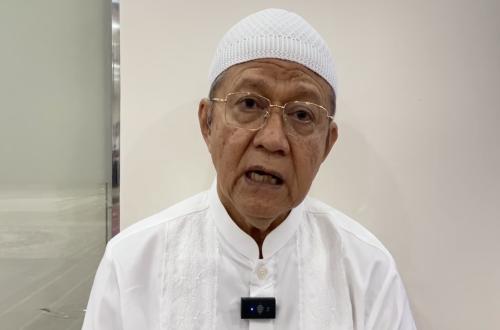
Jakarta — Anwar Abbas, Vice Chairman of the Indonesian Ulama Council (MUI), has argued that judges have a strong legal basis when using only actual loss of state finances as the foundation for imposing sentences in corruption cases.
According to him, the use of potential loss in calculating state losses could lead to different interpretations amongst judges and thus create new problems in the judicial process.
“If a judge is to impose a sentence, the judge must certainly look at actual loss rather than potential loss. This means the judge must determine to what extent the actual loss has been caused by the defendant’s actions,” said Buya Anwar when contacted on Thursday (12 March 2026).
Recently, the Attorney General’s Office of the Republic of Indonesia has been actively pursuing the recovery of state losses in various corruption cases, including cases in the natural resources sector such as oil and nickel governance. In several cases, prosecutors have included potential economic loss to the state as part of their claims for state loss recovery.
However, in practice, several judicial panels have not granted such calculations. Some judges continue to adhere to a Constitutional Court ruling that emphasises that state loss must be actual loss.
Buya Anwar believes the judges’ stance is understandable. He noted that if potential loss were used as the basis, then each judge’s interpretation could differ. “If potential loss is made the basis, then certainly the interpretation between one judge and another could vary and this would clearly create problems,” he said.
Nevertheless, Buya Anwar emphasised that efforts to eradicate corruption must be strengthened to provide a deterrent effect on perpetrators. He proposed several important steps, one of which is the implementation of reversed burden of proof.
According to him, every person suspected of corruption should be required to explain the origin of their wealth. “Every person accused or suspected of corruption should be required to explain the source of their wealth,” he explained.
Furthermore, Buya Anwar believes that the punishment for corrupt officials must be increased to provide a strong deterrent effect. He even mentioned that the heaviest penalties such as life imprisonment or capital punishment could be considered for corruption offenders.
“Secondly, the sentence imposed by judges on corruption perpetrators must be the severest, such as capital punishment or life imprisonment,” said Buya Anwar.