
Businessman Challenges New Criminal Code's Corruption Articles at Constitutional Court for Being Overly Broad
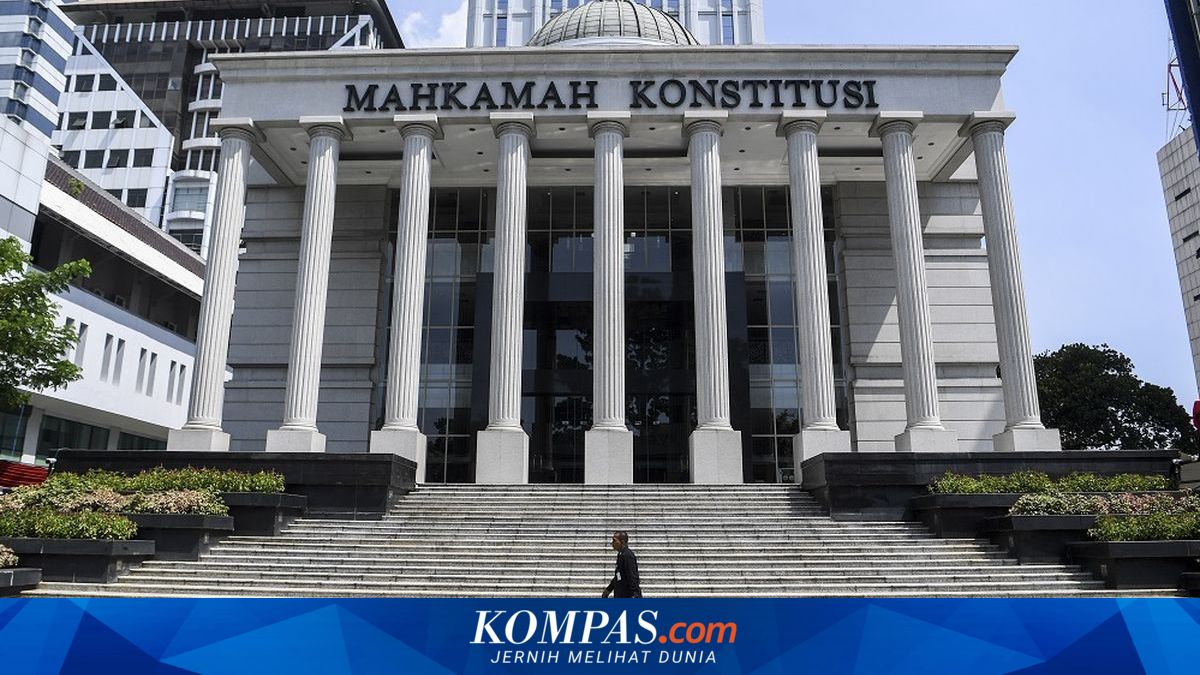
JAKARTA, KOMPAS.com - An entrepreneur named Ngarijan Salim has submitted a judicial review application for Law No. 1 of 2023 on the Criminal Code (KUHP) to the Constitutional Court (MK). Ngarijan Salim’s application has been registered under case number 96/PUU-XXIV/2026. In the hearing presided over by Judge Saldi Isra on Wednesday (1/3/2026), the applicant’s legal representative, Muhammad Yani Rambe, stated that his client is challenging Article 603 and Article 604 of the KUHP. Article 603 stipulates that any person who unlawfully enriches themselves, another person, or a corporation, thereby harming the state’s finances or economy, shall be sentenced to life imprisonment or a prison term of at least two years and at most 20 years, as well as a fine of at least category II and at most category VI. Article 604 stipulates that any person who, with the intent to benefit themselves, another person, or a corporation, misuses authority, opportunity, or means due to their position or office, thereby harming the state’s finances or economy, shall face the same penalties. The applicant is accused of committing the criminal offence of interfering and manipulating the process of reducing the building area of PT Al Ichwan Garment Factory by intervening with officials and staff at the Deli Serdang Regency Revenue Agency. The applicant’s actions are accused of violating Article 2 paragraph (1) in conjunction with Article 3 in conjunction with Article 18 of Law No. 31 of 1999 on the Eradication of Corruption Crimes as amended by Law No. 20 of 2001, as well as in conjunction with Article 55 paragraph (1) first of the KUHP. In case No. 32/Pid.Sus-TPK/2023/PN Mdn at the Corruption Court within the Medan District Court, the panel of judges ruled that the applicant was not proven guilty lawfully and convincingly as per the primary and subsidiary charges. “Meanwhile, the Supreme Court in its cassation decision No. 2638 K/Pid.Sus/2024 ruled and decided that the applicant ‘has been proven to have benefited the defendant’ and in its decree stated that it has been proven that the applicant violated Article 2 paragraph (1) of the Anti-Corruption Law,” said Yani Rambe during the hearing. The applicant also considers the phrases “benefiting oneself” and “enriching oneself” as well as “harming state finances” to potentially make both articles “sweeping clauses”. A sweeping clause is an article with an extremely broad scope and overly flexible interpretation that could criminalise policies. Yani Rambe exemplified with his case, where the cassation judge stated that the applicant benefited himself, but still applied Article 2 paragraph (1) of the Anti-Corruption Law, even though that element is more related to Article 3. “Because the loss in question was actually not proven to be caused by the applicant’s actions, with no clear and tangible calculation of state financial loss that can be proven to benefit or enrich the applicant,” he explained.