
Business Permits Simplified, New OSS System Aims to Drive Investment Boom
Business Permits Simplified, New OSS System Aims to Drive Investment Boom
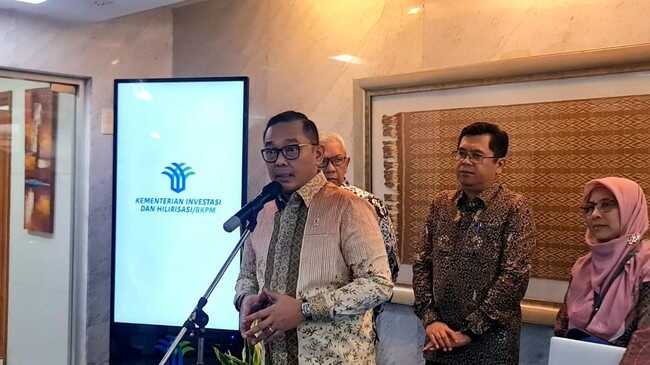
Jakarta, CNBC Indonesia - The Ministry of Investment and Downstreaming/Coordinating Agency for Investment (BKPM) continues to strengthen the Online Single Submission (OSS) system as a strategy to accelerate business licensing and investment realisation. This was conveyed by the Deputy Minister of Investment and Downstreaming/Deputy Head of BKPM, Todotua Pasaribu, during a media briefing after the opening of the socialisation of the adjustment to Government Regulation Number 28 of 2025, Thursday (26/2/2026).
Todotua explained that the socialisation focused on accelerating the issuance of Business Identification Numbers (NIB) as part of risk-based licensing reform. The activity involved various stakeholders, ranging from business actors such as Kadin, HIPMI, and Apindo, to notary institutions.
According to him, the government has received a lot of input in recent months, so improvements and socialisation of OSS will continue to be carried out so that business actors better understand the licensing mechanism.
Currently, around 15 million business actors have been registered in OSS, an increase from around 10.9 million since the beginning of the cabinet’s inauguration in October 2024. The government hopes that improvements to the OSS system can encourage the growth in the number of business actors while also accelerating the realisation of national investment.
Ease of Business Permits for Micro Enterprises and Post-Audit Scheme
Todotua admitted that one of the biggest obstacles previously was business location permits, especially for micro-enterprises. The lengthy location clarification process often hindered the issuance of NIB. Now, the government is implementing a self-reporting mechanism, where business actors still include the business location, but the process is made simpler.
In addition, the government also implements a Service Level Agreement (SLA) to provide certainty regarding the timeframe for business licensing services. A post-audit approach is also applied, so that the NIB can be issued first while other technical processes run in parallel.
For example, business permits in the hospitality sector are targeted to be issued within 28 days. Even though technical processes such as AMDAL are still ongoing, the NIB can still be issued according to the initial commitment, with the technical obligations still having to be fulfilled.
According to Todotua, this OSS reform is expected to have a significant impact on the economy, given that around 90% of national investment and downstreaming is supported by micro-enterprises that need a fast licensing process. The adjustment of regulations and the improvement of the OSS system are also expected to accelerate the growth of business actors and the realisation of investment in the coming years.
(mae/mae)