
Business Owners Claim Difficulties, New Law Must Protect Workers and Companies
Business owners and DPR RI’s Commission IX held a hearing to discuss the new Employment Bill, aimed at ensuring the sustainability of businesses and workers’ employment. The core of this hearing is the expectation that the Employment Bill includes provisions that are more flexible for the business world, while also protecting workers. Flexible regulations are deemed capable of attracting investment and opening new job opportunities in the manufacturing industry sector.
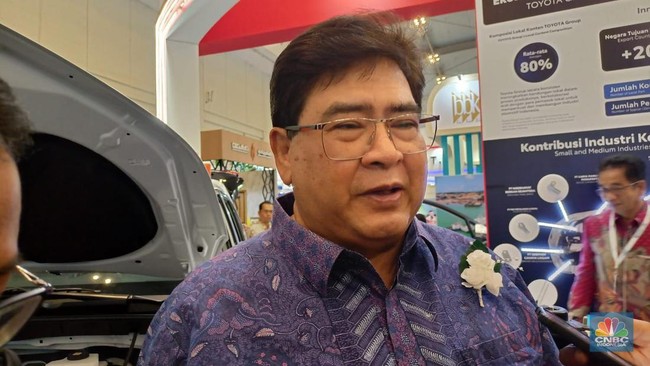
Apindo’s Head of Labour Affairs, Bob Azam, stated that job creation (employment) is expected to be the main direction of the Employment Bill, followed by worker protection and welfare. This is because workers’ positions are important not only as producers or generating products at their workplaces, but also as consumers, namely buying various goods resulting from production.
“This Bill is expected to maintain the sustainability of the business world,” said Bob Azam in his presentation during the hearing with DPR RI’s Commission IX regarding the Employment Bill, on Tuesday (14/4/2026).
Bob assessed that Indonesia’s labour conditions in general are in a cautious category or yellow light because every year around 3.5 million new workers enter the workforce. Meanwhile, every 1% economic growth can only absorb 200-400 workers. Labour-intensive industries absorb the most workers compared to capital-intensive ones.
Workers not absorbed by industry tend to enter the informal sector, which reaches around 60 percent. Indonesian worker productivity is still low because it is dominated by graduates of lower secondary education. Meanwhile, efforts to increase productivity through training have not been optimal due to limited budget allocation.
This Bill is needed because labour regulations over the last 10 years have been unstable. For example, wage regulations have been changed five times, so in practice, they often change every two years. This condition makes it difficult for the business world to compile long-term plans.
“If the regulations change frequently, we have difficulty calculating our labour costs. This makes it difficult for the business world,” he continued.
Citing study results, Bob mentioned that countries with more flexible labour regulation characteristics are able to attract more investment. The future direction of the Employment Bill is expected to protect workers/labourers, business owners, and job seekers.
“We want to convey that the law we expect protects workers, but it should not cause investments to not enter so that those who need jobs do not get opportunities,” he said.
In a separate opportunity, when met by reporters after the hearing, Bob said the core of Apindo’s proposal for the Employment Bill is the issue of worker training, where the government should provide funds so that workers can improve their abilities.
“But the main thing we propose from Apindo is that there must be funds for worker training, especially those already in the workforce. So, they shouldn’t enter work until retirement with the same job, unchanging. We can’t rely on worker welfare from minimum wages. Worker welfare can emerge by them changing jobs. From a job with lower pay to a better salary,” he explained.