
Business Licensing Acceleration Drives Investment Growth: Indonesia Revamps Registration Framework
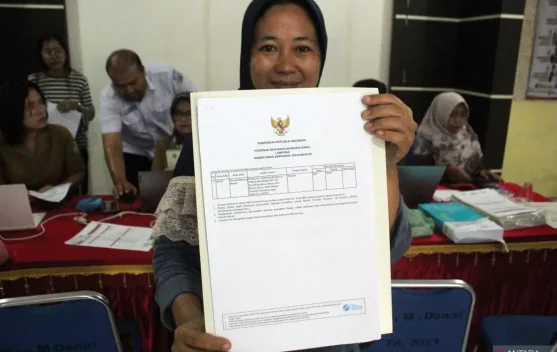
Business Licensing Acceleration is Key to National Investment Growth: Govt
Oleh - Gusti Panji Alif Pratama
Editor - Lasti Martina
26 Feb 2026
Voice of Indonesia
RRI.CO.ID, Jakarta – The Ministry of Investment and Downstream Industry/Investment Coordinating Board (BKPM) seeks to accelerate the issuance of Business Registration Numbers (NIB) by adjusting Government Regulation (PP) No. 28/2025 on risk-based business licensing and strengthening the Online Single Submission (OSS) system.
Deputy Minister of Investment and Downstream Industry and Deputy Head of BKPM, Todotua Pasaribu, said faster licensing services are key to increasing the number of business actors and accelerating investment realization.
“Licensing services contribute significantly to investment realization. Besides construction, land, and the business itself, licensing is the most fundamental aspect,” Todotua said after a dissemination event on the adjustment of PP No. 28/2025 in Jakarta on Thursday, February 26, 2026, as quoted by Antara.
He said around 15.4 million businesses have registered through the NIB system. With improvements to the OSS system, the government expects further growth in new business registrations that will contribute to higher investment realization.
The government targets investment realization of around IDR 13,000 trillion over the next five years. Todotua said the policy’s effectiveness would be measured by growth in the number of business actors andin investment realization.
One of the key changes in the revised PP No. 28/2025 is the simplified procedures for micro-enterprises applying for NIB. Previously, micro businesses were required to undergo a clarification process for the Space Utilization Activity Conformity Approval (PKKPR) or location permit, which often took considerable time.
Following coordination with technical ministries, micro enterprises can now independently declare their business location through the OSS system while still stating the location of their operations. Under this mechanism, NIB issuance can be completed more quickly.
BKPM has also strengthened the implementation of service-level agreements (SLAs) with technical ministries and applied the positive fictitious principle. Under this scheme, permits may be issued within the agreed timeframe, while technical requirements are fulfilled through a post-audit mechanism.
Todotua said the parallel service model aims to shorten the investment cycle, which has often been delayed at the initial licensing stage.
“We are transforming the process to make it parallel so that our investment cycle can be shorter. With a shorter investment cycle, investment realization can also be achieved more quickly,” he said.
BKPM ensures it will continue disseminating regulatory adjustments and improving the OSS system to maintain consistent acceleration of licensing services. ***