
Business leaders warn of palm oil export bottlenecks under one-stop scheme
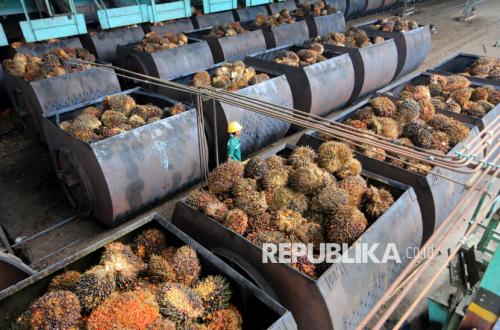
REPUBLIKA.CO.ID, JAKARTA — The Indonesian Palm Oil Entrepreneurs Association (GAPKI) has warned of potential bottlenecks in the implementation of the one-stop natural resource export policy through PT Danantara Sumberdaya Indonesia (DSI). GAPKI Chairman Eddy Martono stated that the palm oil business requires swift decision-making due to rapidly fluctuating global market prices. Eddy said businesses do not oppose government policies. GAPKI remains a strategic partner to the government but requests that the one-stop export transition mechanism be discussed with industry players to avoid market uncertainty. “In any business, decisions must be made quickly. This requires swift decisions,” GAPKI Chairman said during an interview at the Ministry of Agriculture (Kementan) headquarters in Jakarta on Tuesday (26 May 2026). He explained that palm oil prices can change within hours, requiring exporters to have clarity on who makes transaction and export pricing decisions. He added that transaction delays could harm all parties. Eddy cited a scenario where high prices lead to a transaction decision being delayed, causing prices to drop the next day. “If DSI takes too long, a deal today could see prices drop tomorrow, resulting in losses,” he said. Eddy noted that businesses and importers were surprised by the presidential regulation on one-stop natural resource exports. GAPKI also felt the palm oil industry was not involved in initial discussions, causing market uncertainty. He said unclear export mechanisms have led importers to hold off on purchases, immediately pressuring domestic crude palm oil (CPO) prices. Eddy cited Dumai CPO prices at Rp15,300 before President Prabowo Subianto’s speech. Within two hours, prices fell to Rp14,500 with no market purchases, then dropped further to Rp12,300, yet transactions remained scarce. “This shows the market needs certainty. Clear information is essential,” Eddy said. GAPKI highlighted the complexity of Indonesia’s palm oil export market, which spans over 160 countries. Eddy said this differs from other commodities due to diverse importers’ needs, especially as around 90% of Indonesia’s palm oil exports are processed products. He questioned the readiness of the new scheme if all export support is consolidated under PT DSI by 2027. He noted exporters have long-established market networks. “We must avoid hindrances that could lead to losing our markets,” Eddy said. He added that palm oil is not the only vegetable oil globally. Importers could switch to other producers or substitute oils if Indonesian supply becomes difficult to access. GAPKI urged the government to continue involving businesses during the policy transition. The association hopes the one-stop export mechanism will be clearly defined to avoid disrupting the long-established domestic palm oil market. Previously, President Prabowo Subianto announced the issuance of a Government Regulation (PP) on Natural Resource Commodity Export Management during a DPR RI plenary session at the Nusantara Building, MPR/DPR/DPD RI Complex in Jakarta on Wednesday (20 May 2026). The government subsequently established PT DSI as a specially tasked company to manage and oversee strategic natural resource export transactions. DSI’s formation follows longstanding issues of under-invoicing and transfer pricing in Indonesian exports. Under-invoicing involves reporting lower invoice values than actual transactions, while transfer pricing sets prices between affiliated companies. Implementation will occur in two phases. From 1 June to 31 December 2026, DSI will act as an evaluator and intermediary for specific export commodities.