
Business Leader Warns That Impact of Plastic Price Hike Could Become Even More Unpredictable
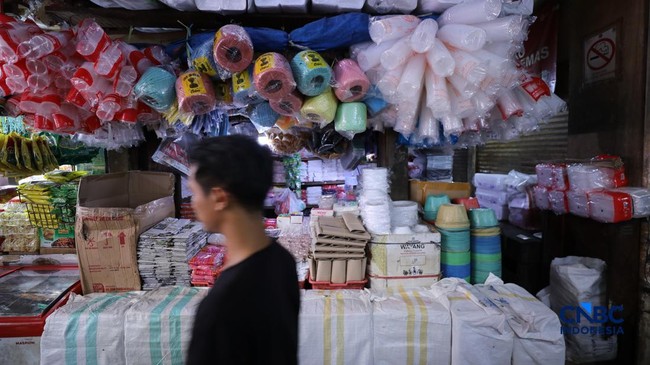
Business leaders have revealed that the increase in plastic raw material prices is already impacting industries in Indonesia, particularly those using plastic packaging.
Apindo’s Head of Labour Affairs, Bob Azam, acknowledged the potential for such impacts and noted that they could have widespread effects because nearly all products use plastic packaging.
Nevertheless, they hope that companies will not resort to layoffs as a response to the cost pressures arising from the rise in plastic raw material prices.
“Indeed, this plastic price increase has the potential for broad impacts, as most use plastic packaging. But if possible for companies, do not do layoffs, do not rush into layoffs,” said Bob Azam when met by reporters at the DPR RI building on Tuesday (14/4/2026).
They also see opportunities to develop substitute materials as an alternative to plastic. According to him, every pressure in the industry can open up space for new innovation.
“Yes, certainly, every pressure creates opportunities, opportunities to foster new innovations. We are working to develop substitute materials as an alternative to plastic,” explained Bob.
Previously, the General Chairman of the Bottled Drinking Water Association/AMDK Nusantara (Amdatara), Karyanto Wibowo, stated that the increase in plastic raw material prices has seriously impacted the AMDK industry, as the majority of its packaging still uses plastic.
“The current increase in plastic raw material prices has a significant impact on the AMDK industry, because almost all AMDK packaging uses plastic, especially polyethylene terephthalate (PET) resin for bottles, high-density polyethylene (HDPE) for gallons, and polypropylene (PP) for caps and labels,” said Karyanto.
He admitted that plastic material prices have risen by around 25% to 70%, with some even increasing by up to 100%, causing production costs to swell by up to 45%.
“PET resin prices and other supporting plastic materials have surged between 25% and 70%, even reaching 100% for some types of material since early April 2026. As a result, overall AMDK production costs have increased between 35% and 45%,” he continued.
Karyanto added that plastic is the highest production cost component after water itself. “Plastic is the second largest production cost component after the water itself, so this increase can no longer be fully absorbed by producers,” he explained.