
Business 'Disaster' Emerges for Malls After Eid, Entrepreneurs Start to Worry
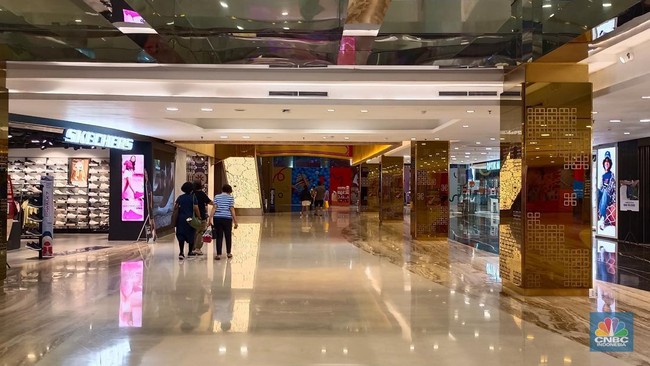
Indonesia’s retail sector is preparing to face a period of weak sales expected to last longer this year. This situation is triggered by the shift in the timing of Ramadan and Eid al-Fitr, which occurred earlier, causing the low season phase to arrive sooner and endure longer than usual.
Chairman of the Indonesian Mall Managers Association (APPBI), Alphonzus Widjaja, explained that this circumstance requires business actors to prepare for sales pressures until mid-year or even the end of the year.
“This year’s low season period will also be relatively longer because Ramadan and Eid al-Fitr came earlier, in the first quarter. The second and third quarters of this year will be a long low season period for the retail business industry in Indonesia,” said Alphonzus to CNBC Indonesia on Wednesday (15/4/2026).
According to him, this condition is even more severe because it coincides with global pressures, particularly the impact of the conflict in the Middle East, which also affects the economic conditions of various countries, including Indonesia.
“The current difficult situation due to the impact of the war in the Middle East is not only experienced by Indonesia but also by many other countries. The impact experienced by our country also has the potential to face greater pressure because it coincides with the start of the ‘low season’ period as usual in Indonesia, which occurs after Ramadan and Eid al-Fitr, which is the peak of retail sales,” he clarified.
In this situation, industry players are faced with the challenge of maintaining sales performance while holding back price increases to avoid further pressuring people’s purchasing power.
Alphonzus emphasised the importance of collaboration between producers and retail actors to find various ways to reduce costs, from efficiency to production innovation.
“Producers along with other retail business industry stakeholders must strive maximally to find various options or alternatives to minimise price increases,” he said.
He added that the manufacturing industry, particularly textiles, needs to innovate to reduce production costs. On the other hand, retailers are also required to be more creative in keeping selling prices competitive.
“The textile manufacturing industry must endeavour various innovations in production, and producers together with retailers must also carry out various creativities to suppress or minimise selling price increases,” he stated.
Nevertheless, he acknowledged that price increases cannot be entirely avoided. However, upstream industry players are expected to hold them back, so as not to worsen market conditions amid the long low season.