
Business Actors Prioritise Efficiency and Adopt a 'Wait and See' Approach Amid Global Uncertainty
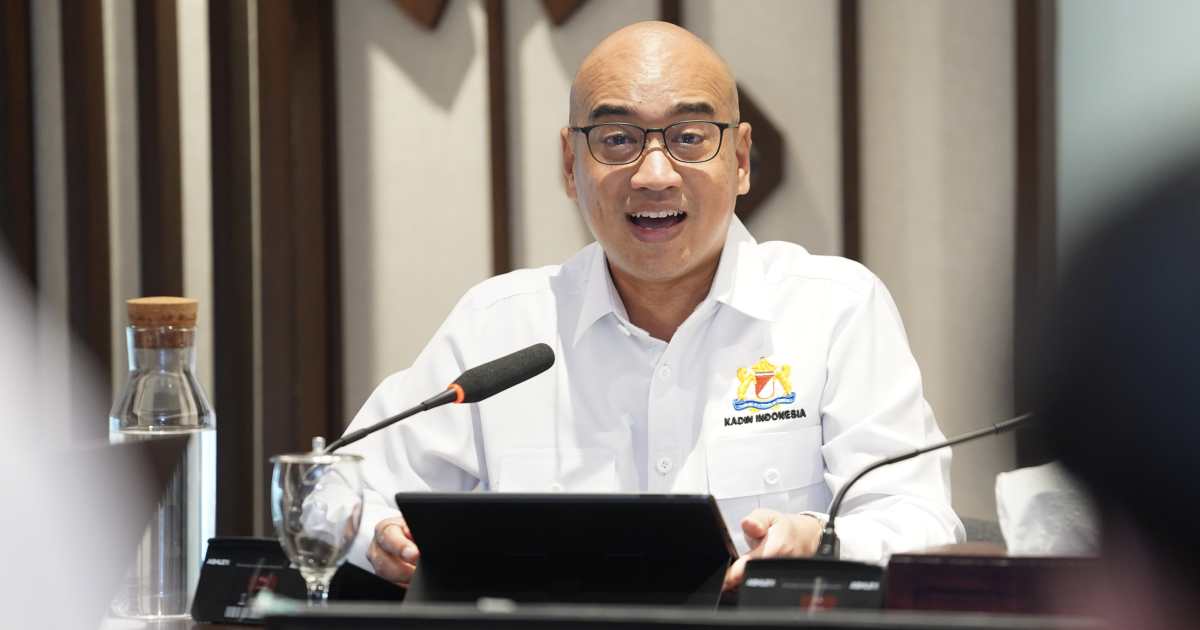
Indonesian business actors in the first quarter of 2026 are tending towards defensive strategies in facing increasingly uncertain global pressures. Amid the impacts of geopolitical conflicts, surges in energy prices, exchange rate fluctuations, and supply chain disruptions, the majority of business actors are focusing on maintaining internal efficiency, while others are taking a wait-and-see approach while weighing the most appropriate strategic direction.
This is reflected in the Kadin Indonesia Business Pulse Q1-2026, announced by the Kadin Indonesia Institute on Friday (24/04/2026), based on a survey of Indonesian business actors’ perceptions of business conditions, challenges, and the impacts of global uncertainty.
Chief of the Kadin Indonesia Institute, Mulya Amri, stated that the survey period ran from 17 March to 5 April 2026, involving 210 Kadin members across 27 provinces through random sampling via online methods using WhatsApp and an online survey form. In the presented material, the publication date is not explicitly stated, so the most certain time reference is the survey period of 17 March to 5 April 2026.
The survey results show that companies’ anticipatory steps against the impacts of geopolitical conflicts are still dominated by internal strategies. Operational cost efficiency is the primary step chosen by 33.9% of respondents, indicating that business actors are more focused on maintaining business margins by reducing production, distribution, and operational costs amid rising input prices and high global uncertainty.
This strategy shows that companies’ current primary priority is not expansion, but rather maintaining cash flow health and business stability.
However, the survey also shows that 29.3% of business actors have not or are not taking specific steps. This large proportion indicates that quite a few business actors are still tending towards a wait-and-see attitude, either due to limited capacity to adapt quickly or because there is no confidence in the most appropriate mitigation strategy amid continuously changing situations. This attitude reflects high caution but also shows that part of the business world remains vulnerable if global pressures persist longer.
Adaptive steps are indeed beginning to emerge, but on a limited scale. As many as 9.9% of respondents chose to diversify trading partners, 9.5% reviewed business contracts and supply chains, and 7.1% diversified raw material or supply sources. These figures show growing awareness among business actors to reduce dependence on certain markets, suppliers, or distribution routes to minimise the impact of global disruptions.
Meanwhile, 6.4% of respondents shifted focus to domestic demand as a way to maintain sales continuity, while only 3.9% engaged in asset or currency hedging, indicating that financial risk management has not yet become widespread practice among business actors.
This defensive stance is inseparable from the business pressures currently felt by the business world. In Q1-2026, perceptions of current business conditions compared to the previous quarter tend to be negative. As many as 40.5% of respondents disagreed that current business conditions are better than the previous quarter, while 25.2% agreed and 34.3% rated it as average. This finding shows that the business world is still overshadowed by cost pressures, weak demand, and geopolitical uncertainty.
Similar pressures are also reflected in perceptions of respective industry sector conditions. As many as 44.3% of respondents stated that the condition of the industry sector they are engaged in is not better than the previous quarter, while 22.9% stated it is better and 32.9% rated it as average. This confirms that slowdowns are felt widely across sectors, and recovery has not yet occurred evenly at the industry level.
The impact also extends to investment decisions. The survey shows that investment plans for the next six months tend to weaken. As many as 39.0% of respondents disagreed that they will invest in the next six months, slightly higher than 38.6% who agreed, while 22.4% answered average. These figures show that business actors’ investment interest is still held back by high caution towards short-term economic prospects.
From the business challenges perspective, the survey results show that the biggest pressure currently comes from government policies and programmes. As many as 16.7% of respondents cited government policies and programmes as the main challenge, followed by bureaucracy and regulations at 14.3%, demand at 11.4%, access to financing at 9.5%, and legal uncertainty at 9.3%.
In addition, external pressures are increasingly felt through supply chain disruptions at 3.4%, weather/climate/natural disasters at 3.6%, and technological changes at 3.0%. This indicates that the business world is not only facing market issues but also must adapt to policy changes, standards, and rapid global dynamics.
In the geopolitical context, business actors feel quite tangible impacts. Surges in energy or commodity prices are the main impact felt by 20.9% of respondents, followed by market demand declines at 16.2%, rupiah exchange rate depreciation at 16.2%, increased operational business risks at 11.8%, global policy or market uncertainty at 11.5%, and global supply chain disruptions at 10.9%. Meanwhile, 12.5% of respondents stated there is no significant impact, showing that geopolitical impacts have not yet been felt equally across all sectors.
From the business readiness perspective, 36.7% of respondents stated they are prepared to face the impacts of conflicts